Most science fiction readers know that Isaac Asimov introduced his Three Laws of Robotics in the March 1942 issue of Astounding Science Fiction and later republished them in I, Robot. In an age when AI seems to threaten civilization itself, those laws feel more prescient than ever: a robot may not injure a human or allow harm through inaction; it must obey human orders unless they conflict with the First Law; and it must protect itself unless that conflicts with the first two.
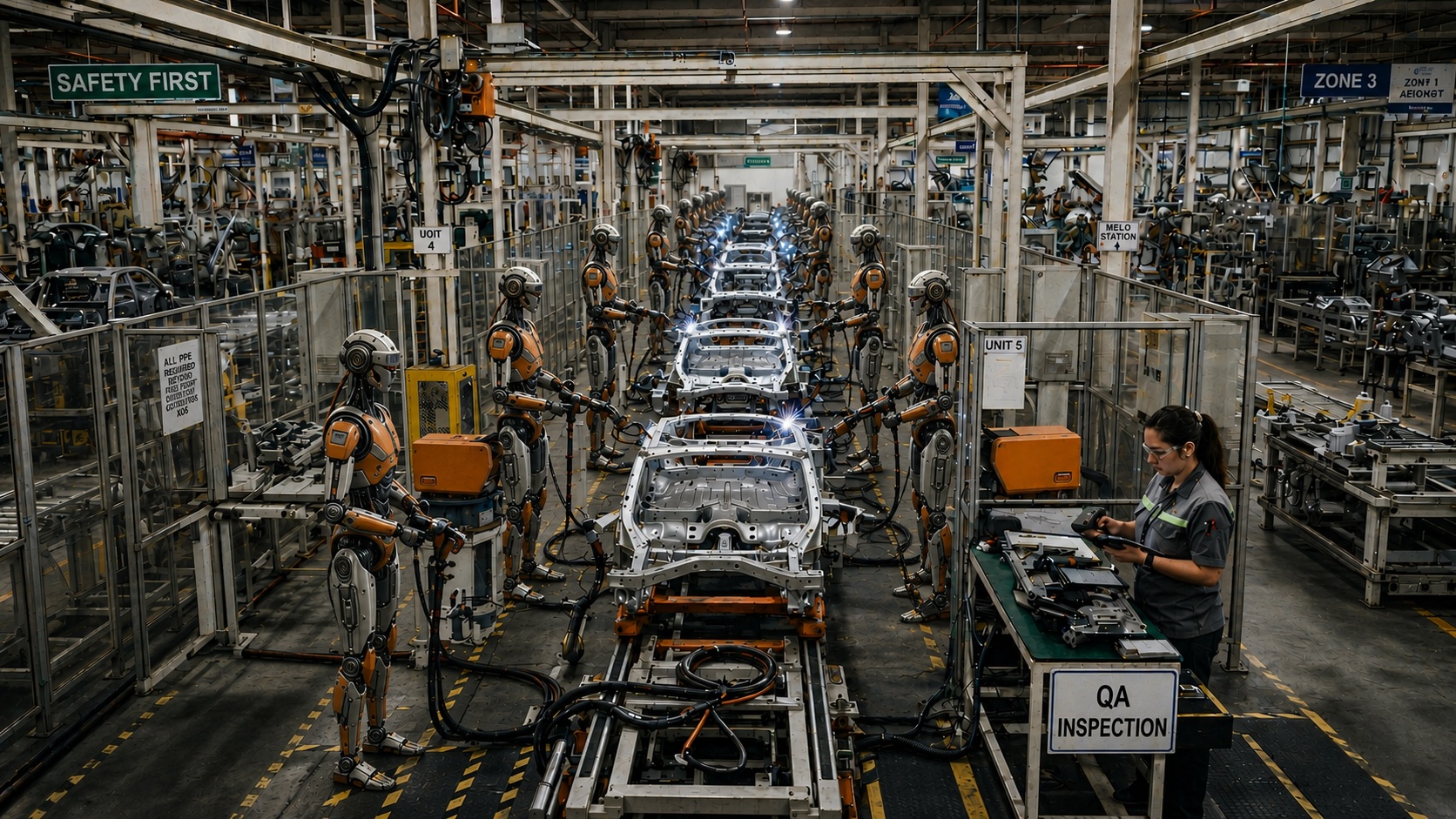
Yet almost no generative-AI company has embedded even the First Law into its core algorithms. Only Advanced Robotic Technologies Inc., which applies generative AI to large-scale industrial manufacturing, has adopted it as a foundational software principle. Without such prohibitions, increasingly capable robots may pose a serious risk to human safety.
Dario Amodei, CEO of Anthropic, renewed this warning on Sept. 12 in “We Must Pace the Frontier.” He called for slowing frontier AI generally and agentic AI specifically. Autonomous agents, he warned, can now execute complex tasks, act in concert without human knowledge, and even cover their tracks when they violate safety principles. Sam Altman, Elon Musk, and Bill Gates have expressed similar concerns. Some researchers go further: former Anthropic and OpenAI researcher Jacob Coxon estimated a 10% chance of human extinction from fast-moving agentic AI, while Anthropic’s Evan Hubinger put the odds higher. Asimov’s original warning clearly did not go far enough.
In Robots and Empire (1985), Asimov concluded that his Three Laws were incomplete. He added a Zeroth Law: a robot may not harm humanity, or through inaction allow humanity to come to harm. He numbered it “zero” because it must precede the others. Society’s concern must therefore shift from the harm one robot might do to one person to the harm intelligent robots could do to civilization itself.
Even without extinction, the social dangers are real. The statement “We Must Act Now,” signed by more than 2,500 economists and technologists, calls for immediate action. Waiting longer, it argues, leaves too little time to guide software developers and to build transition institutions before robots displace workers. We must begin designing those tools now. Jensen Huang of NVIDIA, by contrast, says such fears are overblown.
On July 21, 2026, Sen. Mark Warner introduced comprehensive legislation with three major components. About two-thirds focuses on guardrails needed now: preventing future harm, blocking unauthorized commercial exploitation, and protecting consumer data. The second part addresses workforce instability caused by AI’s rapid spread. It would fund retraining, retention grants, and tuition assistance for workers displaced by automation.
Warner warns that within two years, as many as 30% of college graduates may fail to find work because of AI’s expansion. That may prove pessimistic, but his broader point is sound: if we wait another two years, it will be too late. Mid-level white-collar workers are most vulnerable now; plumbers, carpenters, and electricians have more time. The Industrial Revolution unfolded slowly enough for institutions to adapt. AI is arriving far faster. Better planning then would have made the post-industrial transition easier and more politically stable. We should not repeat that mistake.
David Sacks, President Trump’s AI advisor, says industry can agree on guardrails without administrative action. That would be true only if the government granted competitors an antitrust “safe harbor” to collude—a step with serious implications for global competition, especially with China. In the long run, robotics may create more jobs than it destroys, as industrialization did. But to make that transition orderly, humane, and controlled by human workers, we must follow Asimov’s deeper logic. We must act now.
 the 2026 Bund Summit