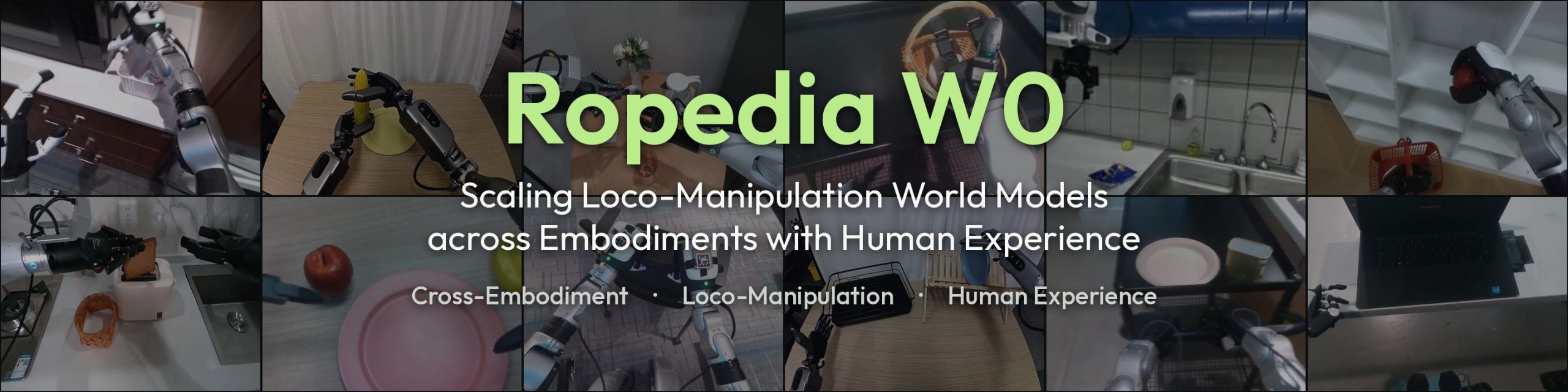
Singapore-based embodied AI startup Ropedia said it has released Ropedia W0, a cross-embodiment mobile manipulation world model developed with researchers from Nanyang Technological University, Duke University, the University of California San Diego and Tsinghua University. The model uses a unified action representation to predict first-person future scene changes after actions by humans, robotic arms and humanoid robots, allowing one model to cover different robot embodiments. Ropedia said W0 ranked first across five evaluation benchmarks and 11 tests. In the Ψ₀ and ω-HOME benchmarks, W0 outperformed comparison models trained on full data without post-training, the company said. On the DreamDojo official benchmark, W0 exceeded DreamDojo trained on full data using only 1% of post-training data. The model takes initial frames, text...
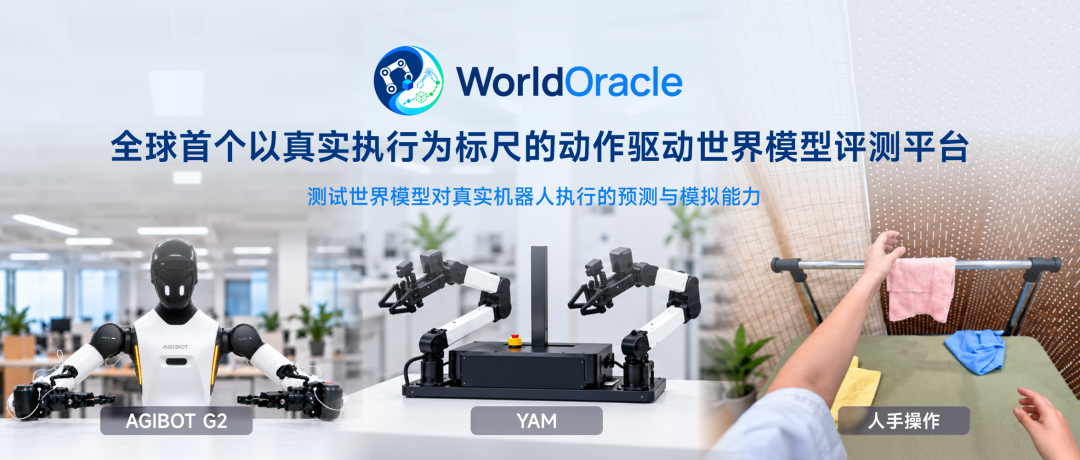
WorldOracle, which its developers describe as the first benchmark for action-driven world models that uses real-world execution as the yardstick, launched on Oct. 16 and opened evaluation submissions to developers. The project was jointly completed by researchers from AGIBOT, NVIDIA, Princeton University, the University of Texas at Austin and the University of Toronto, combining world-model developers with benchmark researchers. The platform addresses a question the industry has lacked a benchmark to answer directly: given a set of actions, how far is a model’s predicted future from what actually happens? WorldOracle defines this as “Execution Coherence.” The researchers said a reliable world model must withstand three stress tests: causal obedience, meaning it must follow the given action sequence, including wrong or...
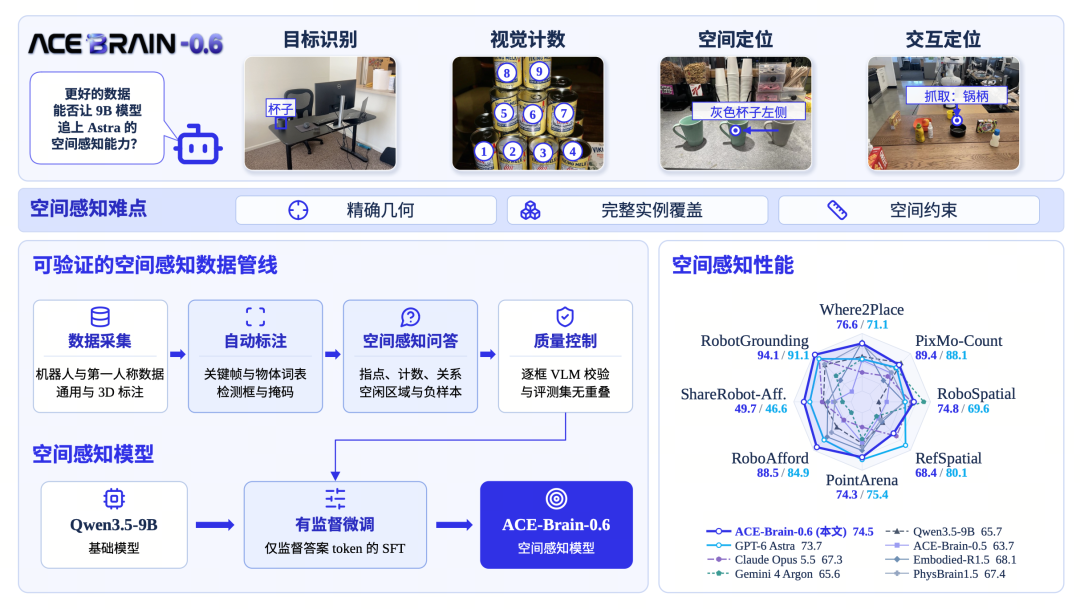
ACE Robotics has released a visual-spatial grounding-enhanced embodied foundation model, ACE-Brain-0.6, and said the 9-billion-parameter system outperformed OpenAI’s GPT-6 Astra on six of eight grounding benchmarks. The company said the model is designed to improve target identification, spatial localization and interaction anchoring—capabilities it described as critical for translating high-level task reasoning into reliable physical action. It builds on the earlier ACE-Brain-0.5 and focuses on visual grounding: identifying target objects, interaction areas and spatial references, and linking them to position, displacement and motion parameters. In seven public benchmarks, ACE-Brain-0.6 averaged 74.53 points versus 73.68 for GPT-6 Astra, according to the company. It said the model beat GPT-6 Astra on six of eight evaluations, including Where2Place (76.55 vs. 71.10), PixMo-Count (89.41 vs....
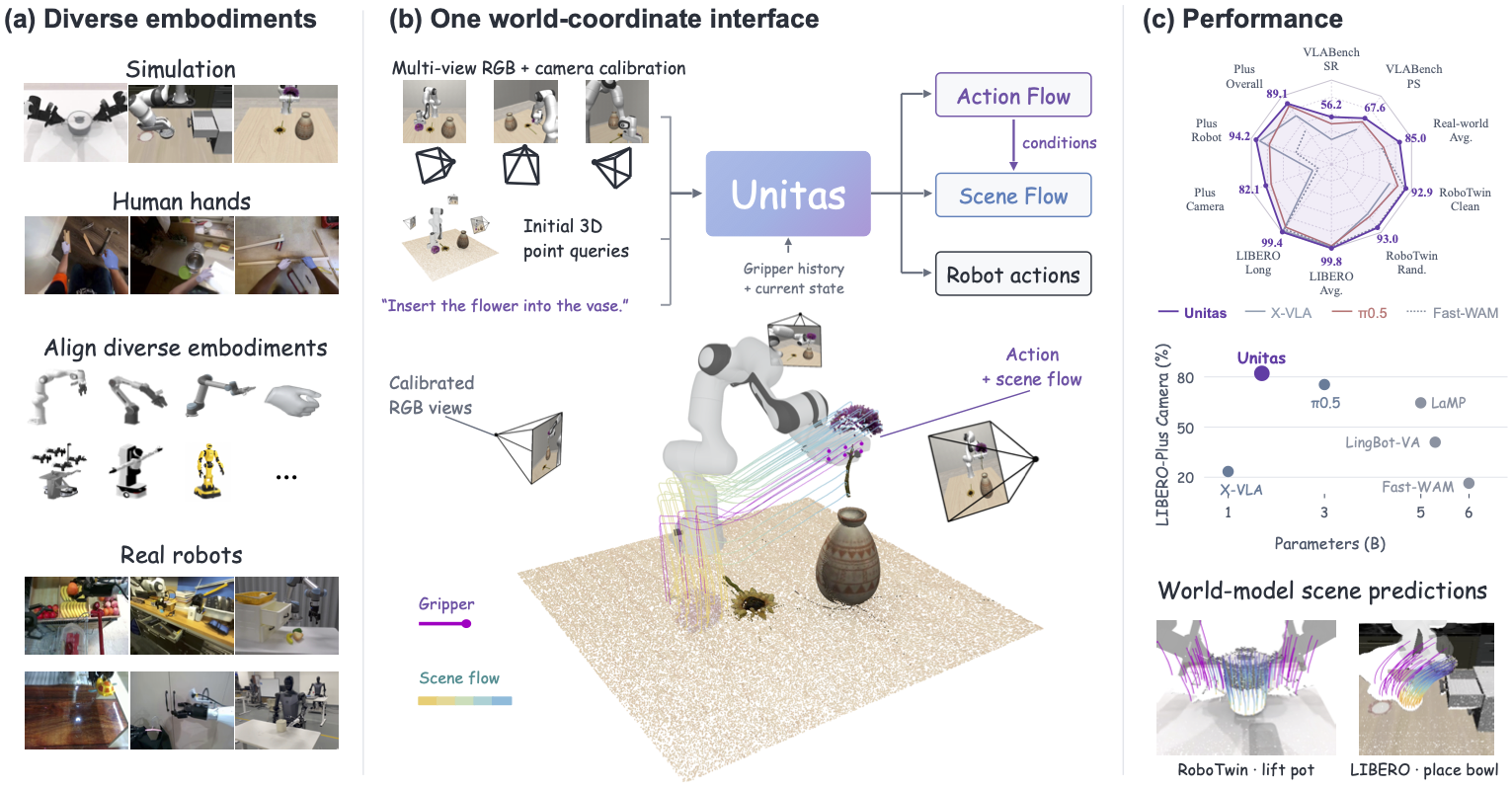
DexForce, an Chinese embodied-AI developer, has unveiled UNITAS, a 3D-native world action model for robot manipulation, saying it is designed to give robots a unified representation of the physical world. The company described UNITAS as the first robot-task-native 3D world model. UNITAS is built on a central premise: just as large language models unify diverse knowledge through text, embodied AI needs a native space for physical experience. DexForce argues that space should be the 3D physical world itself, rather than 2D images or latent features from which 3D relationships must be inferred. The model jointly represents observation, action and scene change in a single 3D coordinate system. Observation corresponds to the 3D positions of objects; action flow corresponds to the...
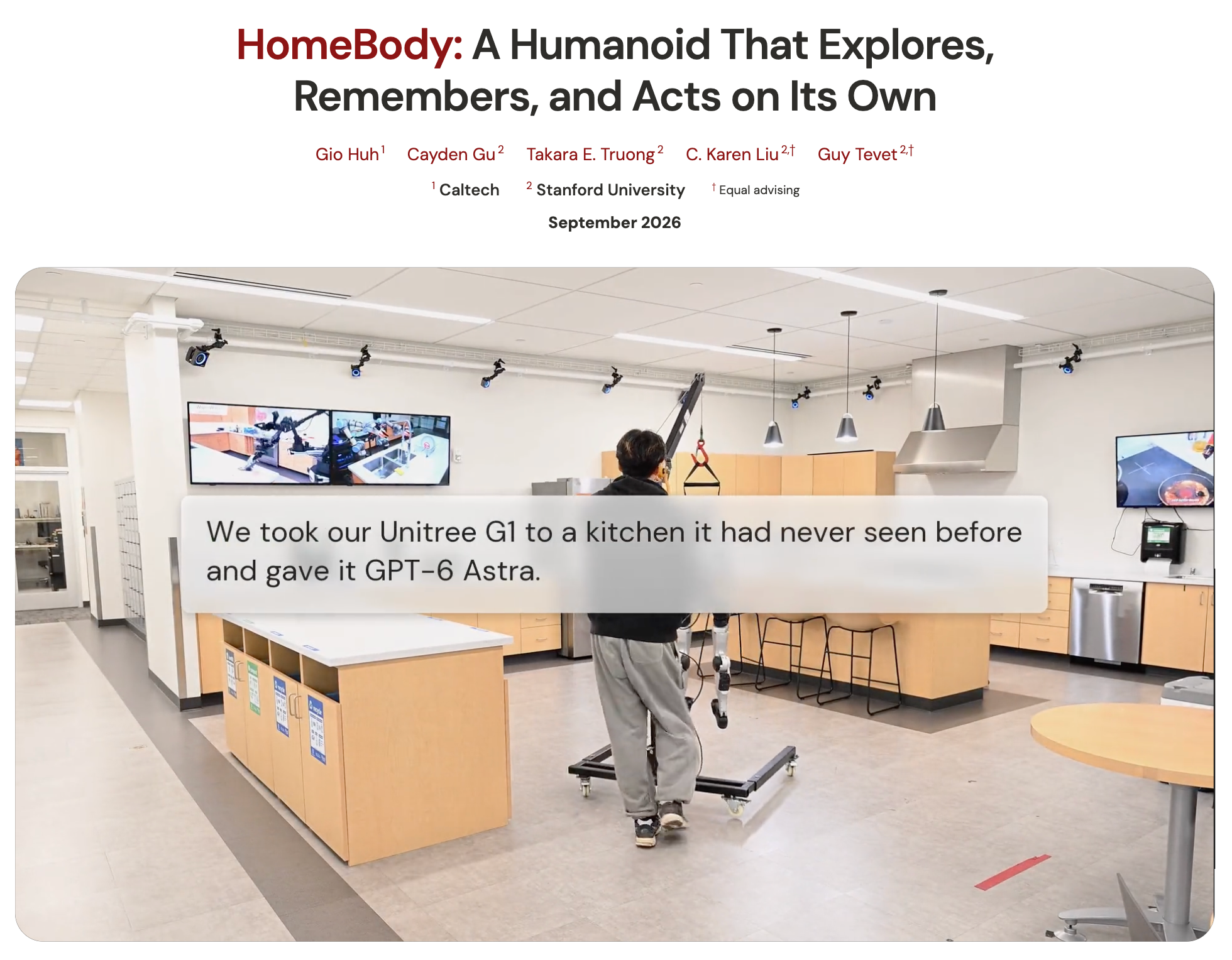
Researchers at Caltech and Stanford have unveiled HomeBody, a system that gives GPT Astra persistent spatial memory and the ability to execute compound humanoid actions for long-horizon tasks. In a kitchen demo, a Unitree G1 robot guided by Astra cleaned the room and retrieved remembered items from ambiguous requests. The team said the system requires no environment-specific training or additional policy learning. HomeBody replaces the trained intermediate VLA layer in conventional three-part architectures—System2 VLM for vision and instructions, System1 VLA for control commands, and System0 for coordinated motion. As frontier models such as Astra improve, the researchers argue trained VLAs are no longer necessary and System2 can directly manage reusable motion skills. A plug-and-play VLM calls a composable skill library....
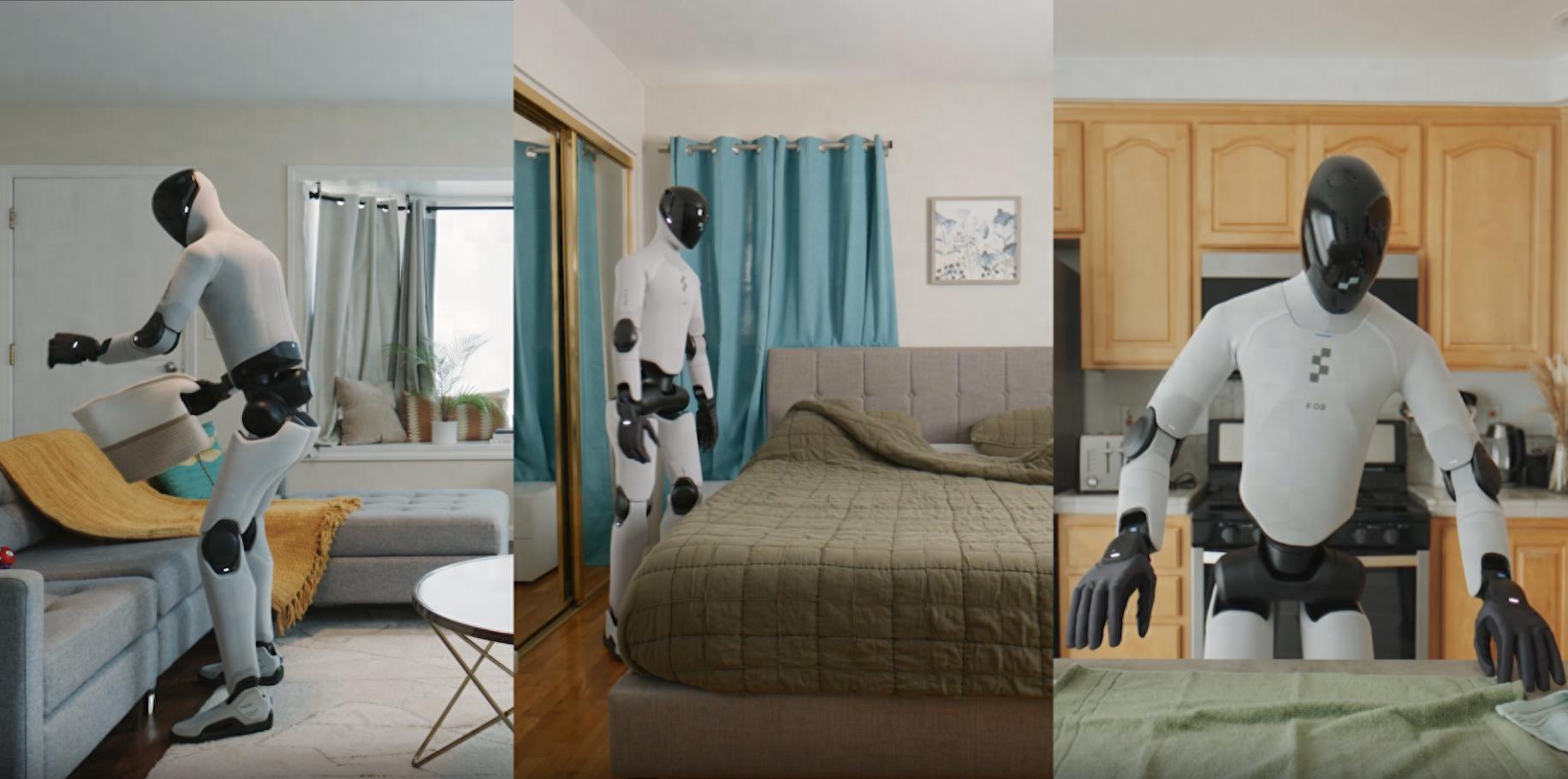
Figure, the U.S. humanoid robot developer, has released Helix 2.5, its most advanced neural network model to date, and said it enabled zero-shot whole-body autonomy in 30 real homes. Figure called it the first demonstration at that scale of zero-shot whole-body behaviour generalisation for a humanoid robot. The company said a single pre-trained foundation model was applied to three types of behaviour: locomotion; manipulation of rigid and deformable objects; and bimanual coordination, as well as active perception. Figure said that, with task-specific data, architecture, training method and evaluation unchanged, pre-training on Index alone raised zero-shot recognition success to 56% from 9%. Index is Figure’s robot dataset project built for global scale. The model also validated a Human-to-Humanoid Robot Transfer Scaling...
What happens if robot model training data is expanded from 300 hours to 30,000 hours? Can robotic systems, similar to large language models, continuously gain new capabilities as datasets grow? AGIBOT’s newly released native World Action Model (WAM), GE-Act 2.0, systematically answers that question for the first time. Unlike mainstream approaches that build upon existing video generation models, every parameter of GE-Act 2.0 — including core modules for visual representation, future prediction and action forecasting — is initialized from scratch and trained end-to-end on embodied manipulation data. After pre-training, the model undergoes zero-shot real robot tests on unfamiliar scenes and unseen objects without fine-tuning or demonstration for benchmark tasks. The evaluation covers 100 atomic tasks, 20 skill categories and two...
Chinese robotics company Unitree said it has fully open-sourced an upgraded version of its general-purpose humanoid foundation model, UnifoLM-WLA-1.0, setting new state-of-the-art results on multiple global open-source embodied model benchmarks. The model can perform both tabletop manipulation and whole-body mobile manipulation with a single model, enabling cross-task and cross-end-effector generalization, Unitree said. It achieves a “one-model-driven, whole-body coordination” effect, the company added. Unitree said UnifoLM-WLA-1.0 was trained on large-scale general-purpose multimodal perception and understanding datasets and incorporates interaction-centric world modeling, significantly strengthening spatial perception and scene understanding. It outperformed several open-source competitors in China and overseas on multiple embodied reasoning benchmarks, with some capabilities comparable to mainstream closed-source models, according to the company. In real-robot tests, a single model completed...
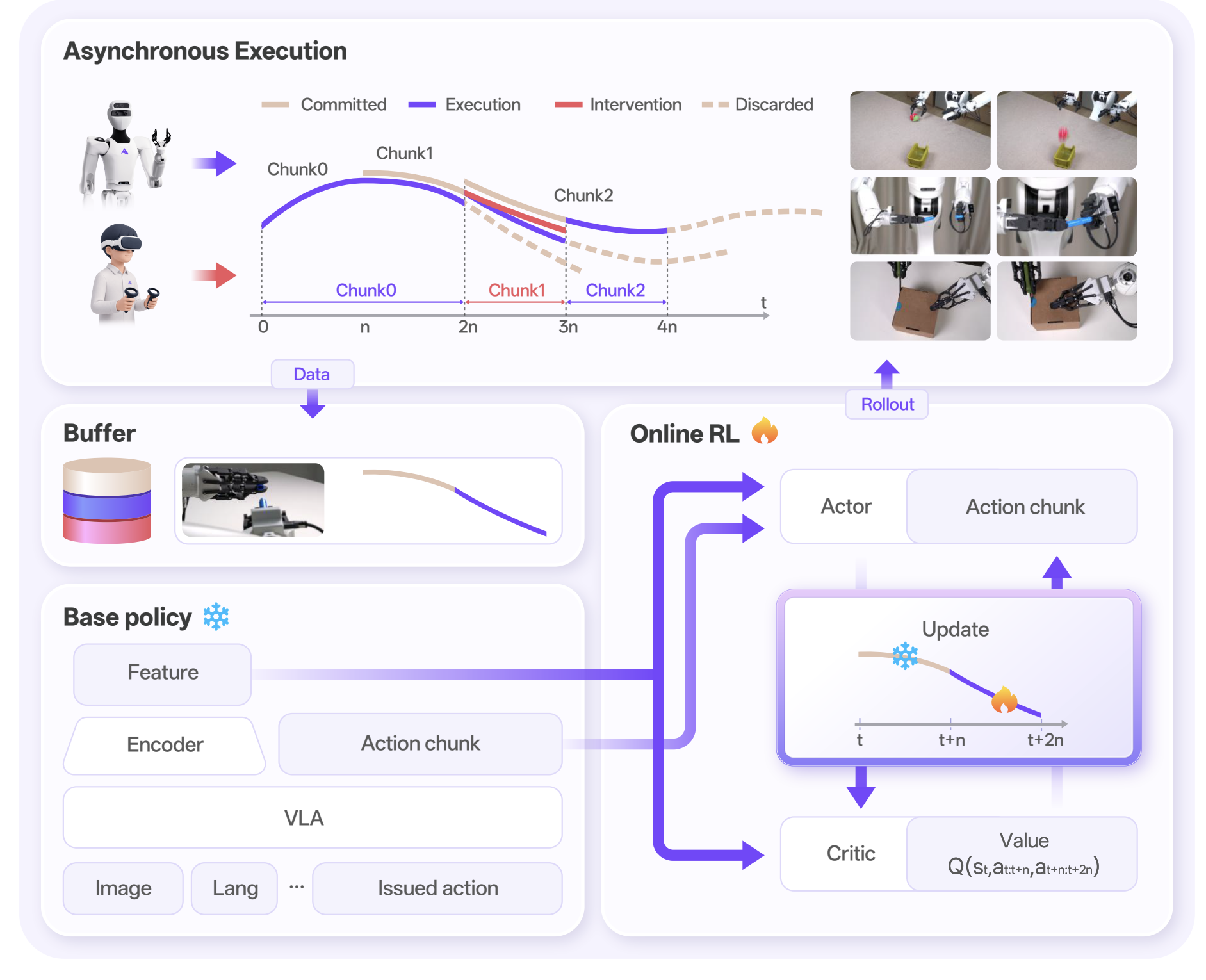
Astribot, a Chinese robotics startup, has unveiled SmoothRL, an online reinforcement learning framework designed to train policies during asynchronous execution – a growing reality for embodied AI deployments where inference and action run at different frequencies. The work, led by the company’s foundation model team, addresses a fundamental mismatch: when a robot receives new action chunks before previous ones finish, conventional RL that updates on entire chunks ends up crediting or blaming actions that were never actually executed. The framework partitions each action chunk into three regions – committed (already fixed), execution (actually performed), and discarded (overwritten by later inference) – and backpropagates gradients only through the execution region. This ensures that optimisation mirrors the robot’s real experience. SmoothRL also...
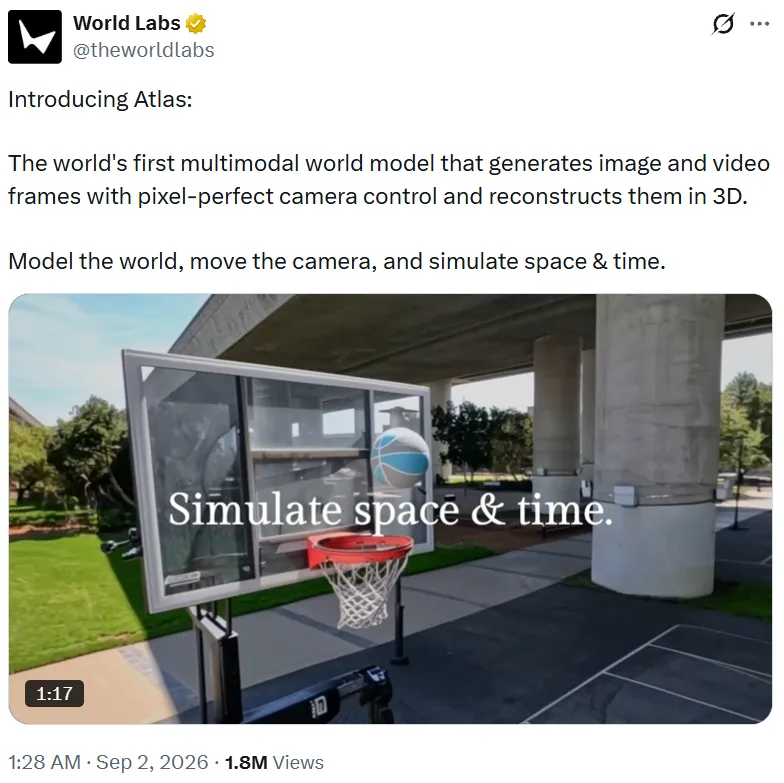
Fei-Fei Li’s startup World Labs has released Atlas, a next-generation world model billed as the first multimodal system capable of pixel-level camera-controllable image and video generation paired with native 3D scene reconstruction. Trained from scratch on text, image, video and 3D data, the so-called “omni model” unifies four distinct modalities within a single unified architecture. Its flagship innovation, termed “spatial context”, grounds each input image in a precise 3D coordinate space with explicit camera pose parameters. By treating geometric camera controls as native inputs, Atlas eliminates reliance on textual prompts to describe camera motion, letting users specify exact viewing angles and trajectories to generate up to 1440p-resolution videos with a maximum one-minute duration. World Labs frames the upgrade as letting...
China Telecom's TeleAI incubates embodied AI startup Gamma Robotics
China Telecom's Artificial Intelligence Research Institute (TeleAI) has incubated Gamma Robotics, an embodied AI company that has recently registered in Shanghai's Xuhui district and moved into Mosu Space, according to company information.
Gamma Robotics is an independent market-oriented entity invested by China Telecom Group and incubated by TeleAI. It will co-build a humanoid robot laboratory with TeleAI.
MIRACLE AUTOMATION's Jiangsu robot data center amasses PB-scale embodied AI data
MIRACLE AUTOMATION, the automotive equipment maker operating the Jiangsu Province Embodied Intelligent Robot Industrial Data Collection and Training Center, has accumulated nearly 20,000 hours and PB-scale multimodal embodied AI data, the company said.
The center has built 36 first-level application scenarios and 163 second-level segmented data-collection scenarios. MIRACLE AUTOMATION is seeking to translate its long-standing production-line experience into data and technology capabilities that can support the industrial deployment of embodied AI.
Shenzhen's YITA DYNAMICS raises over 100 mln yuan in seed funding
Shenzhen-based embodied intelligence operation platform and power system company YITA DYNAMICS said it has completed seed and seed-plus funding rounds totaling more than 100 million yuan ($14 million). The rounds were jointly invested by Matrix Partners China, SenseTime Guoxiang Capital, CCB International, L2F Light Source Entrepreneur Fund, Galbot and Fourier Intelligence. Founded in May 2026, YITA DYNAMICS is focused on building underlying infrastructure for embodied intelligence hardware and has developed compliant force-controlled dual arms and high-performance joint modules.
Robot Warriors Challenge held in Beijing E-Town with 29 teams competing
The autumn edition of the 2026 Robot Warriors Challenge was held on Oct. 18 at the Nanhaizi Park waterfront plaza in the Beijing Economic-Technological Development Area, also known as Beijing E-Town, with 29 teams from across China taking part. As an independent event IP created by Beijing E-Town, the competition aims to push robots beyond running and jumping demonstrations toward real-world operational tasks. MirrorMe Technology, GENISOM AI Milk Long Team B, Xingyuan Dynamics Team A and AK Brothers Team B won their respective categories.
AGIBOT has partnered with Wuhan Culture and Tourism Group and Zhongyun Weixun to build the world's first smart retail warehouse operated by full-size bipedal humanoid robots. Its Expedition A3 Ultra robot has begun offering self-service retail services at Jiangyushang on the Wuhan riverside. The project has completed 827 orders in its phase to date, with a robot grasping success rate of more than 97%.
Tesla's third-generation Optimus robot ready for mass production
Tesla's third-generation Optimus humanoid robot is ready for mass production, refocusing market attention on the sector. Artificial intelligence is moving from the digital world into physical space, with humanoid robots viewed as one of the most important embodiments of physical AI.
China launches National Data Group in Xiong'an to boost data sector
China established National Data Group Co., Ltd. in Xiong'an New Area, Hebei province, on Oct. 20. The group is a central state-owned enterprise whose main responsibility is the development and utilization of data resources, with headquarters in Xiong'an.
The group was set up to advance data resource development and utilization, unlock the value of data elements, support artificial intelligence development and foster the data industry ecosystem, according to the company. After its establishment, it will strengthen central-local coordination and industrial collaboration under the guidance of relevant authorities, promote shared capabilities, experience and business expansion, and work to grow data value, strengthen the data industry and improve the data ecosystem.
Galileo's E1 quadruped robot wins gold at 2026 Canton Fair design awards
Galileo (Tianjin) Technology Co., Ltd.'s E1 series intelligent bionic quadruped robot has won a gold award at the 2026 Canton Fair Design Innovation Award (CF Award). The E1 series is fully self-developed by Galileo, with its complete machine structure, integrated servo joints and bionic gait and posture control algorithms 100% independently controllable. It holds more than 300 independent intellectual property rights. Equipped with all-terrain adaptive posture adjustment and force-sensing technology, the robot can autonomously identify unstructured complex terrain such as stairs, ramps and rubble. It is designed for applications including petrochemicals, power operation and maintenance, rail transit, emergency rescue and security patrol inspection.
RobotHOT brings China & Global Robotics Insights. Explore robotics, embodied‑intelligence updates, startup news and industry analysis for professionals worldwide.


 AGIBOT
 Figure AI
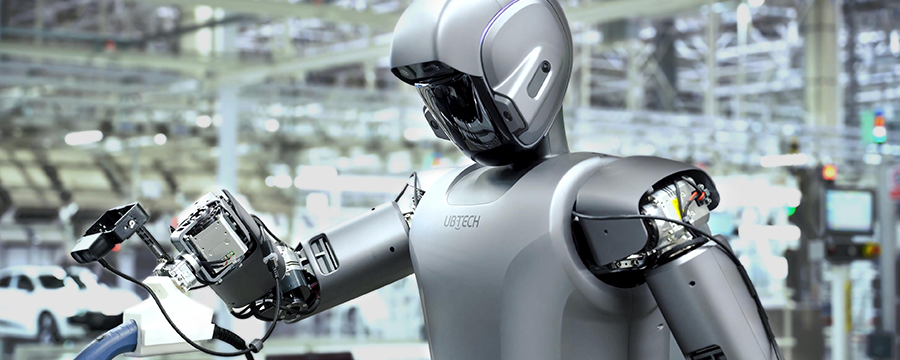 UBTECH