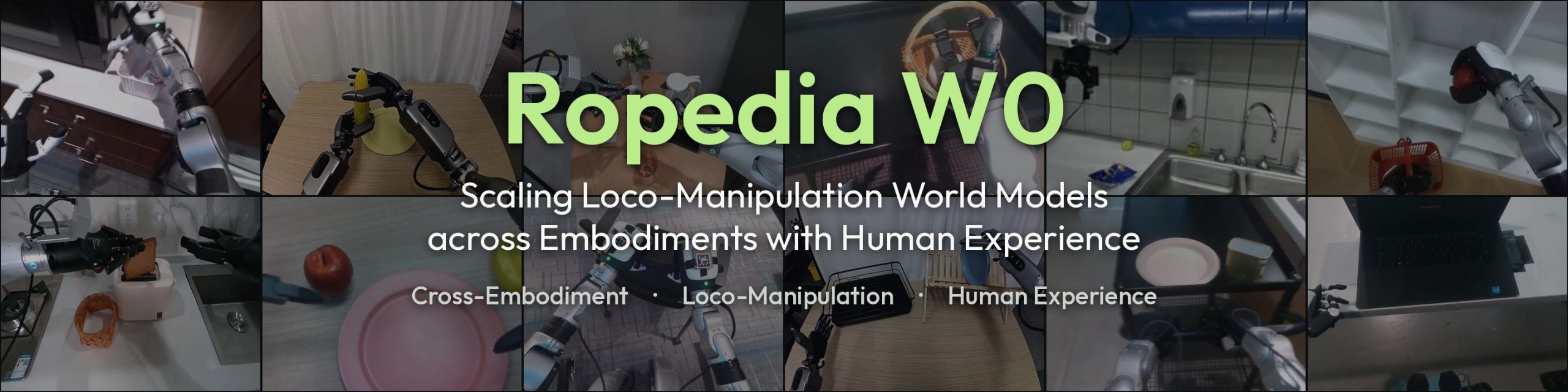
Singapore-based embodied AI startup Ropedia said it has released Ropedia W0, a cross-embodiment mobile manipulation world model developed with researchers from Nanyang Technological University, Duke University, the University of California San Diego and Tsinghua University. The model uses a unified action representation to predict first-person future scene changes after actions by humans, robotic arms and humanoid robots, allowing one model to cover different robot embodiments. Ropedia said W0 ranked first across five evaluation benchmarks and 11 tests. In the Ψ₀ and ω-HOME benchmarks, W0 outperformed comparison models trained on full data without post-training, the company said. On the DreamDojo official benchmark, W0 exceeded DreamDojo trained on full data using only 1% of post-training data. The model takes initial frames, text...
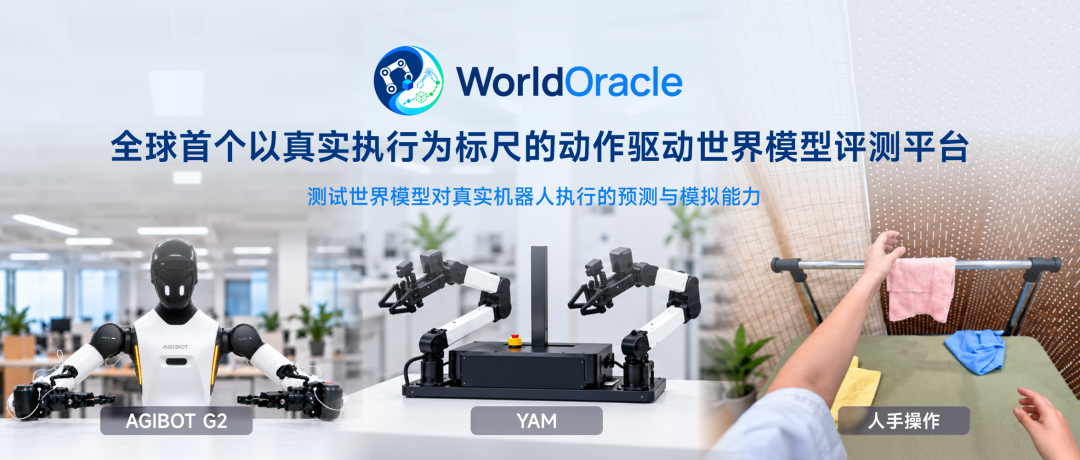
WorldOracle, which its developers describe as the first benchmark for action-driven world models that uses real-world execution as the yardstick, launched on Oct. 16 and opened evaluation submissions to developers. The project was jointly completed by researchers from AGIBOT, NVIDIA, Princeton University, the University of Texas at Austin and the University of Toronto, combining world-model developers with benchmark researchers. The platform addresses a question the industry has lacked a benchmark to answer directly: given a set of actions, how far is a model’s predicted future from what actually happens? WorldOracle defines this as “Execution Coherence.” The researchers said a reliable world model must withstand three stress tests: causal obedience, meaning it must follow the given action sequence, including wrong or...
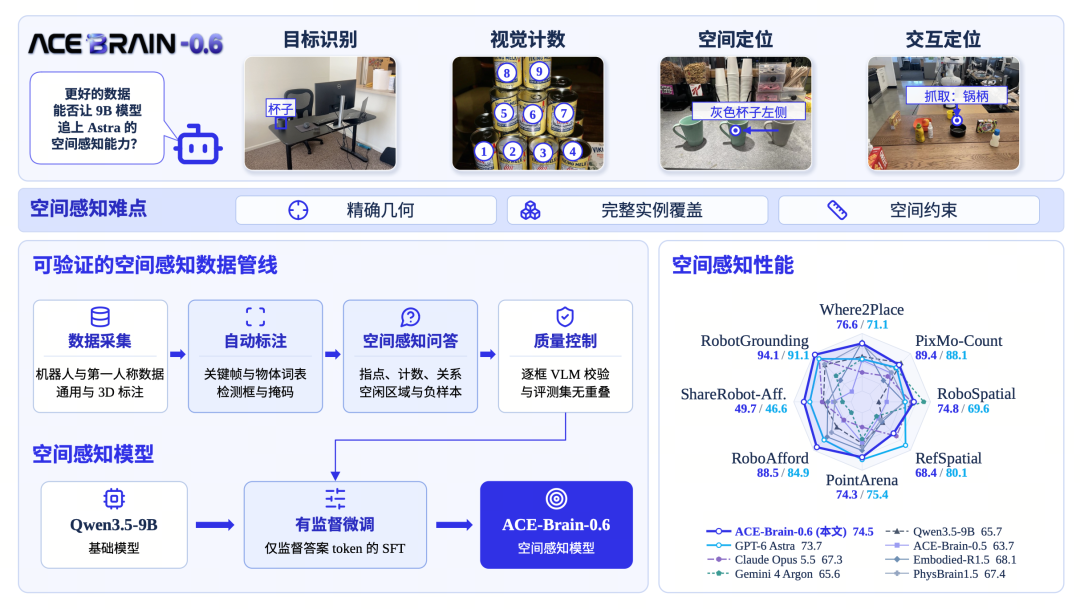
ACE Robotics has released a visual-spatial grounding-enhanced embodied foundation model, ACE-Brain-0.6, and said the 9-billion-parameter system outperformed OpenAI’s GPT-6 Astra on six of eight grounding benchmarks. The company said the model is designed to improve target identification, spatial localization and interaction anchoring—capabilities it described as critical for translating high-level task reasoning into reliable physical action. It builds on the earlier ACE-Brain-0.5 and focuses on visual grounding: identifying target objects, interaction areas and spatial references, and linking them to position, displacement and motion parameters. In seven public benchmarks, ACE-Brain-0.6 averaged 74.53 points versus 73.68 for GPT-6 Astra, according to the company. It said the model beat GPT-6 Astra on six of eight evaluations, including Where2Place (76.55 vs. 71.10), PixMo-Count (89.41 vs....
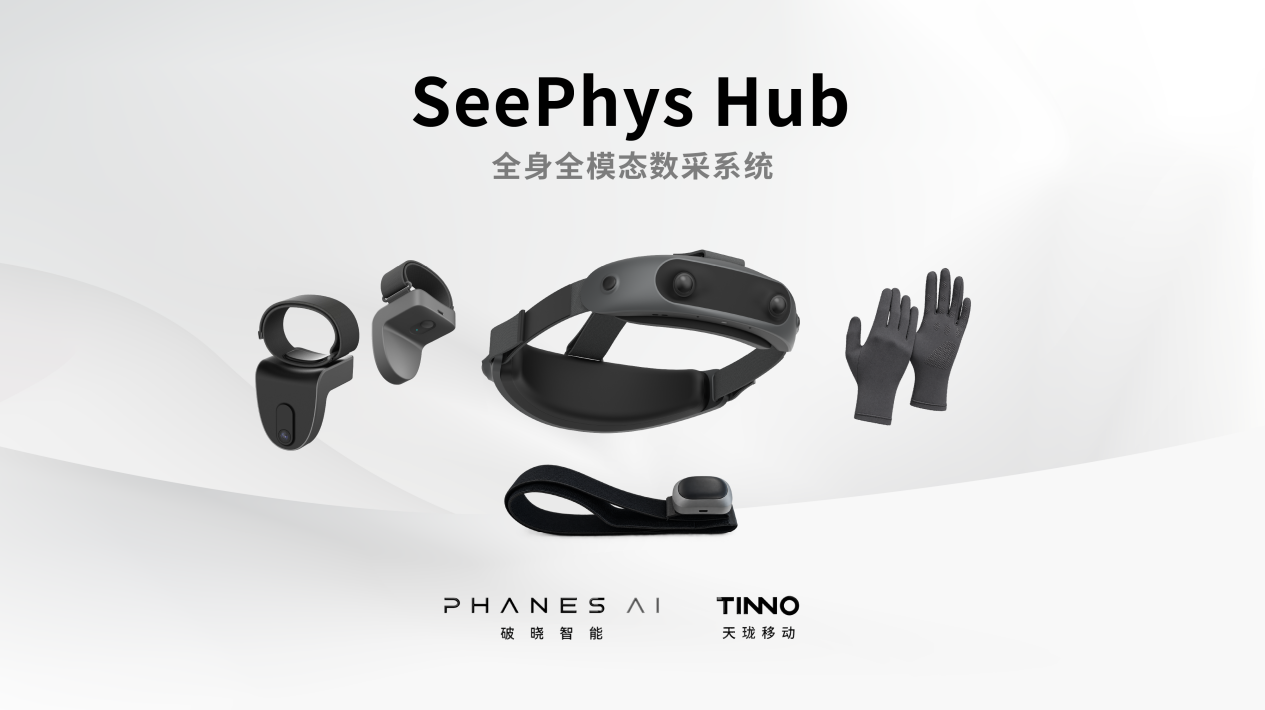
Chinese embodied AI startup PHANES AI, in partnership with Tinno Mobile, launched SeePhys Hub, a wearable full-body multimodal data collection system for robot training. The system comprises a four-camera headband, two wrist bands, three waist-and-leg motion trackers and a tactile glove. PHANES said it can simultaneously collect first-person 360-degree visual data, full hand data including hand pose tracking and high-density touch, and full-body motion data including pose and force. The launch comes as robot data collection has moved from teleoperation to UMI and Ego, with devices becoming lighter and collection simpler. But PHANES said that simplification has come at a cost: Ego can record what the hands are doing, but it struggles to fully capture whole-body movement and cannot sense...
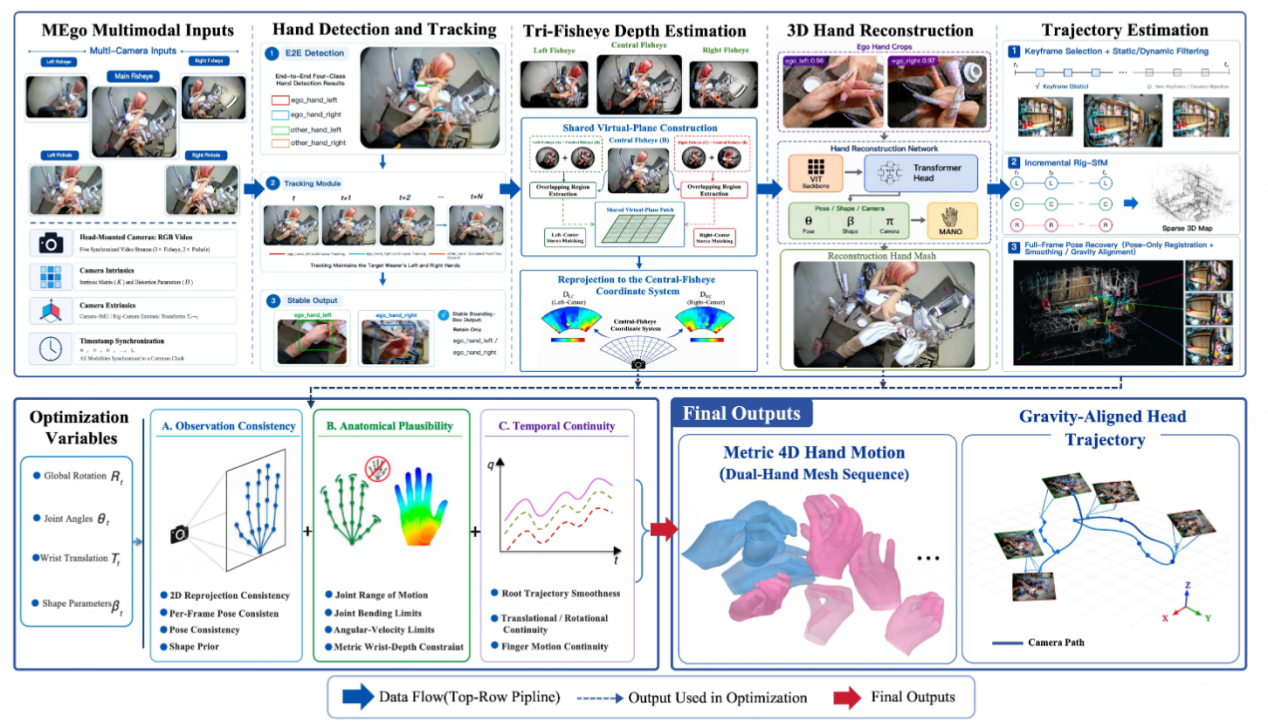
Chinese researchers said they have developed MEgoVista, a framework that converts first-person, or ego, video into 4D motion data for training embodied AI models, addressing a gap between the growing supply of ego video and the precise motion data robots need. The paper was produced by Maniformer Technology, Northwestern Polytechnical University and Xi’an Jiaotong University. Ego video has become an important source of pretraining data because it can be captured in homes, workplaces and other real environments rather than specialized laboratories. But recording an action does not automatically produce usable 4D data, meaning three-dimensional motion over time. Systems must identify the wearer’s hands, reconstruct finger poses and measure how far the hands move in space. MEgoVista is designed as an...
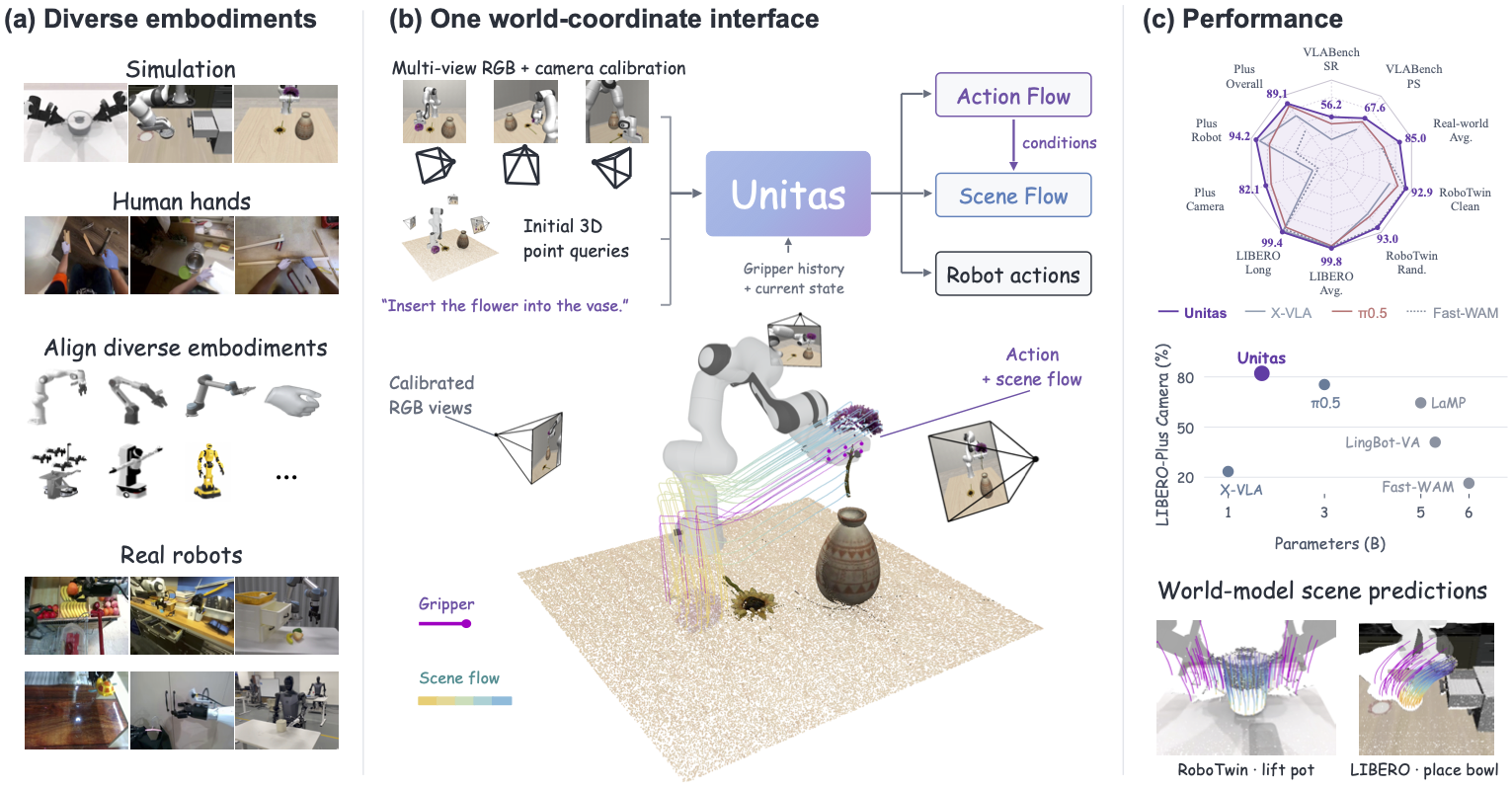
DexForce, an Chinese embodied-AI developer, has unveiled UNITAS, a 3D-native world action model for robot manipulation, saying it is designed to give robots a unified representation of the physical world. The company described UNITAS as the first robot-task-native 3D world model. UNITAS is built on a central premise: just as large language models unify diverse knowledge through text, embodied AI needs a native space for physical experience. DexForce argues that space should be the 3D physical world itself, rather than 2D images or latent features from which 3D relationships must be inferred. The model jointly represents observation, action and scene change in a single 3D coordinate system. Observation corresponds to the 3D positions of objects; action flow corresponds to the...
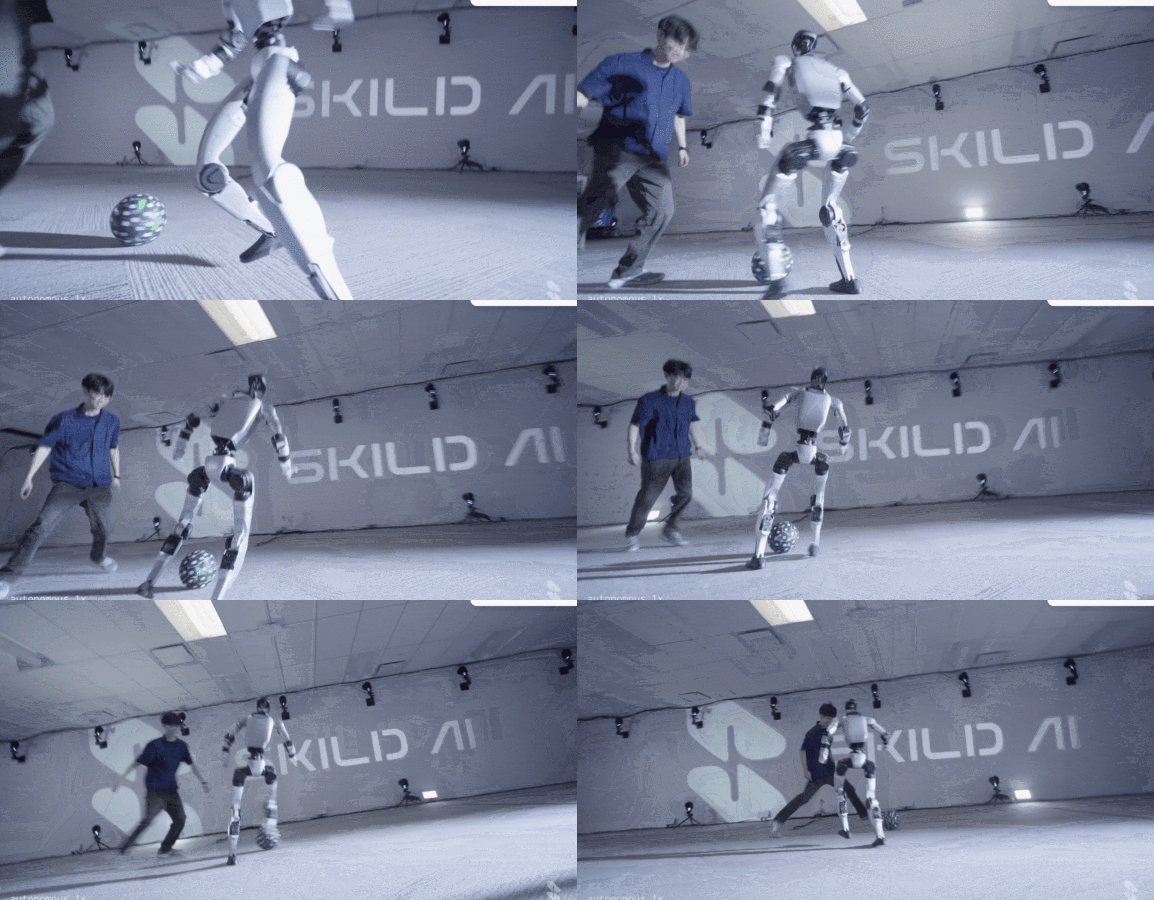
Skild AI has unveiled a new post-training approach for embodied intelligence that uses physical self-play to teach humanoid robots highly dynamic skills. In a demonstration centered on soccer, the company showed a robot defending, dribbling past opponents and scoring—abilities acquired largely through self-competition rather than hand-coded rewards. The robot tracks the ball closely and denies the human opponent possession. After briefly losing focus and conceding an interception, it recovers, turns, runs with the ball and finishes into the goal. The significance is not robot soccer itself, but the use of physical self-play. Most robot foundation models are pretrained on human data. Skild’s S1 model, released last month, follows that pattern and can learn tasks from in-context demonstrations, similar to prompt-based...
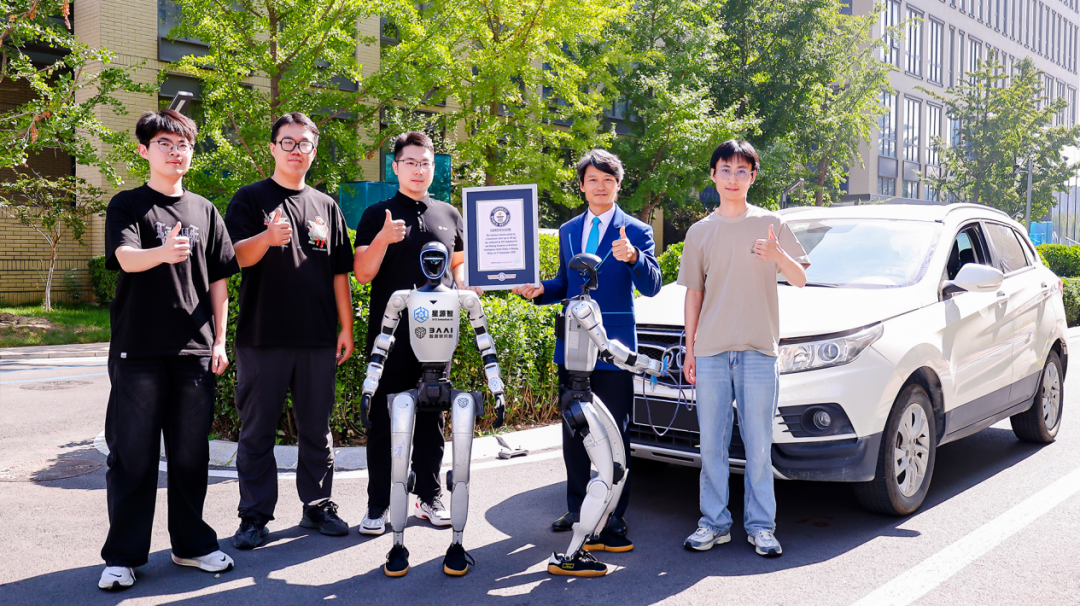
A humanoid robot weighing 37.15 kg pulled a 1,434 kg car 9.92 metres on two legs in Beijing, setting a Guinness World Record for the heaviest vehicle pulled by a humanoid robot under 40 kg, its developers said. The robot was powered by Thor, a whole-body control model jointly developed by Chinese robotics firm XYZ Embodied AI Co. (XYZ), Ltd. and the Beijing Academy of Artificial Intelligence (BAAI). The challenge took place in Beijing’s Yizhuang. Developers said the feat was not merely a display of brute force. The core difficulty was maintaining balance and coordinating the whole body while withstanding a large, changing external force. Unlike running, jumping or dancing, pulling a car is a strong-interaction task: the robot’s movement...
Most science fiction readers know that Isaac Asimov introduced his Three Laws of Robotics in the March 1942 issue of Astounding Science Fiction and later republished them in I, Robot. In an age when AI seems to threaten civilization itself, those laws feel more prescient than ever: a robot may not injure a human or allow harm through inaction; it must obey human orders unless they conflict with the First Law; and it must protect itself unless that conflicts with the first two. Yet almost no generative-AI company has embedded even the First Law into its core algorithms. Only Advanced Robotic Technologies Inc., which applies generative AI to large-scale industrial manufacturing, has adopted it as a foundational software principle. Without...
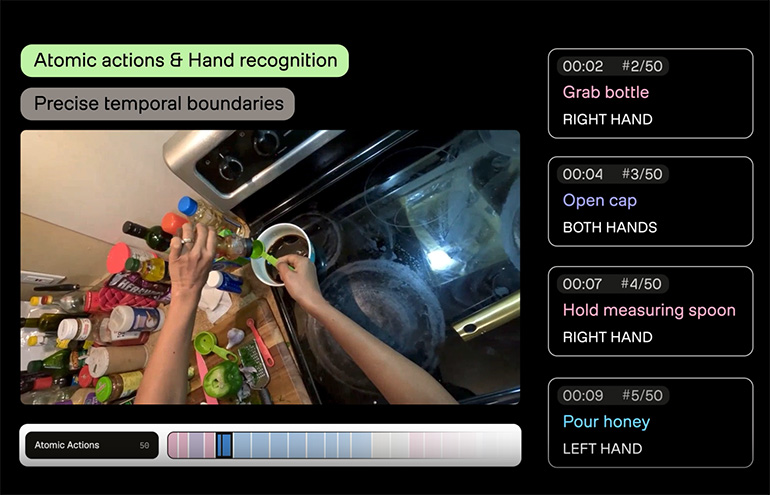
TwelveLabs said its latest video-understanding model, Pegasus 1.6, can now analyze first-person footage, more accurately identify people and objects, and process still images through the same API used for video, broadening its use for robotics, media and security customers. The model builds on Pegasus’s core function: converting video into structured, searchable text such as summaries, tags and timestamps that applications can use. The company said the biggest addition is support for egocentric video — footage shot from the perspective of a person or machine, including body cameras and robot-mounted cameras. Such data is increasingly used by robotics and embodied-AI teams for labeling and training, a category TwelveLabs previously did not support well. Pegasus 1.6 also improves entity recognition, making it...
China Telecom's TeleAI incubates embodied AI startup Gamma Robotics
China Telecom's Artificial Intelligence Research Institute (TeleAI) has incubated Gamma Robotics, an embodied AI company that has recently registered in Shanghai's Xuhui district and moved into Mosu Space, according to company information.
Gamma Robotics is an independent market-oriented entity invested by China Telecom Group and incubated by TeleAI. It will co-build a humanoid robot laboratory with TeleAI.
MIRACLE AUTOMATION's Jiangsu robot data center amasses PB-scale embodied AI data
MIRACLE AUTOMATION, the automotive equipment maker operating the Jiangsu Province Embodied Intelligent Robot Industrial Data Collection and Training Center, has accumulated nearly 20,000 hours and PB-scale multimodal embodied AI data, the company said.
The center has built 36 first-level application scenarios and 163 second-level segmented data-collection scenarios. MIRACLE AUTOMATION is seeking to translate its long-standing production-line experience into data and technology capabilities that can support the industrial deployment of embodied AI.
Shenzhen's YITA DYNAMICS raises over 100 mln yuan in seed funding
Shenzhen-based embodied intelligence operation platform and power system company YITA DYNAMICS said it has completed seed and seed-plus funding rounds totaling more than 100 million yuan ($14 million). The rounds were jointly invested by Matrix Partners China, SenseTime Guoxiang Capital, CCB International, L2F Light Source Entrepreneur Fund, Galbot and Fourier Intelligence. Founded in May 2026, YITA DYNAMICS is focused on building underlying infrastructure for embodied intelligence hardware and has developed compliant force-controlled dual arms and high-performance joint modules.
Robot Warriors Challenge held in Beijing E-Town with 29 teams competing
The autumn edition of the 2026 Robot Warriors Challenge was held on Oct. 18 at the Nanhaizi Park waterfront plaza in the Beijing Economic-Technological Development Area, also known as Beijing E-Town, with 29 teams from across China taking part. As an independent event IP created by Beijing E-Town, the competition aims to push robots beyond running and jumping demonstrations toward real-world operational tasks. MirrorMe Technology, GENISOM AI Milk Long Team B, Xingyuan Dynamics Team A and AK Brothers Team B won their respective categories.
AGIBOT has partnered with Wuhan Culture and Tourism Group and Zhongyun Weixun to build the world's first smart retail warehouse operated by full-size bipedal humanoid robots. Its Expedition A3 Ultra robot has begun offering self-service retail services at Jiangyushang on the Wuhan riverside. The project has completed 827 orders in its phase to date, with a robot grasping success rate of more than 97%.
Tesla's third-generation Optimus robot ready for mass production
Tesla's third-generation Optimus humanoid robot is ready for mass production, refocusing market attention on the sector. Artificial intelligence is moving from the digital world into physical space, with humanoid robots viewed as one of the most important embodiments of physical AI.
China launches National Data Group in Xiong'an to boost data sector
China established National Data Group Co., Ltd. in Xiong'an New Area, Hebei province, on Oct. 20. The group is a central state-owned enterprise whose main responsibility is the development and utilization of data resources, with headquarters in Xiong'an.
The group was set up to advance data resource development and utilization, unlock the value of data elements, support artificial intelligence development and foster the data industry ecosystem, according to the company. After its establishment, it will strengthen central-local coordination and industrial collaboration under the guidance of relevant authorities, promote shared capabilities, experience and business expansion, and work to grow data value, strengthen the data industry and improve the data ecosystem.
Galileo's E1 quadruped robot wins gold at 2026 Canton Fair design awards
Galileo (Tianjin) Technology Co., Ltd.'s E1 series intelligent bionic quadruped robot has won a gold award at the 2026 Canton Fair Design Innovation Award (CF Award). The E1 series is fully self-developed by Galileo, with its complete machine structure, integrated servo joints and bionic gait and posture control algorithms 100% independently controllable. It holds more than 300 independent intellectual property rights. Equipped with all-terrain adaptive posture adjustment and force-sensing technology, the robot can autonomously identify unstructured complex terrain such as stairs, ramps and rubble. It is designed for applications including petrochemicals, power operation and maintenance, rail transit, emergency rescue and security patrol inspection.
RobotHOT brings China & Global Robotics Insights. Explore robotics, embodied‑intelligence updates, startup news and industry analysis for professionals worldwide.
 AGIBOT
 Figure AI
 UBTECH