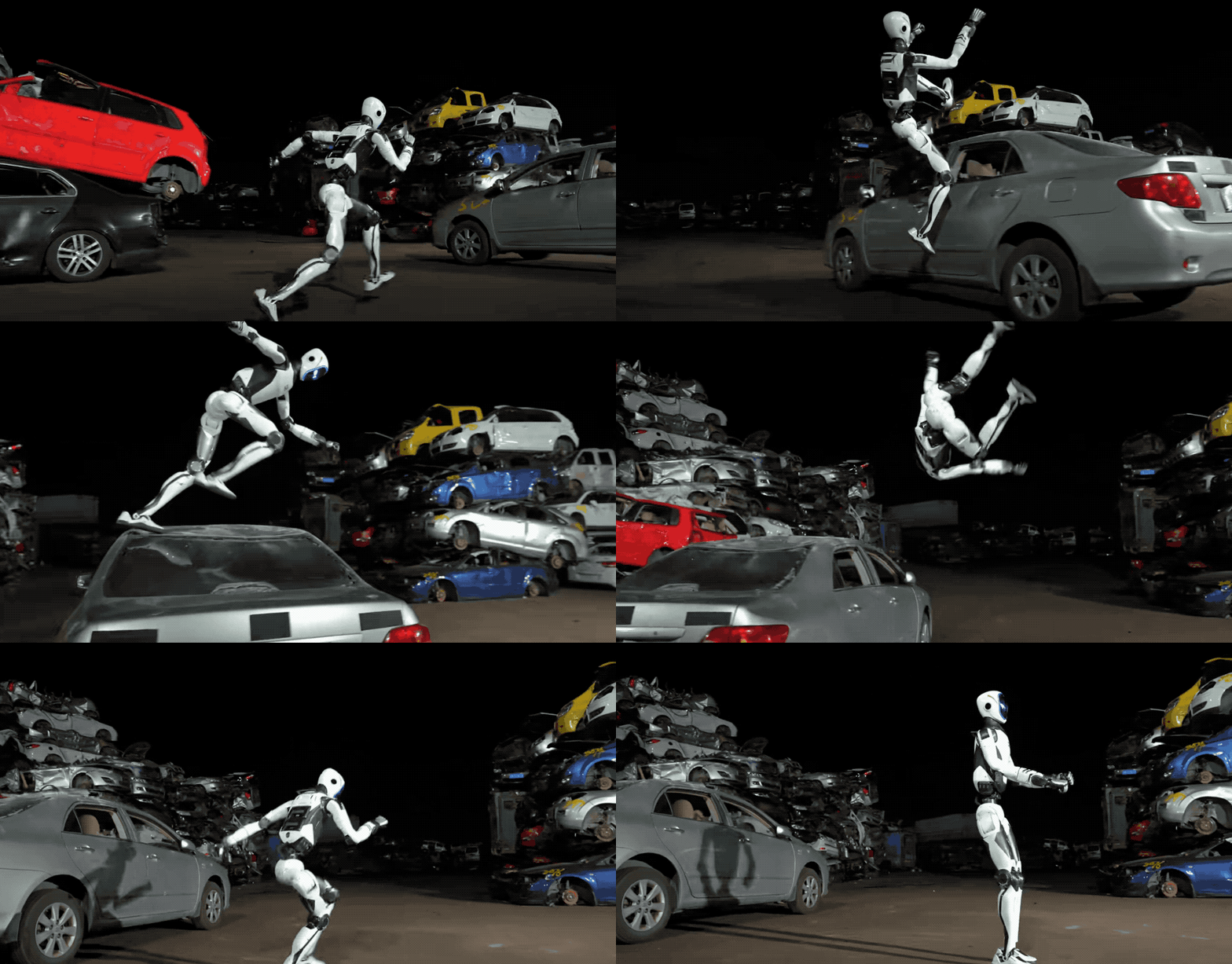
Unitree Technology has unveiled the H2-X, a humanoid robot the Chinese company is presenting as capable of martial-arts-style movement and emergency response, according to a company video. The footage shows the robot, which Unitree says can run for up to about eight hours, carrying out high-impact maneuvers: denting a car door and front hood, vaulting onto a vehicle roof, landing from a 4-meter platform with a forward roll and recovering after repeated airborne kicks. In staged rescue and protection scenes, the H2-X lifts the front of a car to free a trapped mannequin, dives to push another mannequin away from an oncoming vehicle and intervenes against an attacker threatening a person. Unitree said the combination of long endurance and burst-power...
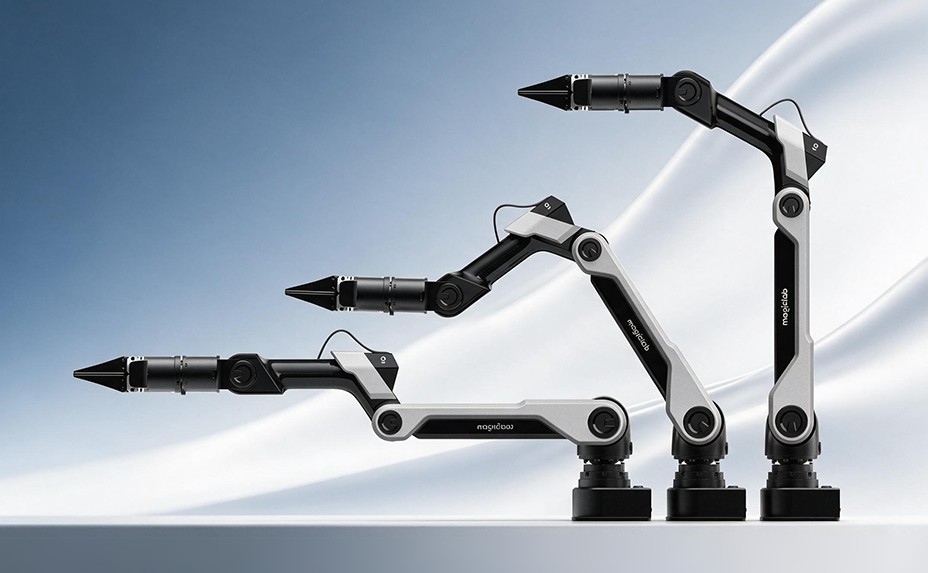
Magic Atom said on Oct. 19 that it has launched the MagicArm R1, a flexible biomimetic force-controlled robotic arm, and built a desktop robotic-arm solution around a vision-language-action (VLA) embodied AI model. The solution uses the MagicArm R1 as its physical platform and runs on EchoPolicy-0, the company’s embodied AI model, which ranked first on the MolmoSpaces Combined leaderboard with a 75.4% average success rate in robot manipulation. MolmoSpaces is a global zero-shot embodied AI benchmark initiated by the Allen Institute for AI (AI2). Magic Atom said the system integrates visual perception, intelligent decision-making, motion control, data collection, model training and real-robot reinforcement learning into a single hardware-software platform. It is aimed at robot algorithm research, model training, intelligent operation...
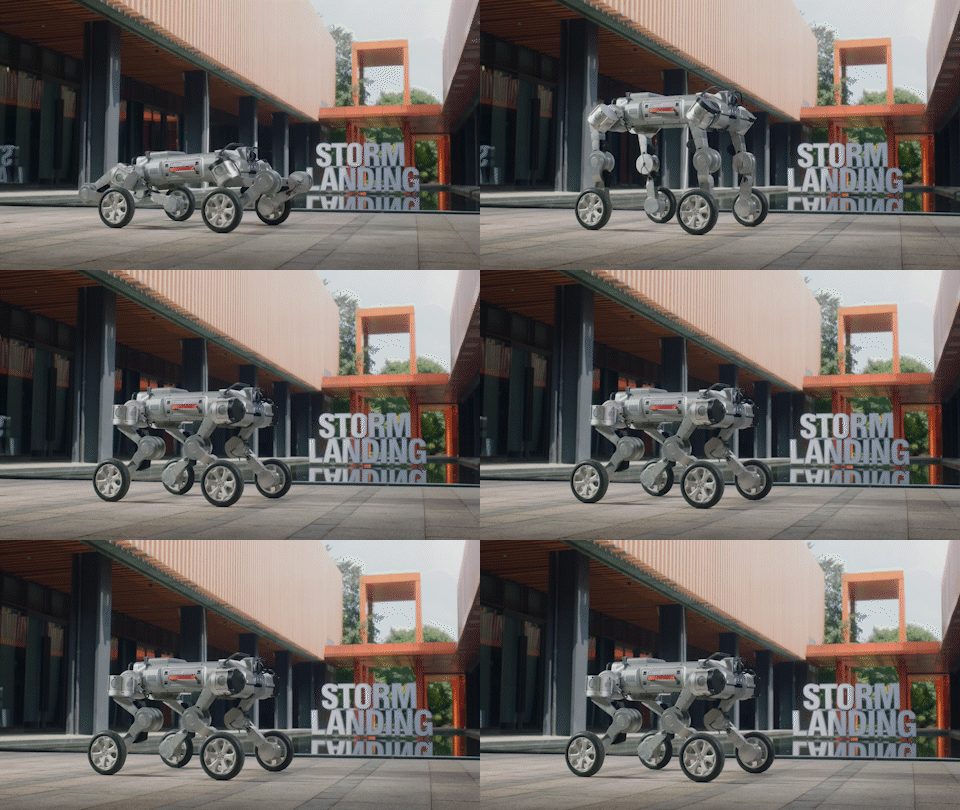
Recently, Galileo Robotics officially launched its all-terrain mobile intelligence platform—the Galileo X Embodied Ground Mobility System. Leveraging its proprietary multi-form adaptive switching technology, the system breaks through the scene- and form-related barriers of traditional robots, effectively addressing the pain points of automation implementation in the industry and accelerating the commercialization of embodied intelligence worldwide. For a long time, poor environmental adaptability has been the core bottleneck hindering the widespread adoption of mobile robots globally. Traditional wheeled, tracked, and quadruped robots each have their own shortcomings and cannot simultaneously meet the diverse demands of high-precision indoor transport, long-distance heavy-load transport outdoors, and obstacle navigation across complex terrain. The industry generally requires the procurement of multiple types of robots to work in...
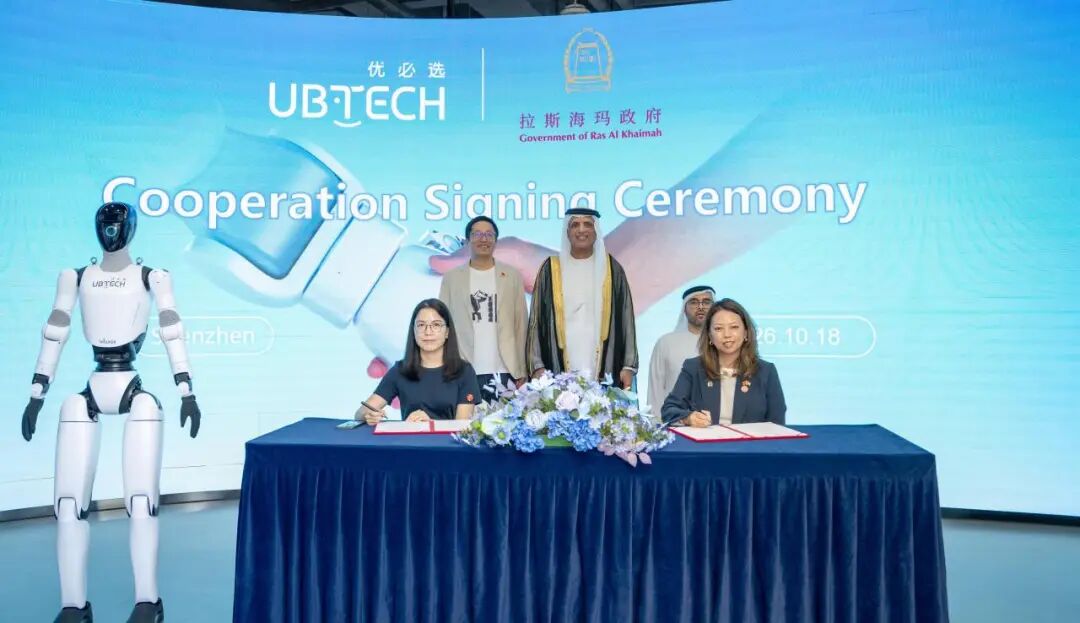
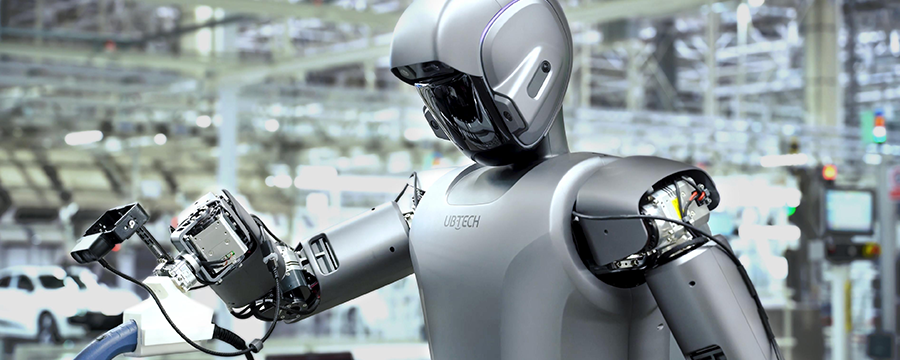
UBTECH Robotics has signed a strategic memorandum of understanding with the Government of Ras Al Khaimah’s Office of International Relations to establish a comprehensive cooperation framework for advanced humanoid robot research and development, real-world testing and system deployment, and to advance development and application of humanoid robot technologies suited to the Gulf region. The signing was attended by Sheikh Saud bin Saqr Al Qasimi, Supreme Council Member and Ruler of Ras Al Khaimah; Mohamed Abdulrahman Al Hawi, Undersecretary of the UAE Ministry of Investment; Ouyang Yongqin, advisor for Greater China affairs at the Ras Al Khaimah Ruler’s Office; Zhang Ju, chief financial officer of UBTECH Robotics; and Chen Xiaoyun, overseas sales director of UBTECH Robotics. Under the plan, UBTECH will...
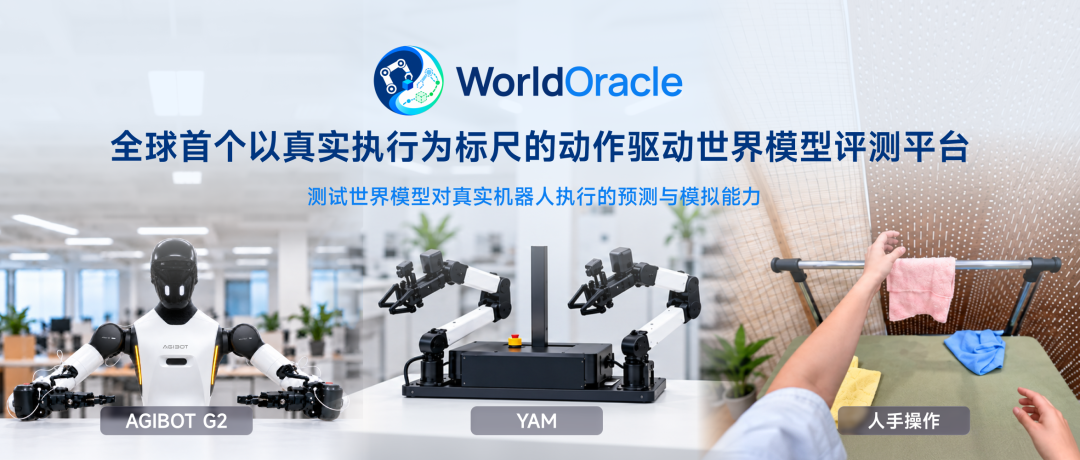
WorldOracle, which its developers describe as the first benchmark for action-driven world models that uses real-world execution as the yardstick, launched on Oct. 16 and opened evaluation submissions to developers. The project was jointly completed by researchers from AGIBOT, NVIDIA, Princeton University, the University of Texas at Austin and the University of Toronto, combining world-model developers with benchmark researchers. The platform addresses a question the industry has lacked a benchmark to answer directly: given a set of actions, how far is a model’s predicted future from what actually happens? WorldOracle defines this as “Execution Coherence.” The researchers said a reliable world model must withstand three stress tests: causal obedience, meaning it must follow the given action sequence, including wrong or...
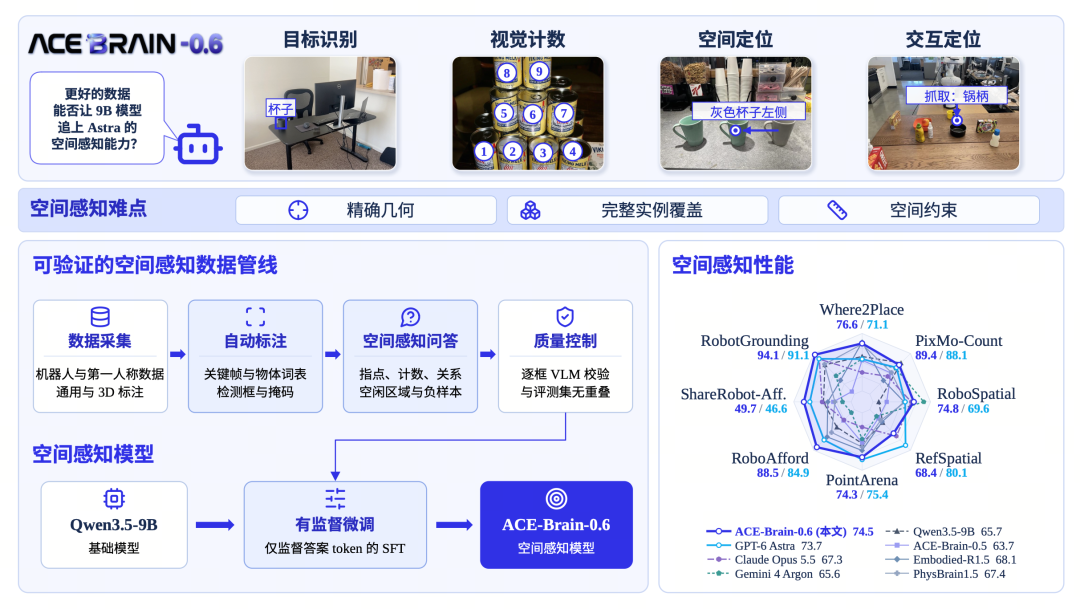
ACE Robotics has released a visual-spatial grounding-enhanced embodied foundation model, ACE-Brain-0.6, and said the 9-billion-parameter system outperformed OpenAI’s GPT-6 Astra on six of eight grounding benchmarks. The company said the model is designed to improve target identification, spatial localization and interaction anchoring—capabilities it described as critical for translating high-level task reasoning into reliable physical action. It builds on the earlier ACE-Brain-0.5 and focuses on visual grounding: identifying target objects, interaction areas and spatial references, and linking them to position, displacement and motion parameters. In seven public benchmarks, ACE-Brain-0.6 averaged 74.53 points versus 73.68 for GPT-6 Astra, according to the company. It said the model beat GPT-6 Astra on six of eight evaluations, including Where2Place (76.55 vs. 71.10), PixMo-Count (89.41 vs....
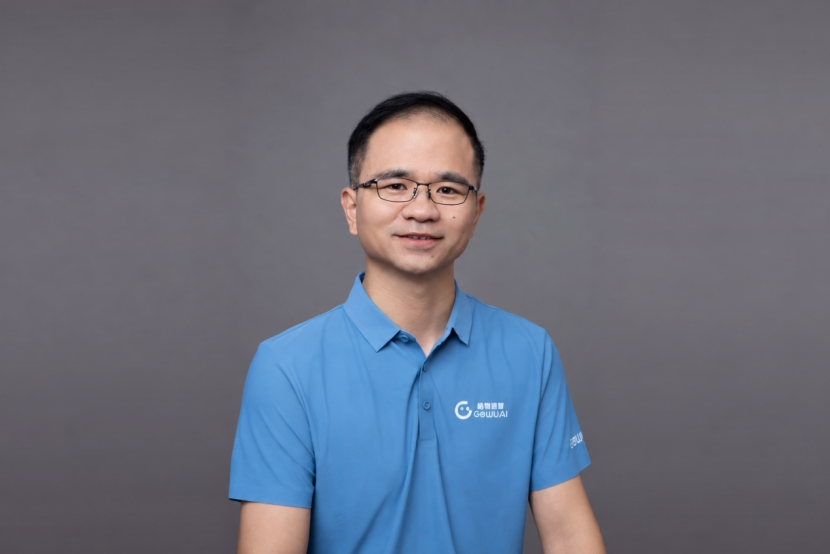
GEWUAI, a Chinese embodied brain company, has completed an angel financing round of nearly 100 million yuan, the company said. Investors included Peak Investment, Hongfu Asset, Hangzhou Capital, Hangzhou Talent Group, a provincial-level embodied AI industrial investment platform and several leading listed companies. Proceeds will be used mainly for large-scale pre-training and technology iteration of its Physical Inversion World Model, hardware and robot body development, talent recruitment and team expansion, and PoC validation and real-world data collection across multiple scenarios. Maple Pledge served as exclusive private equity financing adviser for the round. GEWUAI is based in Hangzhou and was founded in August 2026. Its first round was backed by three Hangzhou municipal-level funds: Hangzhou Runmiao Fund, Hangzhou Disruptive Technology Transformation...
Shenzhen-based robot brain developer Ruoyu Technology said it has raised more than 100 million yuan in a Pre-A funding round led by Sunway Communication, with Jinmu Capital, Qindao Capital, Huanghai Capital and Zhongchuang Capital participating. The proceeds will mainly fund upgrades to its Ruoyu Jiutian robot brain and expand its ecosystem partnerships, the company said. Founder and CEO Sun Teng is a serial entrepreneur whose research focuses on multimedia computing. Founder and Chairman Nie Liqiang is director of the Information Department at HIT Shenzhen. Co-founder and Chief Scientist Zhang Min is specially appointed assistant to the president of HIT Shenzhen, dean of the Institute of Computing and Intelligence, and a professor at the School of Computer Science and the Institute...
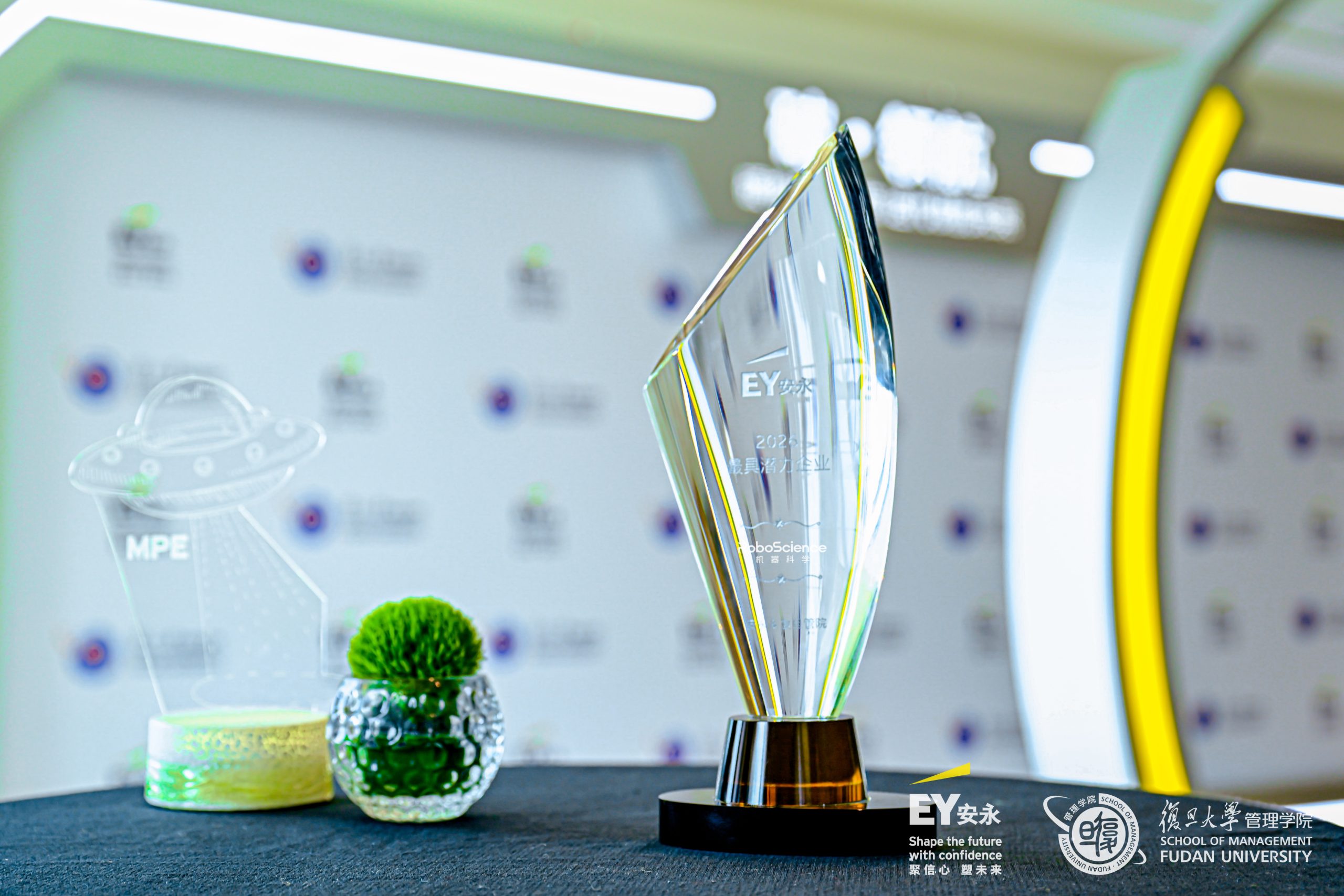
EY and Fudan University unveiled the winners of the 2026 Most Promising Enterprises awards, an annual selection programme themed “Breakthrough · Forging Ahead — Shatter shackles with hardcore innovation, iterate and pilot the future”. The initiative targets homegrown hard-tech innovators that deliver tangible commercialisation results, balancing technological breakthrough capacity with industrial influence. RoboScience, the Chinese embodied AI firm, was named a 2026 EY Most Promising Seed Enterprise for its leading robotics technology portfolio. Embodied artificial intelligence is moving toward large-scale commercial deployment as a key driver of new-quality productivity, addressing real-world industrial and societal pain points. For embodied AI developers, long-term potential lies not merely in completed task benchmarks, but in the model’s capability to adapt across different robot hardware...
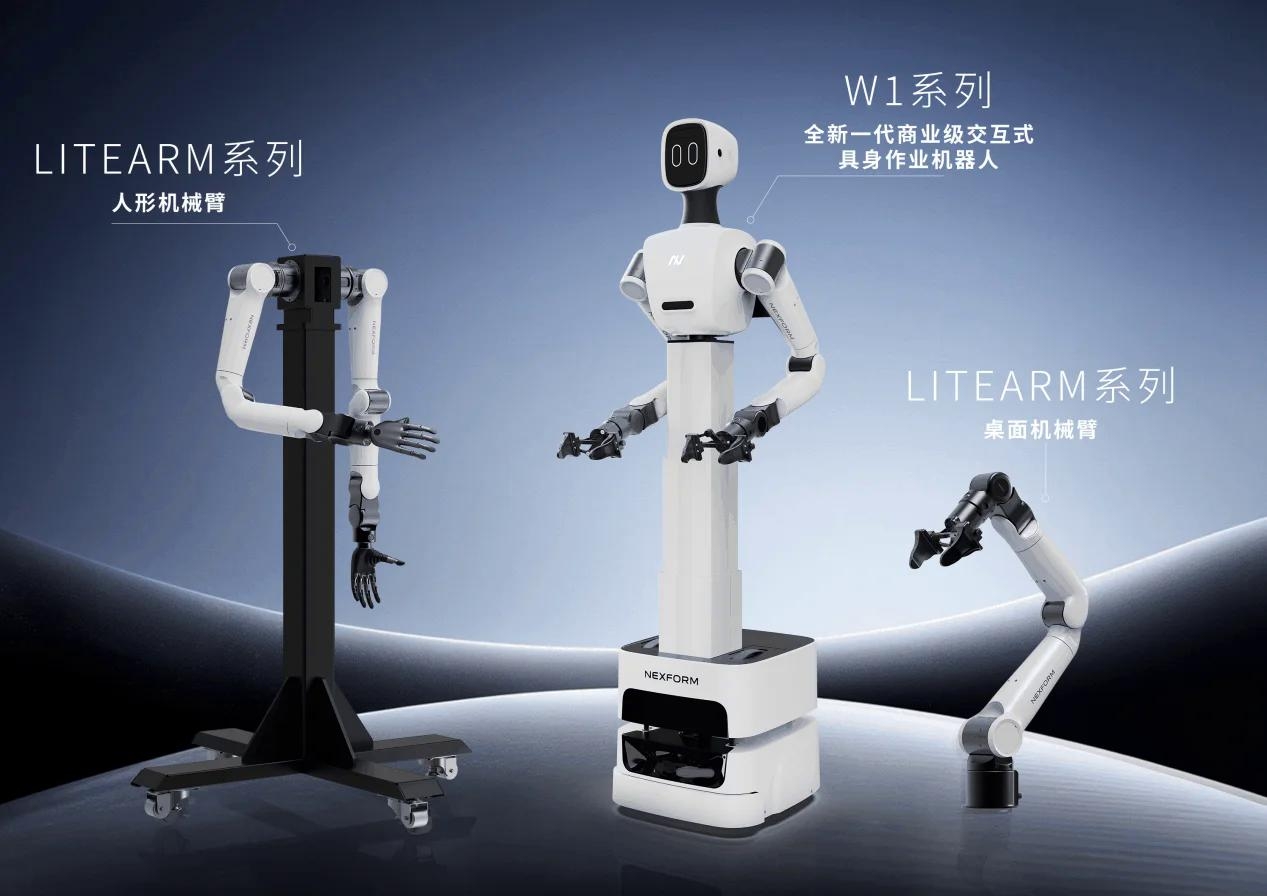
NEXFORM, a Zhejiang-based physical artificial general intelligence (AGI) company, said it has completed a seed round worth tens of millions of yuan. Investors included Gobi Partners, Zheda Youchuang and others. Founded in 2023, NEXFORM is led by an expert team from the Robotics Institute of Zhejiang University and was incubated by the Tianmu Laboratory at Zhejiang University’s Xinchang Joint Innovation Center. It focuses on general-purpose embodied robots, key components and embodied intelligence application solutions. Its products include the SE seven-axis robotic arm and W1 commercial-grade interactive embodied operation robot. NEXFORM has signed cooperation agreements with several hotel groups and property management companies, with cumulative contract value reaching several hundred million yuan and covering more than 100 million square meters of...
China Telecom's TeleAI incubates embodied AI startup Gamma Robotics
China Telecom's Artificial Intelligence Research Institute (TeleAI) has incubated Gamma Robotics, an embodied AI company that has recently registered in Shanghai's Xuhui district and moved into Mosu Space, according to company information.
Gamma Robotics is an independent market-oriented entity invested by China Telecom Group and incubated by TeleAI. It will co-build a humanoid robot laboratory with TeleAI.
MIRACLE AUTOMATION's Jiangsu robot data center amasses PB-scale embodied AI data
MIRACLE AUTOMATION, the automotive equipment maker operating the Jiangsu Province Embodied Intelligent Robot Industrial Data Collection and Training Center, has accumulated nearly 20,000 hours and PB-scale multimodal embodied AI data, the company said.
The center has built 36 first-level application scenarios and 163 second-level segmented data-collection scenarios. MIRACLE AUTOMATION is seeking to translate its long-standing production-line experience into data and technology capabilities that can support the industrial deployment of embodied AI.
Shenzhen's YITA DYNAMICS raises over 100 mln yuan in seed funding
Shenzhen-based embodied intelligence operation platform and power system company YITA DYNAMICS said it has completed seed and seed-plus funding rounds totaling more than 100 million yuan ($14 million). The rounds were jointly invested by Matrix Partners China, SenseTime Guoxiang Capital, CCB International, L2F Light Source Entrepreneur Fund, Galbot and Fourier Intelligence. Founded in May 2026, YITA DYNAMICS is focused on building underlying infrastructure for embodied intelligence hardware and has developed compliant force-controlled dual arms and high-performance joint modules.
Robot Warriors Challenge held in Beijing E-Town with 29 teams competing
The autumn edition of the 2026 Robot Warriors Challenge was held on Oct. 18 at the Nanhaizi Park waterfront plaza in the Beijing Economic-Technological Development Area, also known as Beijing E-Town, with 29 teams from across China taking part. As an independent event IP created by Beijing E-Town, the competition aims to push robots beyond running and jumping demonstrations toward real-world operational tasks. MirrorMe Technology, GENISOM AI Milk Long Team B, Xingyuan Dynamics Team A and AK Brothers Team B won their respective categories.
AGIBOT has partnered with Wuhan Culture and Tourism Group and Zhongyun Weixun to build the world's first smart retail warehouse operated by full-size bipedal humanoid robots. Its Expedition A3 Ultra robot has begun offering self-service retail services at Jiangyushang on the Wuhan riverside. The project has completed 827 orders in its phase to date, with a robot grasping success rate of more than 97%.
Tesla's third-generation Optimus robot ready for mass production
Tesla's third-generation Optimus humanoid robot is ready for mass production, refocusing market attention on the sector. Artificial intelligence is moving from the digital world into physical space, with humanoid robots viewed as one of the most important embodiments of physical AI.
China launches National Data Group in Xiong'an to boost data sector
China established National Data Group Co., Ltd. in Xiong'an New Area, Hebei province, on Oct. 20. The group is a central state-owned enterprise whose main responsibility is the development and utilization of data resources, with headquarters in Xiong'an.
The group was set up to advance data resource development and utilization, unlock the value of data elements, support artificial intelligence development and foster the data industry ecosystem, according to the company. After its establishment, it will strengthen central-local coordination and industrial collaboration under the guidance of relevant authorities, promote shared capabilities, experience and business expansion, and work to grow data value, strengthen the data industry and improve the data ecosystem.
Galileo's E1 quadruped robot wins gold at 2026 Canton Fair design awards
Galileo (Tianjin) Technology Co., Ltd.'s E1 series intelligent bionic quadruped robot has won a gold award at the 2026 Canton Fair Design Innovation Award (CF Award). The E1 series is fully self-developed by Galileo, with its complete machine structure, integrated servo joints and bionic gait and posture control algorithms 100% independently controllable. It holds more than 300 independent intellectual property rights. Equipped with all-terrain adaptive posture adjustment and force-sensing technology, the robot can autonomously identify unstructured complex terrain such as stairs, ramps and rubble. It is designed for applications including petrochemicals, power operation and maintenance, rail transit, emergency rescue and security patrol inspection.
RobotHOT brings China & Global Robotics Insights. Explore robotics, embodied‑intelligence updates, startup news and industry analysis for professionals worldwide.

 AGIBOT
 Figure AI
 UBTECH