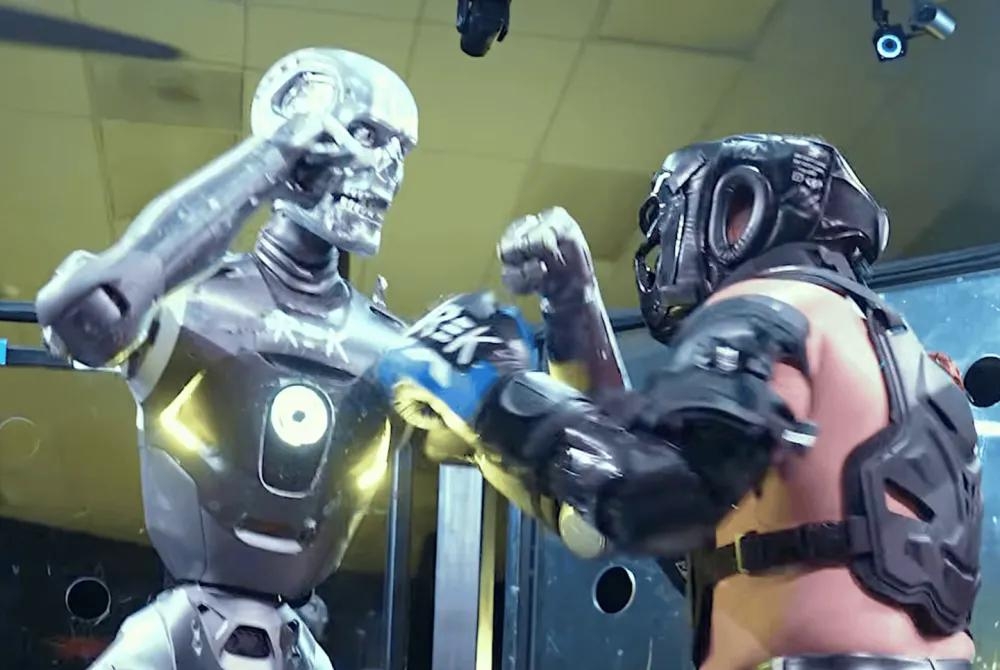
The California State Athletic Commission has sent a letter to technology startup REK ordering it to stop staging unapproved fights after it held a human-versus-robot match last month. On Sept. 18, Frankie LaPeña faced one of REK’s humanoid robots. The robot was remotely controlled by a human through a virtual reality system, according to the report. REK describes itself on its website as a “humanoid robot fighting league.” The robot in the match may have been an EngineAI product fitted with a head resembling the robot in “The Terminator.” REK CEO Sixx Liiv posted the commission’s notice on X on Sept. 30. The commission determined the earlier match was unapproved and told Liiv and REK not to hold, promote or...
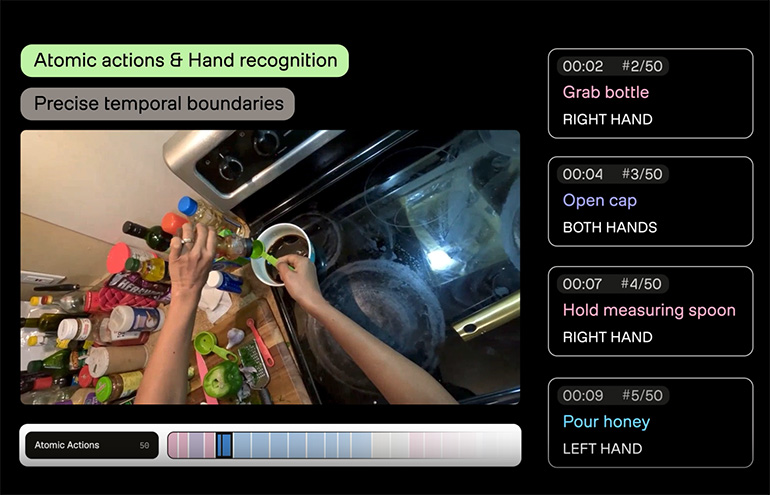
TwelveLabs said its latest video-understanding model, Pegasus 1.6, can now analyze first-person footage, more accurately identify people and objects, and process still images through the same API used for video, broadening its use for robotics, media and security customers. The model builds on Pegasus’s core function: converting video into structured, searchable text such as summaries, tags and timestamps that applications can use. The company said the biggest addition is support for egocentric video — footage shot from the perspective of a person or machine, including body cameras and robot-mounted cameras. Such data is increasingly used by robotics and embodied-AI teams for labeling and training, a category TwelveLabs previously did not support well. Pegasus 1.6 also improves entity recognition, making it...
Boston Dynamics has tapped ex‑Amazon AI executive Rohit Prasad to fill its chief executive role, nearly nine months after Robert Playter stepped down from the top post. The robotics firm stated Prasad’s appointment will take effect the day following the announcement. Previously serving as senior vice‑president and lead scientist for Alexa and Amazon’s artificial general intelligence initiatives, Prasad is tasked with accelerating Boston Dynamics’ physical‑AI roadmap. The firm notes his expertise will fuse robotic hardware with cutting‑edge AI to scale commercial deployment of intelligent machines. “Boston Dynamics holds a distinctive edge in advancing physical AI, built on its world‑renowned robotics engineering talent,” Prasad commented in an official press release. “I’m privileged to join the business at this defining turning point...
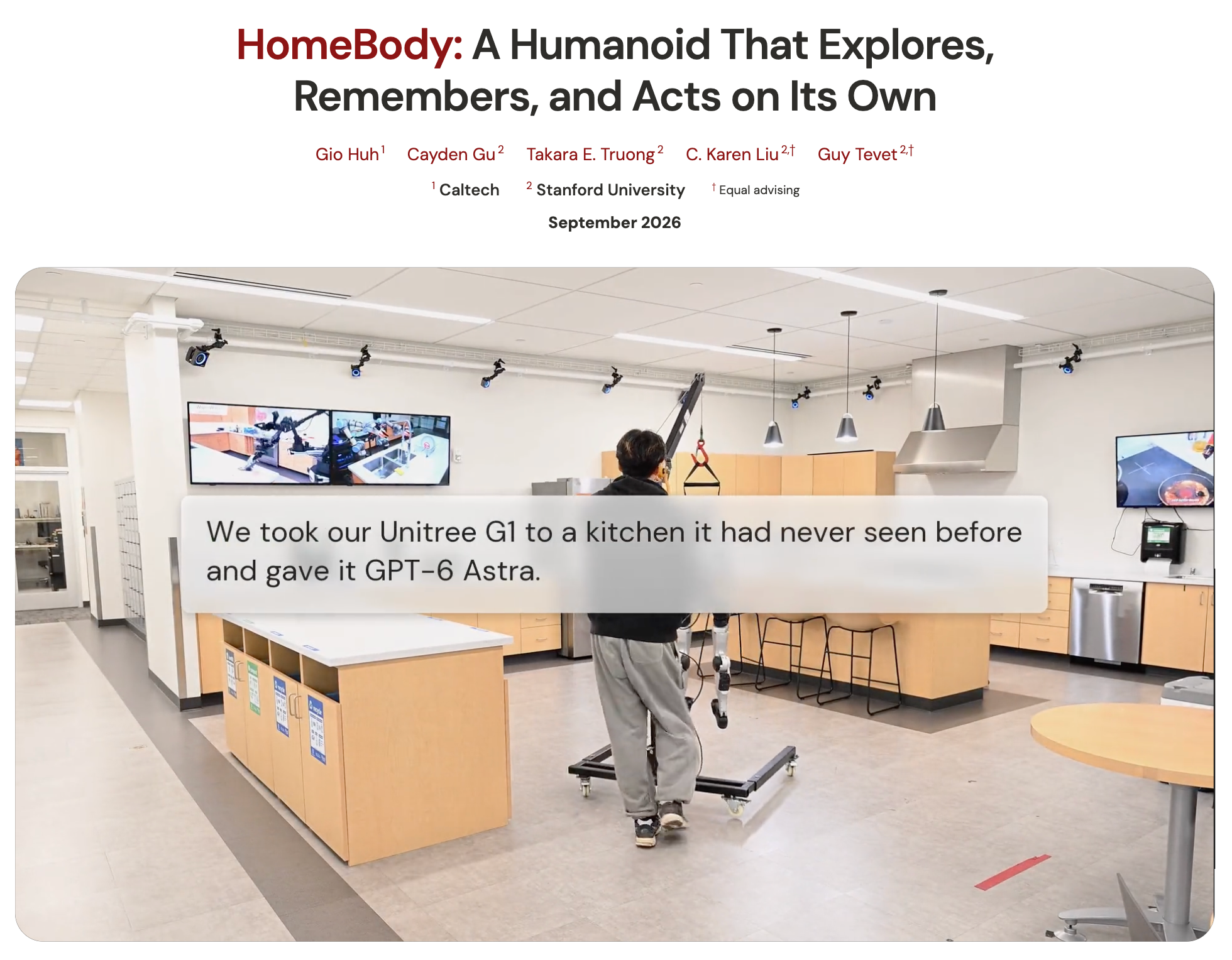
Researchers at Caltech and Stanford have unveiled HomeBody, a system that gives GPT Astra persistent spatial memory and the ability to execute compound humanoid actions for long-horizon tasks. In a kitchen demo, a Unitree G1 robot guided by Astra cleaned the room and retrieved remembered items from ambiguous requests. The team said the system requires no environment-specific training or additional policy learning. HomeBody replaces the trained intermediate VLA layer in conventional three-part architectures—System2 VLM for vision and instructions, System1 VLA for control commands, and System0 for coordinated motion. As frontier models such as Astra improve, the researchers argue trained VLAs are no longer necessary and System2 can directly manage reusable motion skills. A plug-and-play VLM calls a composable skill library....
SiMa.ai, a leader in Physical AI, announced $150 million in Series C financing, bringing the total capital raised to $500 million and valuing the company at $1.45 billion. The round was co-led by Fidelity Management & Research Company and Amplify, with participation from Alter Venture Partners, Dell Technologies Capital, Maverick Capital, +ND Capital, Point72 and StepStone Group. AllianceBernstein, Baron Capital, J.P. Morgan, and the State of Michigan also joined the round as new investors. The global market for Physical AI devices, including robotics, automotive, and drones, is set to explode with cumulative shipments projected to hit 145 million units by 2035, according to Counterpoint Research. This surge marks AI’s transition from software applications into tangible, real-world consumer and industrial hardware,...
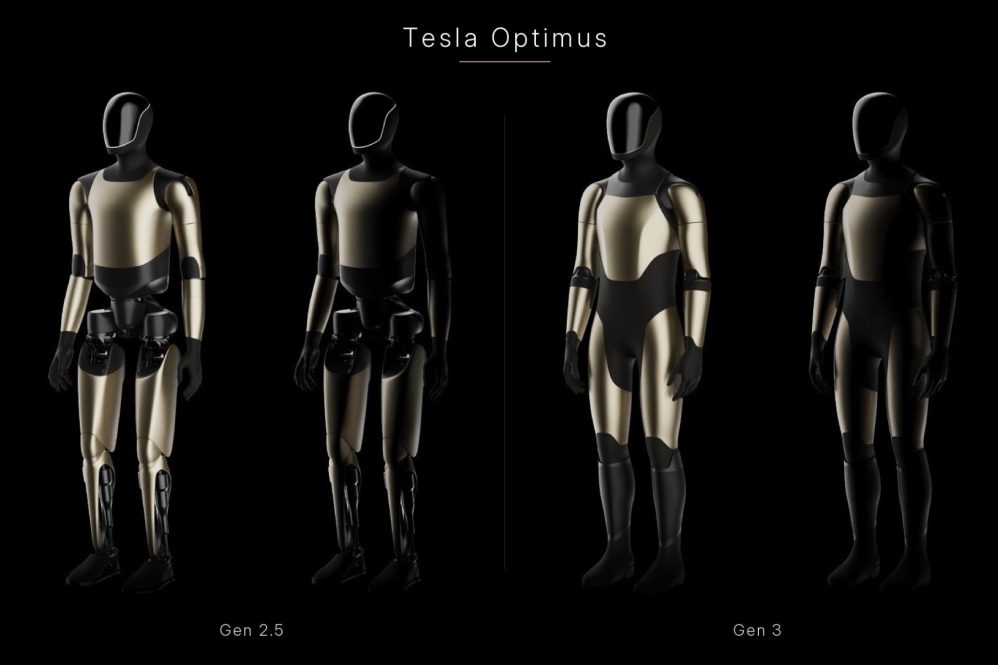
A robotics enthusiast accidentally unpacked Tesla Inc’s (TSLA.O) Android app package and discovered unreleased designs for the company’s third-generation Optimus humanoid robot, according to a now-deleted post on X. User @wholemars said in a post on Tuesday, which has since been deleted, that he extracted the material from Tesla’s app. The files included renderings labeled “gen3” and side-by-side images of Optimus 2.5 and Gen 3 to distinguish the two generations. The images were not concept sketches or fan renderings, but internal material Tesla embedded in a publicly distributed app package, according to the post. According to the leaked images, the Gen 3 Optimus appears more streamlined and designed for factory assembly lines rather than the laboratory. Compared with Optimus 2.5,...
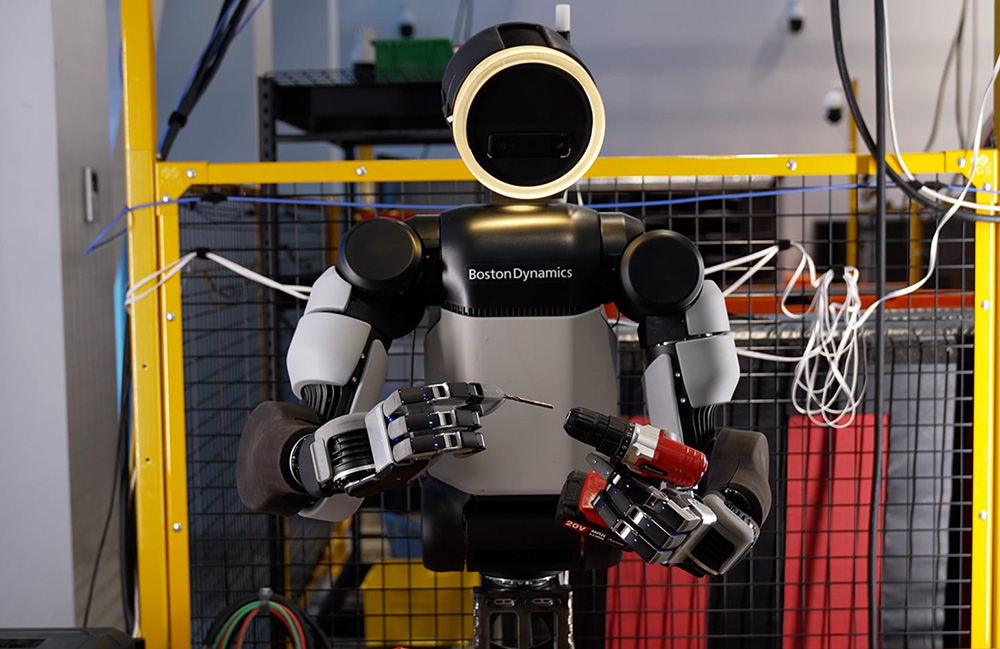
Boston Dynamics has introduced a new four-fingered hand for its Atlas humanoid, a 13-degree-of-freedom, directly actuated design intended for mass production. The hand marks a strategic shift. Earlier Atlas hands had seven degrees of freedom and were designed to grasp a wide range of objects. The new version focuses on manipulating them. “We considered many, many designs,” said Alberto Rodriguez, director of robot behavior for Atlas. “It boils down to a trade-off of competing objectives.” The design omits a pinky and is tailored for high-fidelity simulation and sim-to-real reinforcement learning. It uses a single actuator type, fully encapsulated joints and no fragile cables crossing joints. Boston Dynamics said the hand can slide the thumb tip along and across the other...
Toyota Motor Corp is launching a sweeping global factory upgrade that will put 400,000 robots to work, including a semi-humanoid model designed to learn tasks alongside humans, as the automaker seeks to build plants where people and machines coexist. The push includes ELEY, short for Embodied Learning robot for Enhanced Yield, a Toyota-developed semi-humanoid robot. ELEY has two fingers on each robotic hand, weighs about 50 kg, runs on battery or external power and moves on a wheeled base, according to Toyota’s website. Toyota said ELEY’s joints are designed on the same principles as human joints, with all dimensions based on the average Japanese adult male. The aim is to use large-model-based physical AI to let the robot directly imitate...
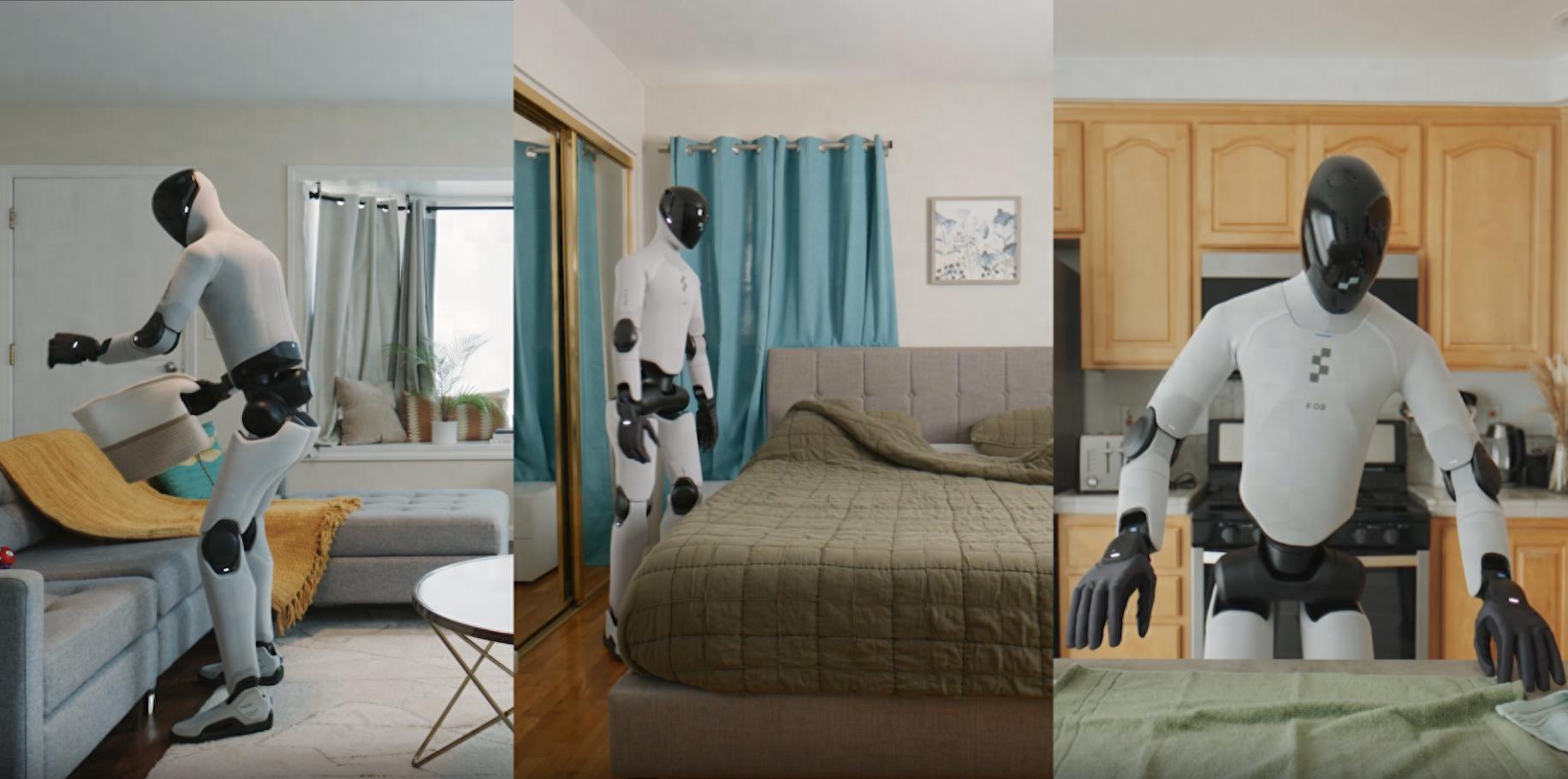
Figure, the U.S. humanoid robot developer, has released Helix 2.5, its most advanced neural network model to date, and said it enabled zero-shot whole-body autonomy in 30 real homes. Figure called it the first demonstration at that scale of zero-shot whole-body behaviour generalisation for a humanoid robot. The company said a single pre-trained foundation model was applied to three types of behaviour: locomotion; manipulation of rigid and deformable objects; and bimanual coordination, as well as active perception. Figure said that, with task-specific data, architecture, training method and evaluation unchanged, pre-training on Index alone raised zero-shot recognition success to 56% from 9%. Index is Figure’s robot dataset project built for global scale. The model also validated a Human-to-Humanoid Robot Transfer Scaling...
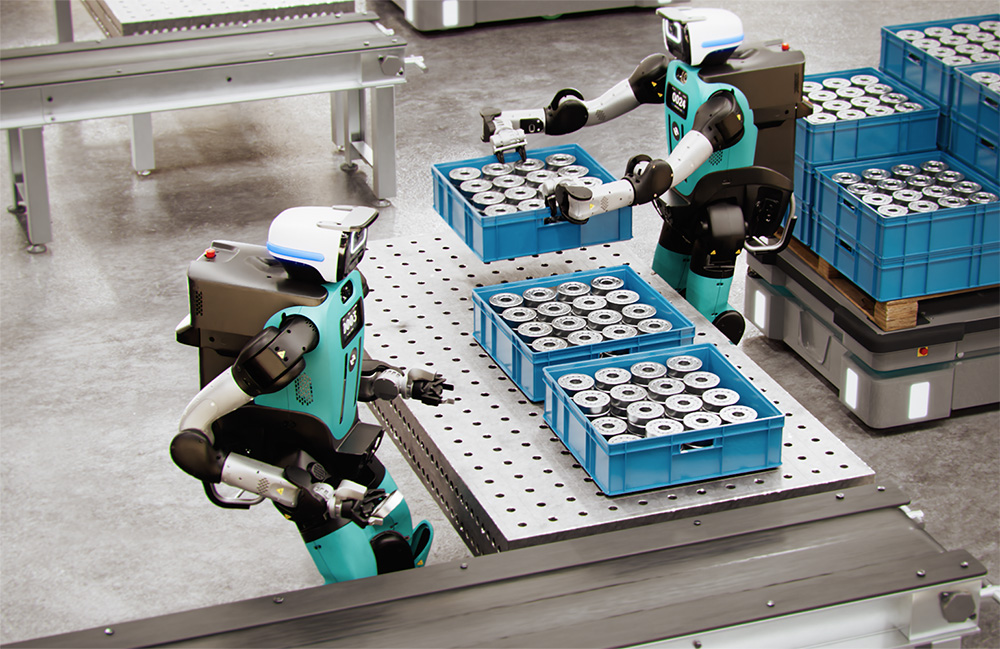
Agility Robotics unveiled Digit 5, its latest humanoid robot, as the firm advances plans to go public via a proposed SPAC merger with Churchill Capital Corp. XI. Digit 5 features new legs, upgraded batteries and a more comprehensive safety architecture, and can work in close proximity to people without physical safety barriers, Agility said. CEO Peggy Johnson said“a major barrier to scaling humanoid robots in industrial environments,” adding that the market has responded with more than $300 million in multi-year orders across manufacturing, warehousing and logistics. Agility reported $1.8 million in net sales in 2025, according to a recent SEC filing. The company expects early access to Digit 5 in the first half of 2027 and general availability for manufacturing,...
Shenzhen embodied AI startup KNOWIN raises Angel+++ round led by JD-linked fund
Shenzhen-based consumer embodied AI company KNOWIN said it has completed an Angel+++ round worth hundreds of millions of yuan, led by a JD.com-linked fund, with Loyal Valley Capital, Nanshan Strategic Emerging Investment and Walden International participating.
Proceeds will focus on expanding training data to improve GLOW's generalization across tasks, objects and home environments; deepening robot hardware R&D and advancing engineering validation and mass-production preparation for KNOWIN-X1; and recruiting senior embodied AI talent.
KNOWIN has now completed five financing rounds: seed, Angel, Angel+, Angel++ and Angel+++. Its Angel++ round raised 500 million yuan, with Matrix Partners China and Redpoint China among investors.
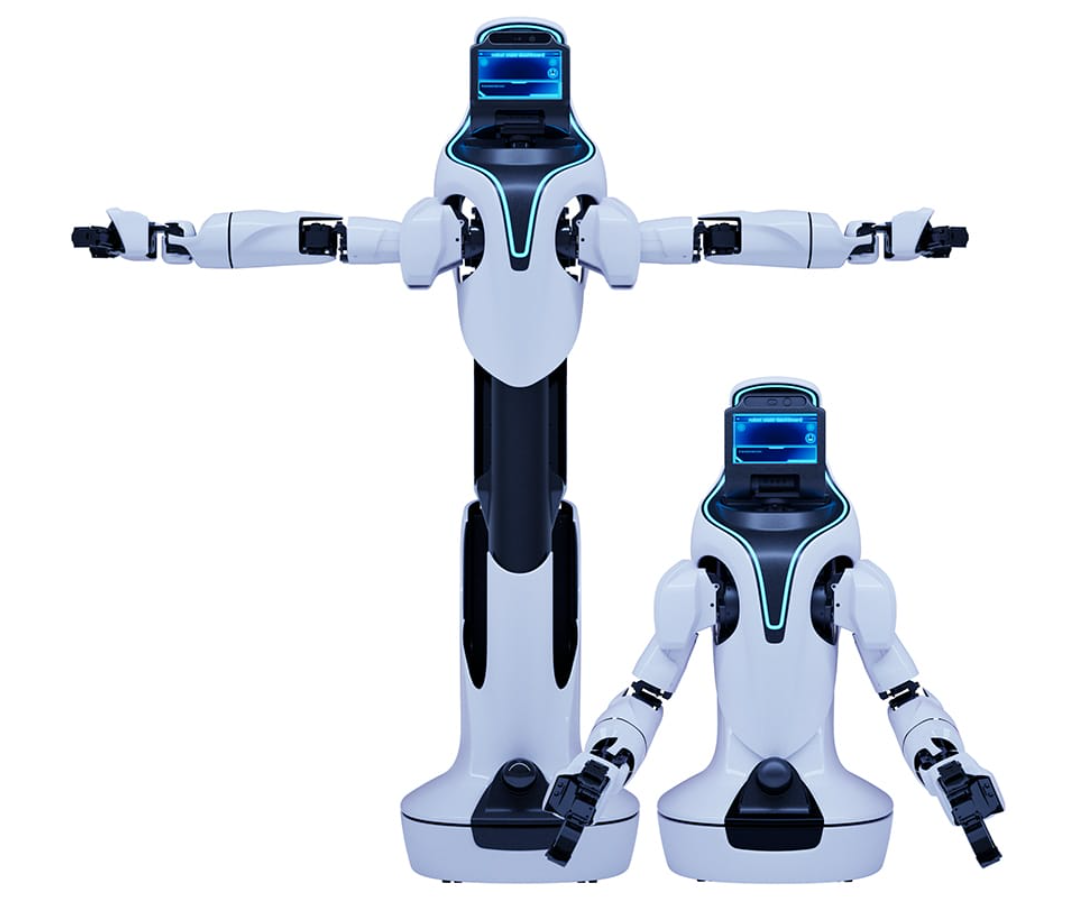
Founded in 2025, KNOWIN targets consumer home scenarios and aims to build embodied AI systems with physical bodies that can form a “perception-generation-execution-evolution” loop and interact continuously in real environments. Its folding dual-arm robot, KNOWIN-X1, is about 1.4 metres tall unfolded, 40 cm folded, weighs about 50 kg and has self-developed arms with a 6 kg payload.
China tactile robotics startup AGIMind Robotics raises tens of mln yuan in angel round
Shenzhen-based tactile robotics startup AGIMind Robotics said it has raised tens of millions of yuan in an angel funding round, with investors including Lihe Capital, Hefei Industrial Investment and other institutional investors.
The proceeds will be mainly used for production line construction, mass-production capacity optimization and R&D of tactile intelligent systems, the company said.
Founded in 2025, AGIMind Robotics focuses on tactile sensing and fine manipulation skills for robots. It has launched the Lux visuotactile sensor series.
Founder and CEO Zhang Yazhan holds a bachelor's degree from the University of Science and Technology of China and a PhD in robotics from the Hong Kong University of Science and Technology.
Manus parent Butterfly Effect raises over $500 mln in record China agent-native funding
Butterfly Effect, the parent of AI agent Manus, said it has completed a new funding round of more than $500 million, the largest ever raised by a China-based agent-native startup.
The round was led by Boyu Capital and IDG Capital, with existing investors Tencent, HongShan and ZhenFund also participating.
The funding news follows Manus's launch of Manus 2.0 and Cue, a multi-agent group chat app, on Sept. 29. It was the company's first major update since it formally resumed independent operations on Sept. 1.
Manus 2.0 uses Cascade, its in-house agent framework. The framework allows user-created projects to stay lightweight from the outset and invoke relevant specialized capabilities only when tasks actually require them.
Ashish Kumar, Former Tesla AI Lead Launches Robotics Startup
Ashish Kumar, who previously led Tesla's Optimus humanoid robot AI initiative, announced the founding of a new startup focused on developing non-humanoid robots. The venture is reportedly seeking to raise approximately $100 million in funding to innovate within the robotics industry.
Nvidia in talks to invest another $1 bln in humanoid robot startup Figure
Nvidia is in talks to invest an additional $1 billion in humanoid robot company Figure, extending a strategy that has shifted the chipmaker from financial investor to core technology supplier to the startup. Nvidia previously joined Figure's Series C round and provides hardware support for training and deploying Figure's Helix AI model. Nvidia CEO Jensen Huang has called the partnership a "robot flywheel": models are trained on Nvidia's Vera Rubin chips, validated on its Isaac Sim simulation platform and ultimately deployed on Nvidia GPUs inside the robots. The closed loop is accelerating Nvidia's strategic push into physical AI.
Zhongda Leader plans up to 530 mln yuan A-share private placement for embodied intelligence, automation projects
Zhongda Leader Intelligent Transmission Co Ltd disclosed a preliminary plan for a 2026 targeted private placement of A-shares, seeking to raise up to 530 million yuan, with proceeds mainly earmarked for two production projects—embodied intelligence joint modules and distributed intelligent actuator units for industrial automation—and an R&D center upgrade.
The company said the private placement is aimed at capturing opportunities in emerging industries such as embodied intelligence and seizing the window for domestic substitution of core components.
ByteDance preparing AI model for real-time spatial video
China's ByteDance is preparing to launch an artificial intelligence (AI) model capable of generating spatial video in real time, according to people familiar with the matter, entering the world-model field with potential uses in robots and autonomous systems and competing with Meta and Google parent Alphabet.
The new model builds on ByteDance's existing cinematic video-generation model Seedance, the sources said. It is designed to let users create interactive virtual worlds for livestreaming, short dramas and games.
The vision-based AI approach is viewed as critical to advances in robotics, gaming and self-driving cars. The sources spoke on condition of anonymity because the plans are not public.
Amazon to invest over $100 mln in Indiana robotics manufacturing plant
Amazon.com Inc said it plans to invest more than $100 million to build an advanced robotics manufacturing plant in Greenwood, Indiana, with production expected to begin in 2028. The facility will make warehouse robots and supporting automation equipment for Amazon's North American fulfillment network.
The plant will integrate precision component machining, robotic welding, automated powder coating and final assembly, and will rely on AWS cloud and smart manufacturing systems, Amazon said. All completed robots and components produced there will be supplied to Amazon's North American fulfillment centers and robotics operations network.
RobotHOT brings China & Global Robotics Insights. Explore robotics, embodied‑intelligence updates, startup news and industry analysis for professionals worldwide.


 the 2026 Bund Summit