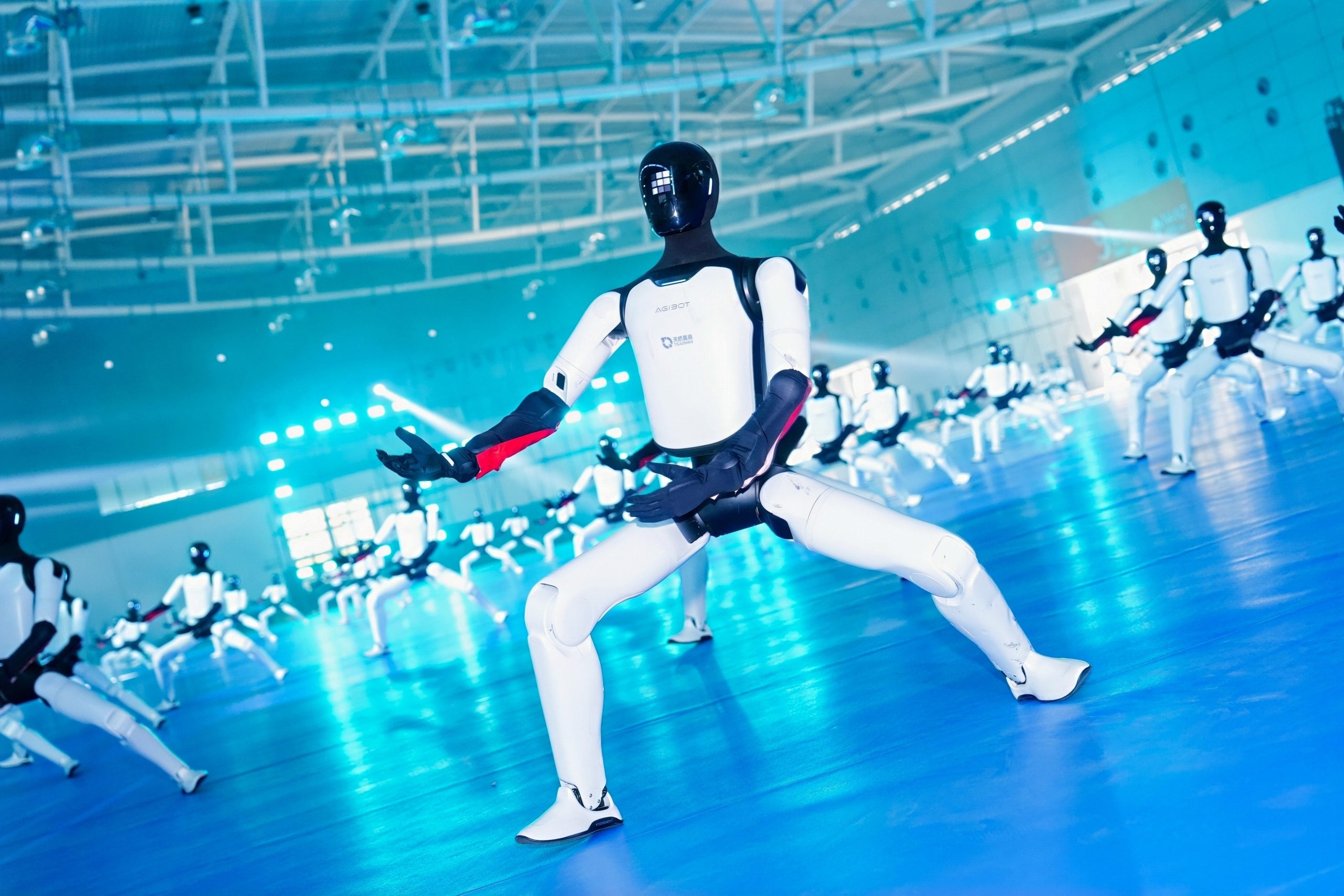
China’s AGIBOT said its Expedition A3 humanoid robots have set a Guinness World Record for the most humanoid robots dancing simultaneously, with 110 full-size units performing coordinated routines at the Yellow River International Convention and Exhibition Center in Jinan, Shandong province. Guinness World Records adjudicators attended the event and issued an official certificate.

The robots performed coordinated dance moves, wave-like formations and countdown numerals. Wang Chuang, AGIBOT partner and senior vice president, said all 110 units were mass-production models rather than specially tuned demonstration machines. “Each robot’s joint zero position, torque and motion library are unified at the production-line level. That consistency allows 110 robots to perform as one, and the demonstration site is the delivery site,” Wang said.
The challenge used AGIBOT’s self-developed LinkBots swarm control platform, which supports visual formation programming, autonomous navigation, integrated walking and running coordination, and independent motion control for multiple formations. The platform uses dual-mode 5G and Wi-Fi communications and an autonomous fault-tolerance mechanism that automatically compensates for local formation gaps when a single robot disconnects, keeping the overall formation intact. Expedition A3 units come standard with UWB centimeter-level fusion positioning, enabling a unified time base, unified trajectory planning and millisecond-level synchronization.
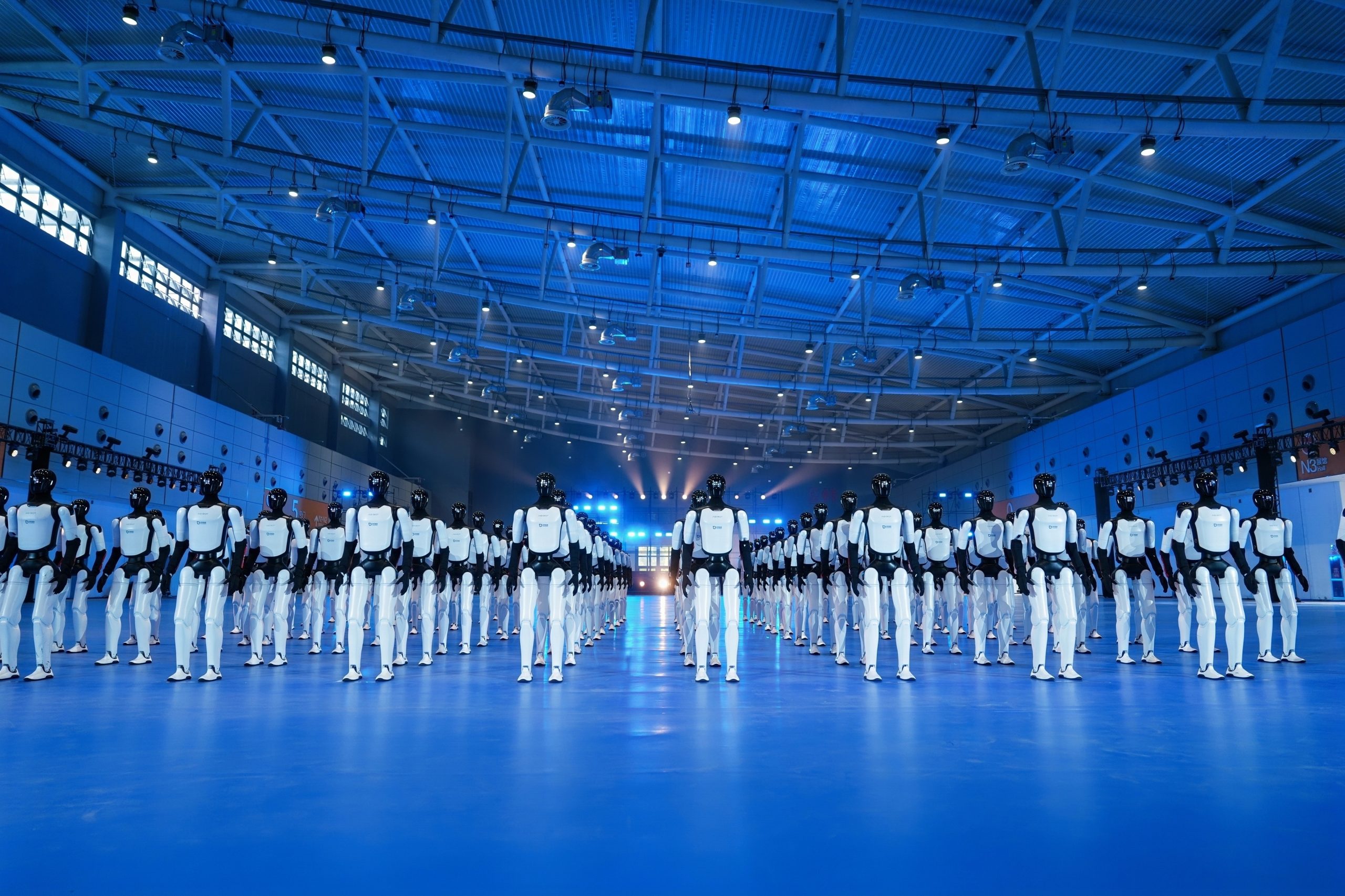
During the challenge, the 110 robots completed a series of synchronized movements including positioning, jumping, flipping and formation switches. AGIBOT described the event as a stress test for mass-production consistency, large-scale swarm scheduling and centimeter-level positioning—core capabilities for scaled deployment. The outdoor setting introduced sunlight interference, multi-robot occlusion and positioning-signal obstruction from moving crowds, while the 110 robots maintained high-precision positioning without coordinate drift or route conflicts, the company said. AGIBOT said the capability can be replicated for outdoor parades at theme parks, commercial performances in plazas and fixed shows at scenic spots.
The challenge also demonstrated autonomous unpacking and positioning. Expedition A3 robots can be folded and packed into transport cases, then drive out autonomously upon arrival, locate themselves and enter preset positions, reducing logistics, labor and on-site debugging costs for batch deployment, AGIBOT said.
After the event, the robots will be deployed in public services, cultural tourism performances, park exhibition halls and research and education. AGIBOT said it has already begun pilot deployments at Jinan Olympic Sports Center and Zhuanshanxi Road metro stations, providing information guidance, passenger flow assistance and city culture commentary.
“The core of deployment is not flashy stunt movements, but making robots like mature production equipment and service terminals—plug-and-play, continuously stable in operation and quickly replicable and scalable,” Wang said.


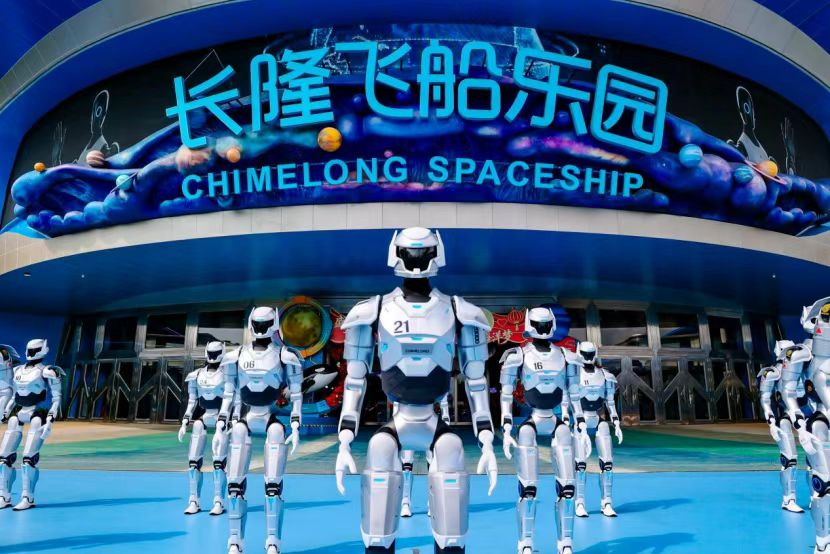
 AGIBOT
 Figure AI
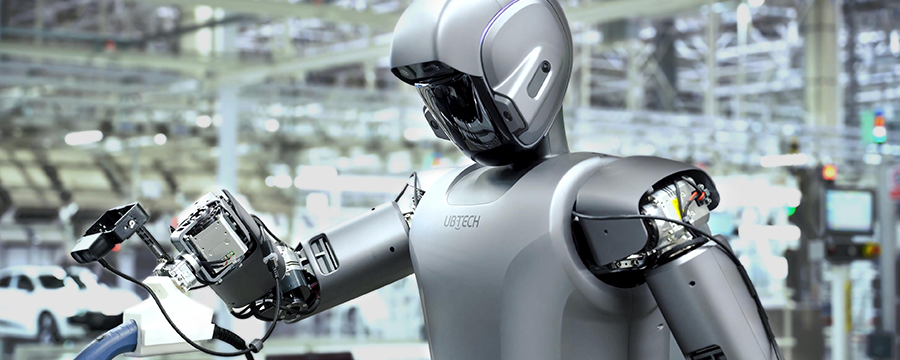 UBTECH