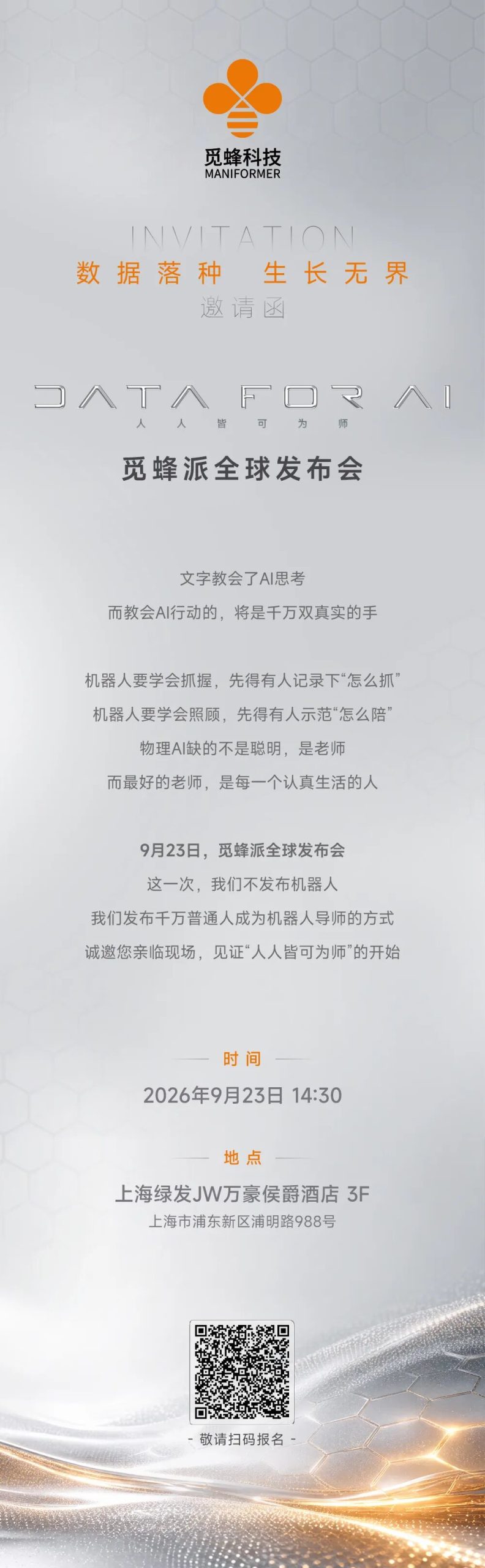
SHANGHAI, Sept 23 – Maniformer Chairman and CEO Yao Maoqing launched Mifengpai, which the company calls the world’s first full-category, high-quality physical AI data crowdsourcing service platform, at a global launch event in Shanghai.
Mifengpai opens physical AI data collection tasks to the public. Users take tasks through the Mifengpai app, wear MEgo devices to perform designated operations in real scenarios such as retail, warehousing, manufacturing and homes, and receive payment based on the duration of validated effective data, becoming “robot trainers.”
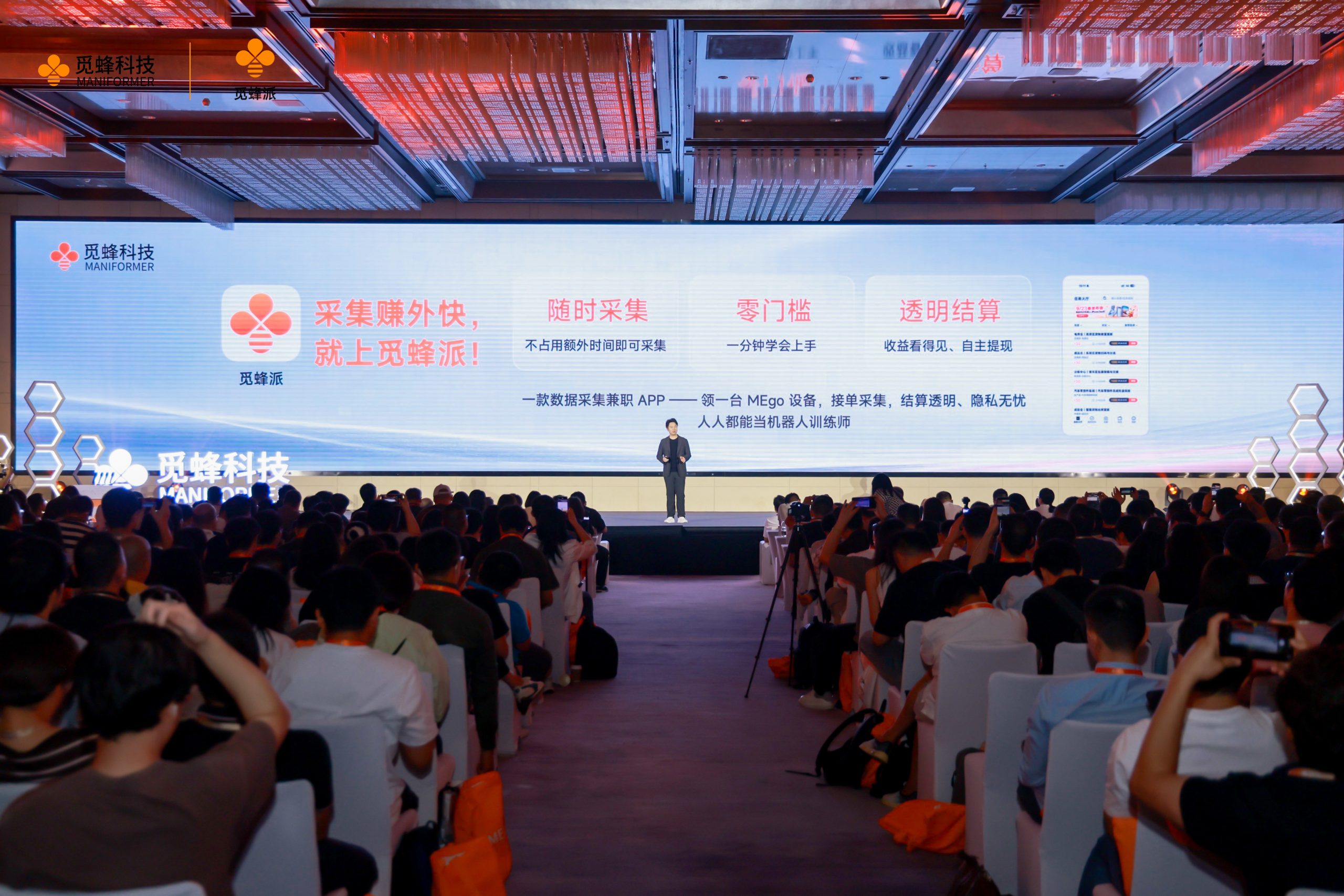
“The best teacher of physical AI is everyone who lives life earnestly,” Yao said. Mifengpai aims to turn real operating experience scattered across daily life and industries into data that robots can learn, train on and reuse, he said.
The launch means physical AI data production is moving from centralized collection to broader distributed, socialized collaboration, forming a new production system around task organization, data engineering, quality control and closed-loop operations.
Hardware + app + data engine: making physical AI data collectible, accessible and usable
Hotel attendants cleaning guest rooms, store clerks arranging shelves, chefs preparing meals, workers completing assembly, couriers sorting packages and cleaners doing their jobs—these operations from daily life and different occupations may be routine for many people, but robots need large amounts of data to gradually master them.
Mifengpai turns professional data collection into standardized tasks that ordinary users can perform, allowing users to record real operations while working and living without spending extra time, Yao said.
Yao said Mifengpai is supported by a “scenario network” and a “people network.” The scenario network connects real work environments such as hotels, catering, supermarkets, logistics, factories, healthcare, homes, elderly care and intangible cultural heritage, providing continuous and rich task sources for data collection. The people network connects participants from different industries and regions, allowing real operating experience to be recorded at scale.
On this basis, Mifengpai has formed a complete service system of “collectible, accessible and usable” through its self-developed MEgo data collection device, Mifengpai app and data governance engine MEgo Engine. The MEgo device is designed to consumer hardware standards and records first-person video, millimeter-level pose and multimodal information such as touch and force. The app simplifies the user process into four steps—taking orders, collection, acceptance and settlement—with zero barrier to entry. MEgo Engine handles data processing, annotation, quality assessment and delivery, turning real operations into data that models can train on and evaluate.
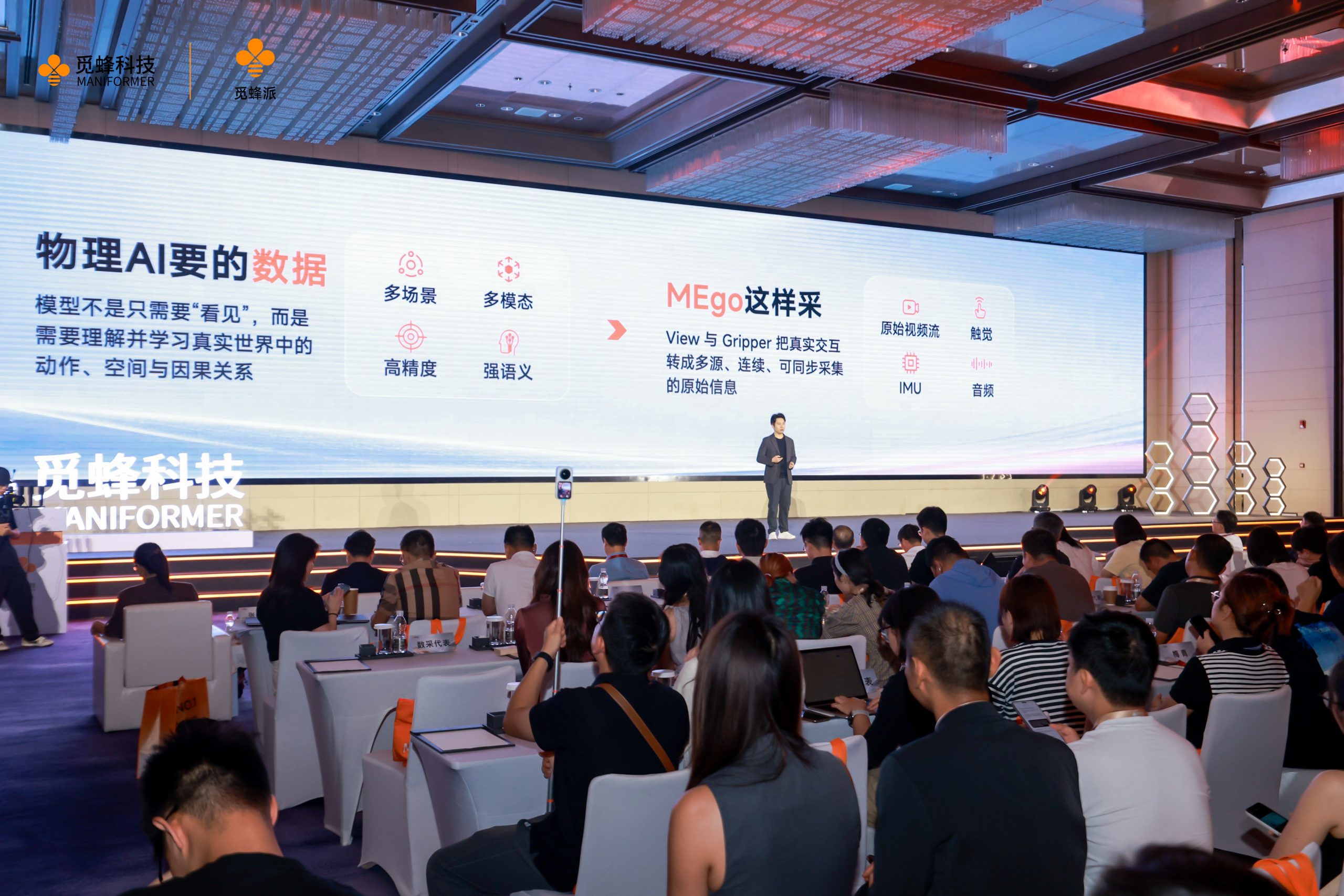
Mifengpai currently covers 22 major categories, more than 5,000 tasks and more than 50,000 real environments, including logistics, warehousing, accommodation services, education, elderly care, catering, retail, public services, offices, automotive services, healthcare, construction, transportation, agricultural production and cultural tourism. These scenarios include general operations such as pick-and-place, organizing and carrying, as well as specialized tasks such as assembly, maintenance and care, providing data for robot training in dynamic environment understanding, fine motion control, continuous process execution, risk judgment and safe interaction.
On the same day, Mifengpai launched the Scenario Data Alliance, bringing together scenario owners, collection networks, robot and model companies to close the loop among scenario demand, data collection, model training and deployment validation. The first batch of members covers retail supermarkets, hotel and cultural tourism, catering services, nursing homes, smart living, healthcare, real estate and manufacturing, and urban property management, with more than 50 companies and institutions including Dossen Hotel, China Travel Service Group, Huayi Hotel, Chen Xianggui, Pushang Fresh Supermarket, Pushan Nursing Home, Shanghai Deji Hospital, Zhenro Group, Longqi Technology, Haitian Ruisheng and Zhangjiang Group.
From everyday life to factory floors, ‘robot trainers’ enter various industries
Not long ago, the Ministry of Human Resources and Social Security and other departments officially designated “embodied intelligent robot application technician” as a new profession. As robots accelerate into real scenarios such as industry, logistics and homes, data collection, model training and scenario application are creating new job demand.
During a one-month beta period, Mifengpai registered 20,000 users and generated 13,000 cumulative collection task submissions. The first participants came from different ages and professions, turning daily labor and professional skills into robot training data.
During the beta, Li Guoying, a 42-year-old ride-hailing operator, put on a MEgo data collection device for the first time to record watering flowers, cleaning windows and organizing desktops and documents. After about 15 minutes, she uploaded the data to the Mifengpai app and received task income after approval. She then began using time after work to complete collection while doing household chores. “It takes care of life and gives me extra income, which is double happiness,” she said.
Robot trainers record not only daily labor but also traditional intangible cultural heritage skills. Lu Xiaoxing, an inheritor of the Renchangshun Su-style pastry-making technique, said: “Recording this data and uploading it for robots to learn opened a new way of thinking for me about inheritance.” Through collection, movements such as kneading, filling and molding, along with their force and rhythm, are recorded, leaving a new digital carrier for intangible cultural heritage.
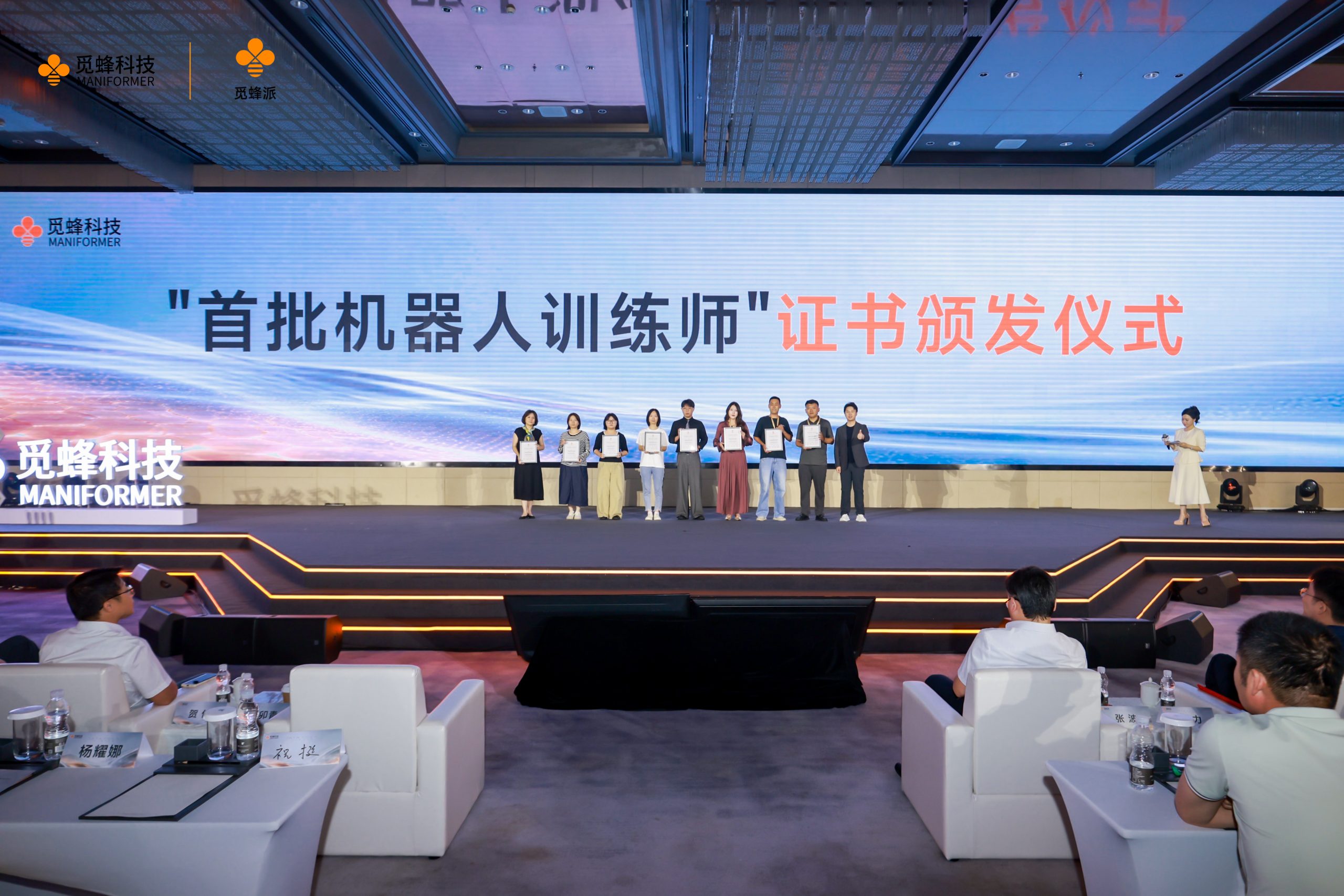
At the launch event, Yao awarded “No. 001 Robot Trainer” certificates to 16 first-batch beta data collectors including Li and Lu. Mifengpai will build a clearer growth path for robot trainers through task grading, skills training and certification incentives.
To lower the barrier to participation, Mifengpai requires no programming or robotics knowledge. Task pages clearly show operating steps, equipment requirements, acceptance standards and payment rules; collection progress and review results can be queried. The platform applies five standards—compliance, authenticity, standardization, non-mixing and multi-point—across task design, collection execution and quality acceptance to ensure effective data quality.
At the event, Mifengpai also announced a 100 million yuan subsidy plan covering collection tasks, device policies, offline services and insurance. During the promotion period from Sept 23 to Oct 22, 2026, Mifengpai will


 the 2026 Bund Summit