
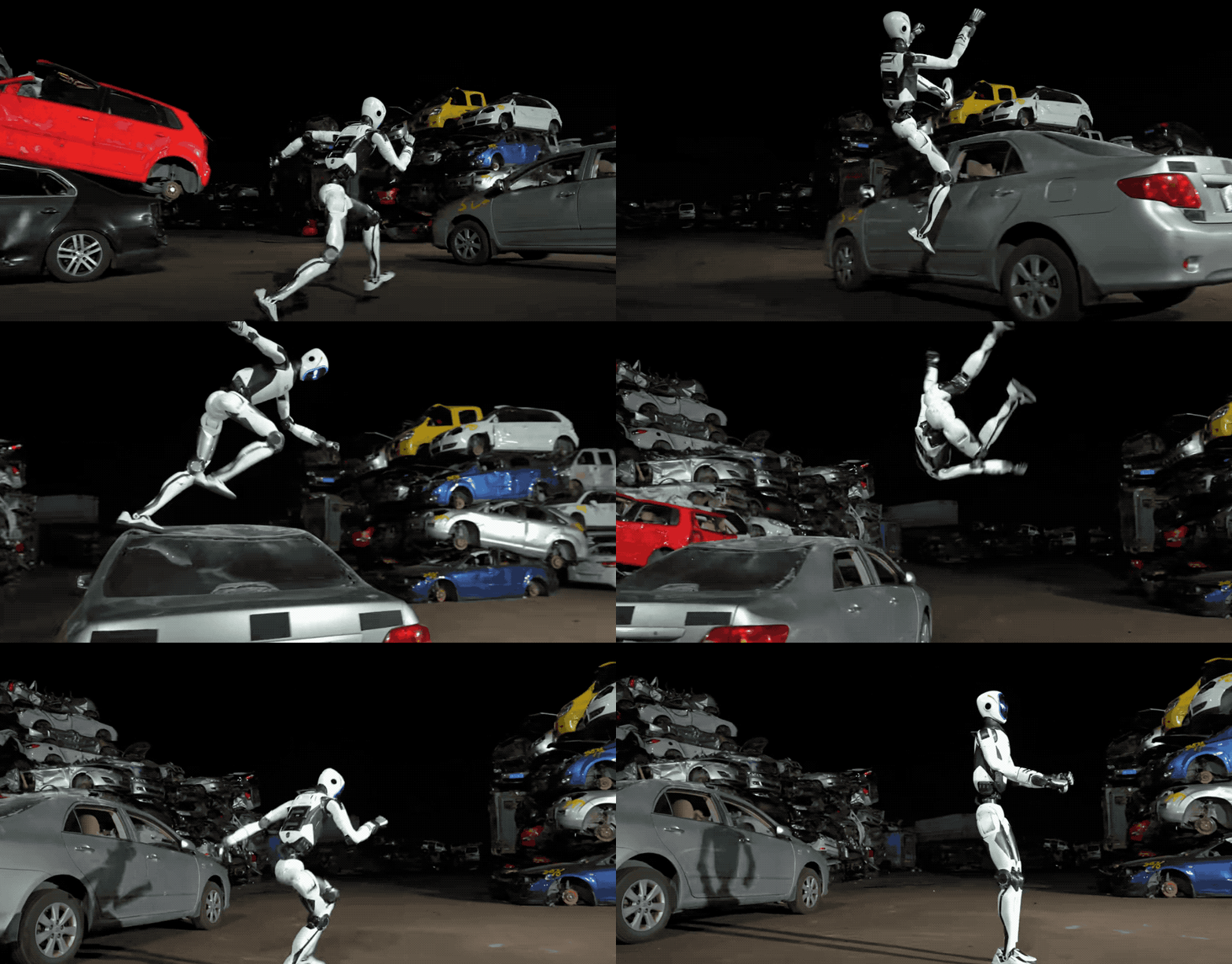
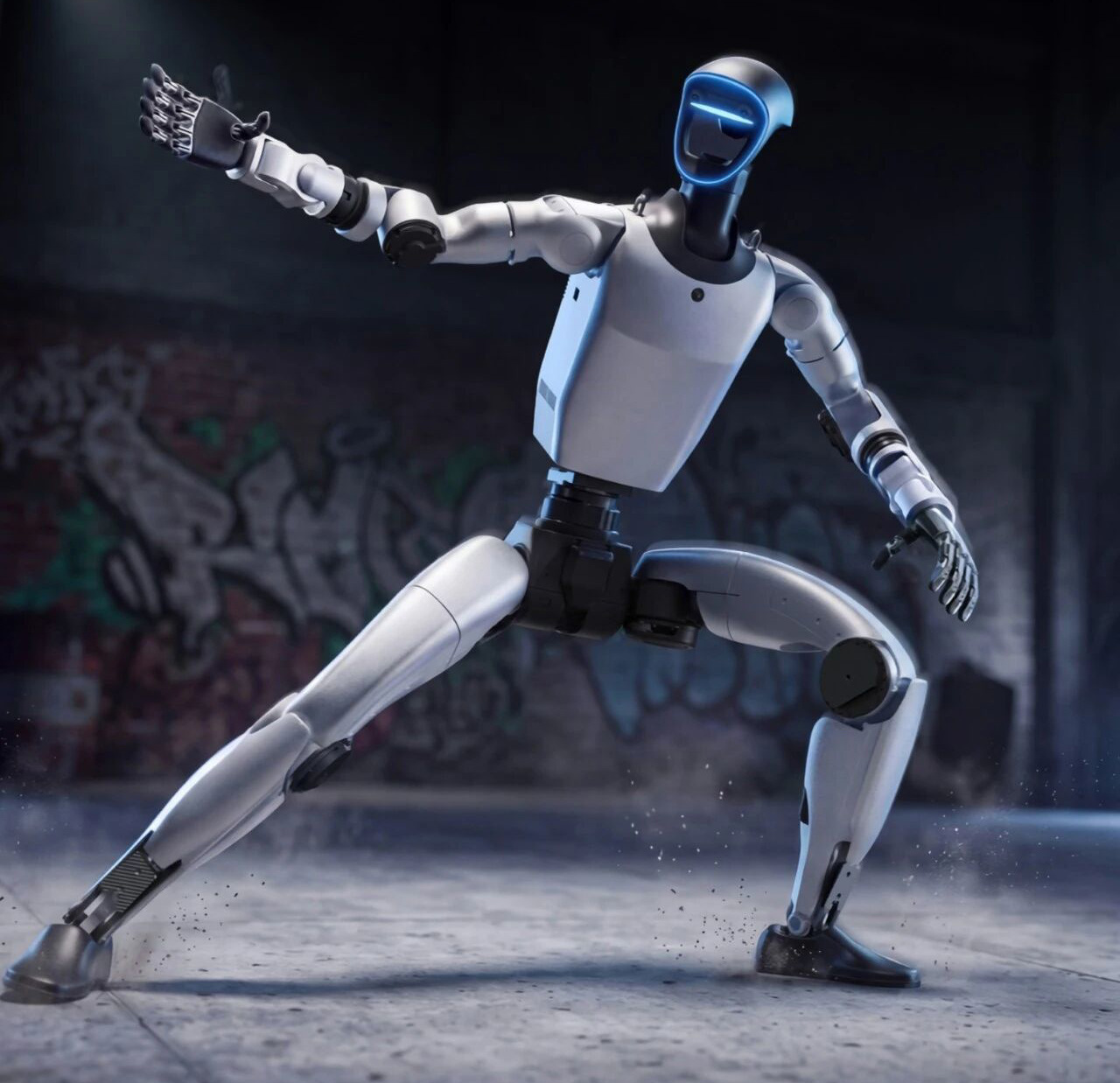
Unitree Technology has unveiled the H2-X, a humanoid robot the Chinese company is presenting as capable of martial-arts-style movement and emergency response, according to a company video. The footage shows the robot, which Unitree says can run for up to about eight hours, carrying out high-impact maneuvers: denting a car door and front hood, vaulting onto a vehicle roof, landing from a 4-meter platform with a forward roll and recovering after repeated airborne kicks. In staged rescue and protection scenes, the H2-X lifts the front of a car to free a trapped mannequin, dives to push another mannequin away from an oncoming vehicle and intervenes against an attacker threatening a person. Unitree said the combination of long endurance and burst-power...
At the 2026 China International Industry Fair, Wang Xingxing, founder of Unitree Robotics, said that with breakthroughs in models such as GPT-6, the tipping point for embodied intelligence—its “ChatGPT moment”—could arrive “in as soon as one or two years.” He also predicted that next year’s GPT-7 may “directly crack the embodied intelligence problem.”
Unitree Robotics has undergone industrial and commercial changes, raising its registered capital from roughly 364 million yuan to about 404 million yuan, an increase of around 11%, and updating its enterprise type from unlisted foreign-invested joint stock company to listed foreign-invested joint stock firm; founded in August 2016 and led by Wang Xingxing, the firm researches, sells and manufactures intelligent and industrial robots with shareholders including Wang Xingxing, Shanghai Yiyi Enterprise Management Consulting Partnership and Hanhai Information Technology.
Chinese robot maker Unitree has unveiled the G1+, an upgraded version of its G1 humanoid robot, delivering six improvements across motion performance, perception and interaction while retaining the G1’s affordability at 95,000 yuan including tax. The G1+ gains two extra degrees of freedom in the neck, giving a pitch range of -25 to 36 degrees and a yaw range of plus or minus 110 degrees for flexible head movement, the company said. Motors across the robot have been comprehensively upgraded: peak torque of the shoulder and waist motors rose 110%, with heat generation down 72% at the same torque; arm motors saw peak torque up 43% and heat reduced 30%; and thigh motors cut heat generation by 28% at the...
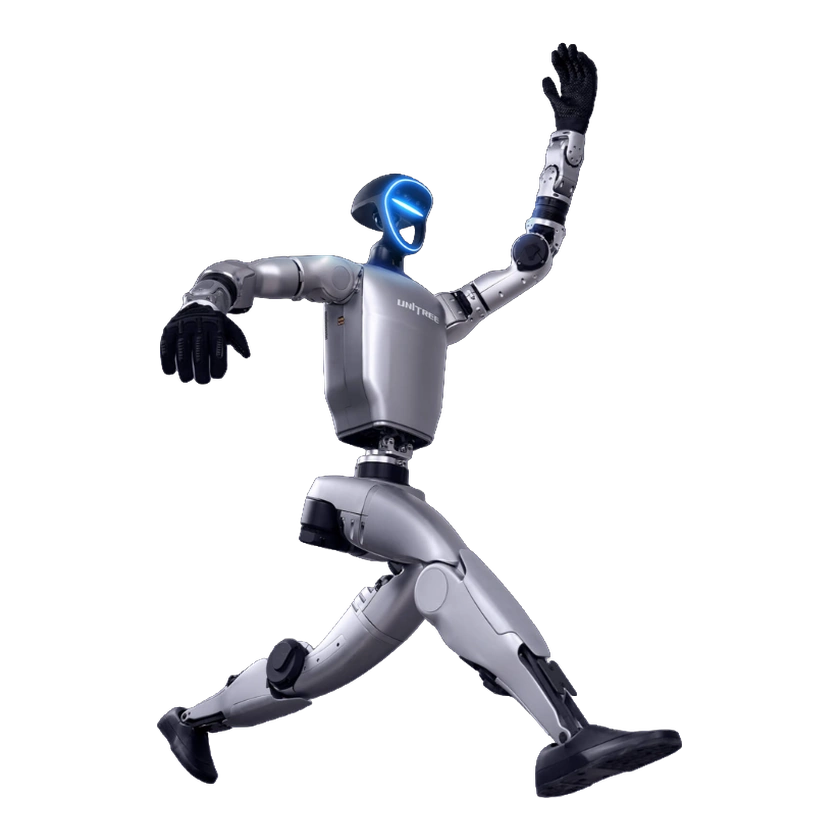
Unitree G1 is a compact humanoid robot. It stands 1.32 meters tall and weighs 35 kg. The base configuration features 23 degrees of freedom, depth vision and a 3D LiDAR. It delivers approximately 2 hours of battery life. It has demonstrated straight punches, hooks, kicks and impact recovery capabilities in its official boxing application. ⚠️ This information is compiled from publicly available online sources, for reference only.
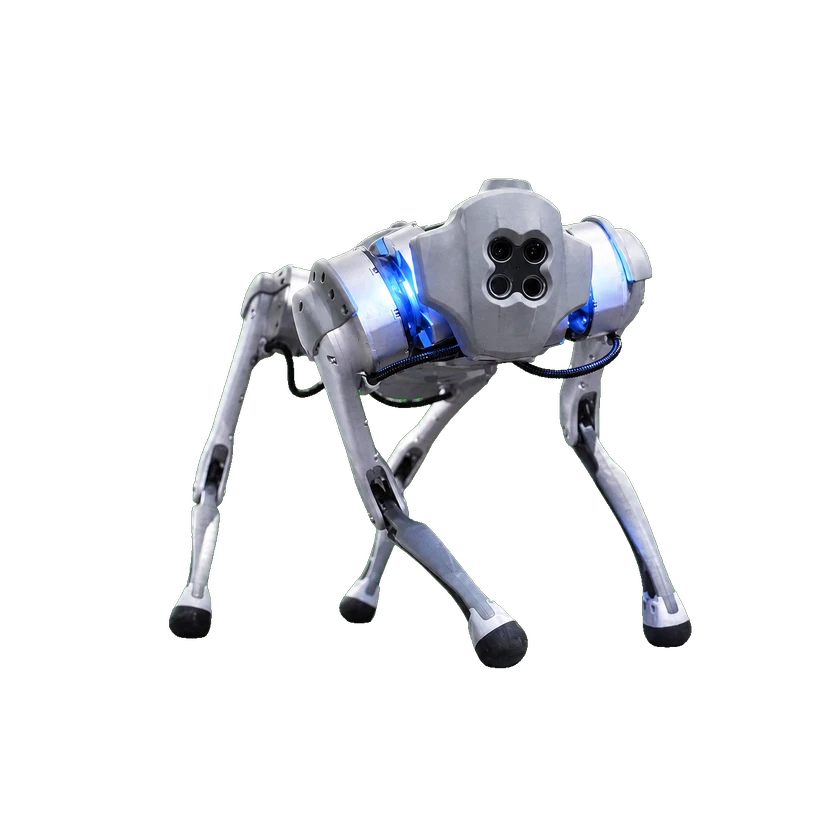
Go1 Pro is an enhanced version of Go1 designed for consumer companionship, exploration and education scenarios. It weighs approximately 12 kg, equipped with five perception cameras, an adaptive payload of about 4 kg, a maximum speed of 3.5 meters per second, and adds God View plus upgraded perception configurations. ⚠️ This information is compiled from publicly available online sources, for reference only.
Unitree H2 is a full-size humanoid robot designed for industrial, logistics, research, and education applications. It measures 1,820 × 456 × 218 mm and weighs approximately 70 kg including the battery. The platform features 31 degrees of freedom, joints powered by low-inertia, high-speed inner-rotor permanent magnet synchronous motors, a stereo camera, a microphone array, a high-power speaker, Wi-Fi 6, and Bluetooth 5.2. It uses a quick-release smart battery and comes with a charger and a manual remote controller. The officially rated arm payload is approximately 7 kg, with a maximum of approximately 15 kg. ⚠️ This information is compiled from publicly available online sources, for reference only.
Chinese robotics company Unitree said it has fully open-sourced an upgraded version of its general-purpose humanoid foundation model, UnifoLM-WLA-1.0, setting new state-of-the-art results on multiple global open-source embodied model benchmarks. The model can perform both tabletop manipulation and whole-body mobile manipulation with a single model, enabling cross-task and cross-end-effector generalization, Unitree said. It achieves a “one-model-driven, whole-body coordination” effect, the company added. Unitree said UnifoLM-WLA-1.0 was trained on large-scale general-purpose multimodal perception and understanding datasets and incorporates interaction-centric world modeling, significantly strengthening spatial perception and scene understanding. It outperformed several open-source competitors in China and overseas on multiple embodied reasoning benchmarks, with some capabilities comparable to mainstream closed-source models, according to the company. In real-robot tests, a single model completed...
Unitree Robotics said it has fully open-sourced UnifoLM-WLA-1.0, an embodied foundation model that uses a single model to coordinate desktop and whole-body mobile manipulation, supporting cross-task and cross-end-effector generalization.
Unitree, the Chinese humanoid robot maker, released a video on Monday showing what it called the world’s first fully autonomous humanoid combat driven by a real-time world model. The company said its UnifoLM-X2-1.0 model has broken through bottlenecks in instantaneous planning, decision-making, and dynamic interactive execution, enabling high-dynamic, highly interactive real-time future prediction and planning that allows a humanoid robot to engage in fully autonomous combat. Unlike previous demonstrations that relied on preset programmes or remote control, the breakthrough enables the robot to independently predict future states and make decisions through its world model. Unitree said the achievement validates the foundational feasibility of large-scale deployment of humanoid robots driven by world models.

 AGIBOT
 Figure AI
 UBTECH