
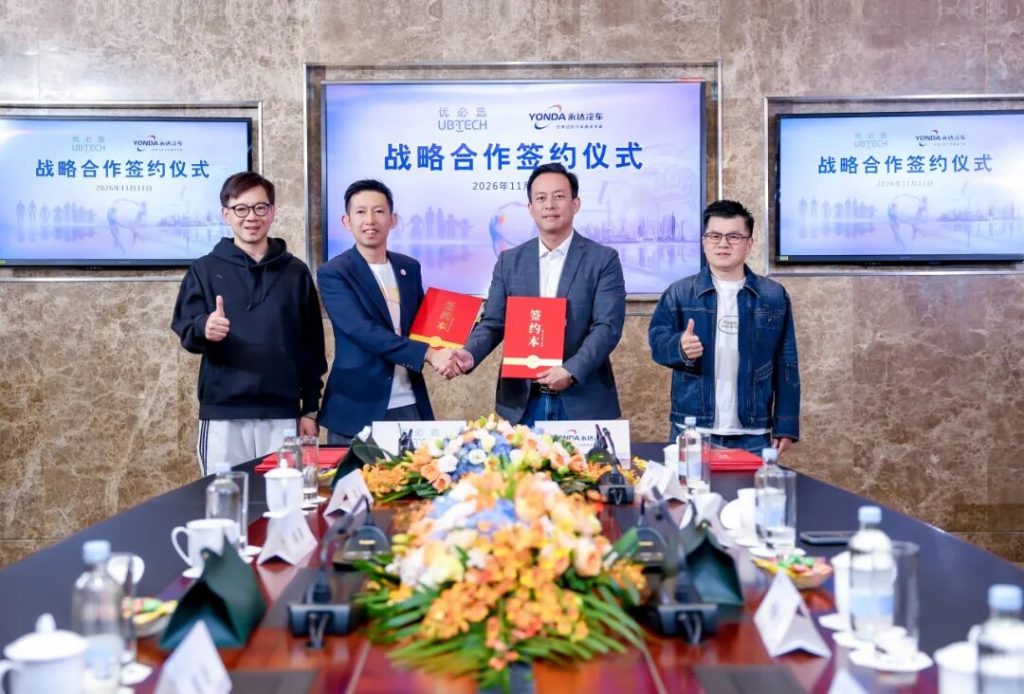
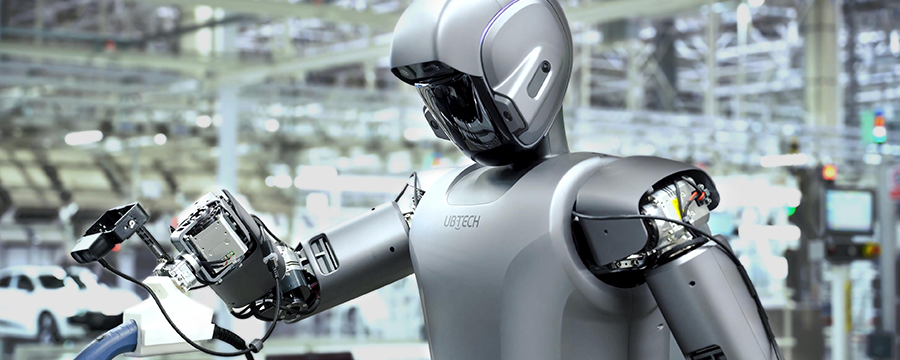
UBTech Robotics, China’s first listed humanoid robot maker, has signed a strategic cooperation agreement with Hong Kong-listed luxury car dealer Yongda Automobiles Services Holdings, under which Yongda will purchase 400 U1 Pro ultra-bionic humanoid robots, with delivery planned this year. The companies will combine UBTech’s product technology with Yongda’s channel and service resources to develop consumer sales, industry applications, experience and delivery services, and data and ecosystem cooperation, as they seek to commercialize embodied intelligence. UBTech has built four core technology clusters: an embodied brain, a humanoid cerebellum, a high-performance body and swarm intelligence. It offers products and solutions for industrial, commercial and consumer scenarios. Yongda has a multi-city, multi-brand store network in China, an online traffic matrix and a...
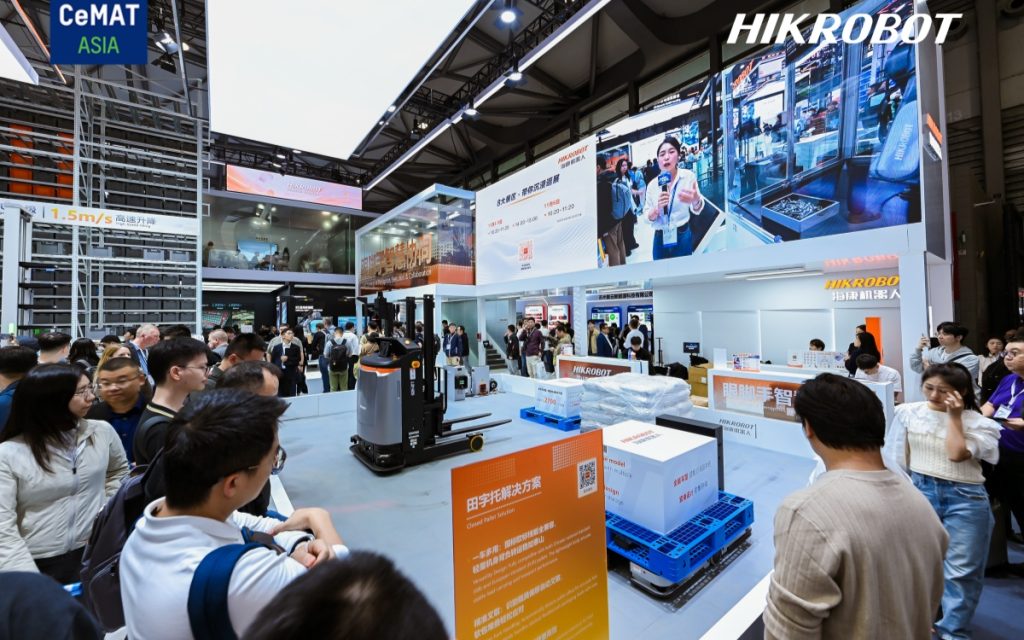
Following the official kickoff of CeMAT ASIA 2026 on November 3, Hikrobot (Booth A3-1, Hall N1) continues to highlight its latest breakthroughs under the theme “Embodied Intelligent Manufacturing, Cross-scenario Operations.” Featuring eight dedicated exhibition zones and is showcasing more than 40 exhibits, Hikrobot is presenting its full-chain capabilities—from high-density storage, autonomous handling, high-precision picking, flexible assembly, smart identification, receiving and inspection, and virtual simulation—with several groundbreaking products making their offline debut. At the core of this year’s display is “Embodied Intelligent Manufacturing”. By leveraging a highly flexible intelligent product matrix and scalable, replicable application frameworks, Hikrobot seamlessly connects fragmented operational processes into an end-to-end operational loop—transitioning from swarm intelligence to individual edge intelligence across every workflow step. Smart Retrieval for...
Chinese robotics company AGIBOT release LIFE, a lifelong embodied intelligence framework that combines continuous perception, long-term memory and skill reuse. The framework enables robots to gather environmental information during and between tasks and to use past observations to support subsequent decisions. LIFE has three core components: RoboBeats, a lightweight decision model for condition tracking and event discovery; Plastic Memory, a plasticity memory module that stores raw footage and structured records and supports retrieval and information supplementation; and EDM, a capability reuse mechanism that turns methods developed during problem-solving into validated tools and skills for later tasks.
Chinese robot maker AGIBOT releases WITA-Omni, an end-to-end embodied omni-modal interaction model trained on robot proprioceptive data. The model supports audio and video inputs and outputs, adds tactile and proprioceptive state inputs, and outputs robot actions and facial expressions, according to the company. Built on a streaming full-duplex architecture, it can listen, think, respond, move and make facial expressions simultaneously, with response latency as fast as about 400 milliseconds and averaging about 600 milliseconds — nearly three times faster than the industry average, AGIBOT said. Its omni-modal rejection capability eliminates the need for wake words by combining conversational orientation, video, audio, voiceprint, lip movement, posture, semantics and context to decide whether a current utterance needs a response, reducing false triggers...
D-Robotics and ROKAE (3752.HK) announced a deepening partnership under which D-Robotics’ Sunrise S600 edge computing platform will provide integrated compute support for intelligent decision-making, multimodal perception and real-time control in ROKAE’s AR5 force-controlled dual-arm integrated form and Zhuxing H-series humanoid robots. ROKAE’s Xuanhe iNex open motion control system is adapted to the Sunrise S600, allowing the AI brain and whole-body motion control to run on the same machine without a separate motion control box.
Anthropic released its new flagship model, Fable 5.2. In the RoboDojo dual-arm simulated robot benchmark, Fable 5.2 achieved an average success rate of 64.9%, controlling a physical robotic arm to complete three tasks — drawing patterns, unscrewing a bottle cap and solving a Rubik’s cube — without dedicated training, according to test data published by the company. Anthropic said Fable 5.2’s robot-control performance is “better than most AI models designed specifically for robot control.”
UBTech, known as China’s “first listed humanoid robot company,” has won a bid for a Shaoxing embodied intelligence industry-education integration center project, according to a disclosure by Zhejiang Enterprise Procurement Information Service Network. The winning bid was 88.892378 million yuan ($12.3 million). The procurement covers primary and intermediate education humanoid robots, building-block robot teaching kits, modular mobile chassis robot kits and robot controllers, among other items.
Ant Lingbo Technology released LingBot-Touch, a tactile foundation model pretrained on nearly 5,000 hours of real tactile data. It converts magnetic, vision-based and piezoresistive signals into a unified representation for dexterous hands and action models, adding touch sensing for fine manipulation. The model and code are open-sourced on Hugging Face, GitHub and ModelScope.
Anthropic sent bankers working on its initial public offering a filing that included pricing information, then withdrew those details, according to the document and a subsequent email. The filing initially said the company planned to offer about 867 million shares at $70 to $80 apiece. Anthropic later said in an email that the pricing information was inaccurate and that it would update the filing later.
ACE ROBOTICS said it has deployed its dual-brain collaborative architecture in a hotel laundry scenario for the first time, with embodied recursive self-improvement (RSI) enabling continuous skill evolution. The deployment brings together world models, general-purpose models and embodied RSI.
 AGIBOT
 Figure AI
 UBTECH