
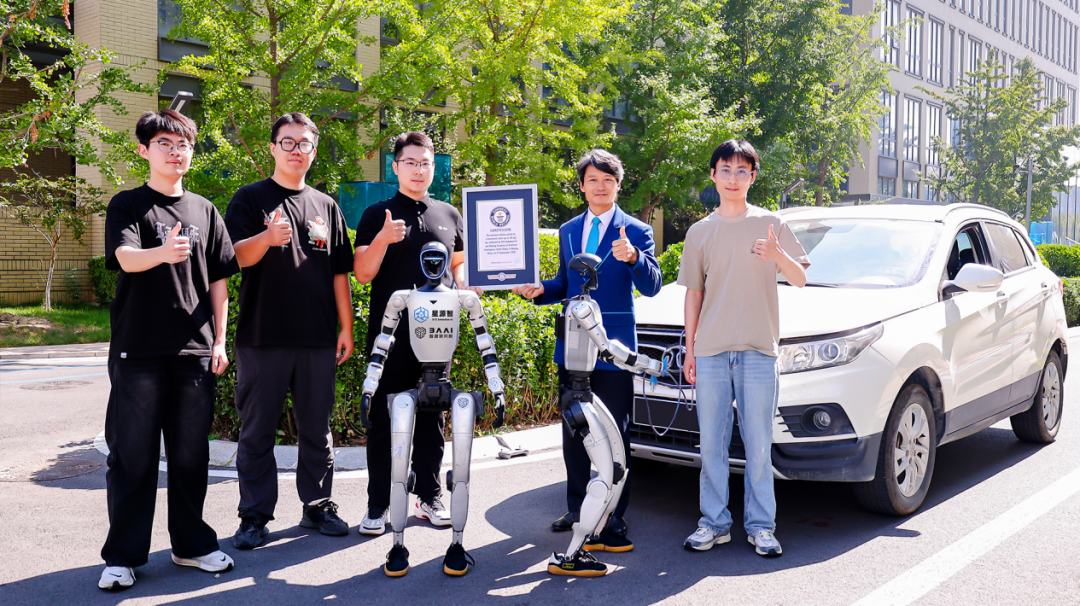
A humanoid robot weighing 37.15 kg pulled a 1,434 kg car 9.92 metres on two legs in Beijing, setting a Guinness World Record for the heaviest vehicle pulled by a humanoid robot under 40 kg, its developers said. The robot was powered by Thor, a whole-body control model jointly developed by Chinese robotics firm XYZ Embodied AI Co. (XYZ), Ltd. and the Beijing Academy of Artificial Intelligence (BAAI). The challenge took place in Beijing’s Yizhuang. Developers said the feat was not merely a display of brute force. The core difficulty was maintaining balance and coordinating the whole body while withstanding a large, changing external force. Unlike running, jumping or dancing, pulling a car is a strong-interaction task: the robot’s movement...
Butterfly Effect, the parent of AI agent Manus, said it has completed a new funding round of more than $500 million, the largest ever raised by a China-based agent-native startup. The round was led by Boyu Capital and IDG Capital, with existing investors Tencent, HongShan and ZhenFund also participating. The funding news follows Manus’s launch of Manus 2.0 and Cue, a multi-agent group chat app, on Sept. 29. It was the company’s first major update since it formally resumed independent operations on Sept. 1. Manus 2.0 uses Cascade, its in-house agent framework. The framework allows user-created projects to stay lightweight from the outset and invoke relevant specialized capabilities only when tasks actually require them.
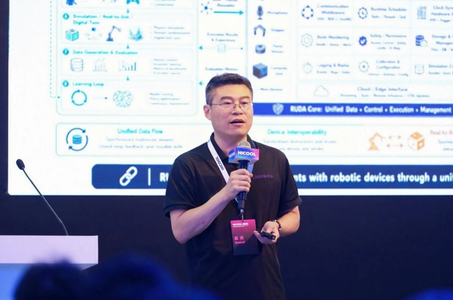
Beijing-based embodied AI startup Livsyn Robotics said it has completed a Series A funding round of more than 100 million yuan, jointly invested by Huafang Capital, Daohe Yuanqi under Daohe Longterm, Suwen Electric Energy and an unnamed leading strategic industrial investor in the embodied AI sector. Founded in February 2023, Livsyn positions itself as an embodied AI infrastructure provider. It focuses on RUDA (Robotics Unified Device Architecture), a fully self-developed unified architecture for embodied models that aims to build a cross-embodiment general foundation for robots. RUDA forms a self-evolving closed loop covering data collection, model training, robot execution and feedback. Its general Harness system supports heterogeneous hardware including humanoid robots, various dexterous hands and industrial grippers. Within the system, RUDA...
Ashish Kumar, who previously led Tesla’s Optimus humanoid robot AI initiative, announced the founding of a new startup focused on developing non-humanoid robots. The venture is reportedly seeking to raise approximately $100 million in funding to innovate within the robotics industry.
Nvidia is in talks to invest an additional $1 billion in humanoid robot company Figure, extending a strategy that has shifted the chipmaker from financial investor to core technology supplier to the startup. Nvidia previously joined Figure’s Series C round and provides hardware support for training and deploying Figure’s Helix AI model. Nvidia CEO Jensen Huang has called the partnership a “robot flywheel”: models are trained on Nvidia’s Vera Rubin chips, validated on its Isaac Sim simulation platform and ultimately deployed on Nvidia GPUs inside the robots. The closed loop is accelerating Nvidia’s strategic push into physical AI.
Zhongda Leader Intelligent Transmission Co Ltd disclosed a preliminary plan for a 2026 targeted private placement of A-shares, seeking to raise up to 530 million yuan, with proceeds mainly earmarked for two production projects—embodied intelligence joint modules and distributed intelligent actuator units for industrial automation—and an R&D center upgrade. The company said the private placement is aimed at capturing opportunities in emerging industries such as embodied intelligence and seizing the window for domestic substitution of core components.
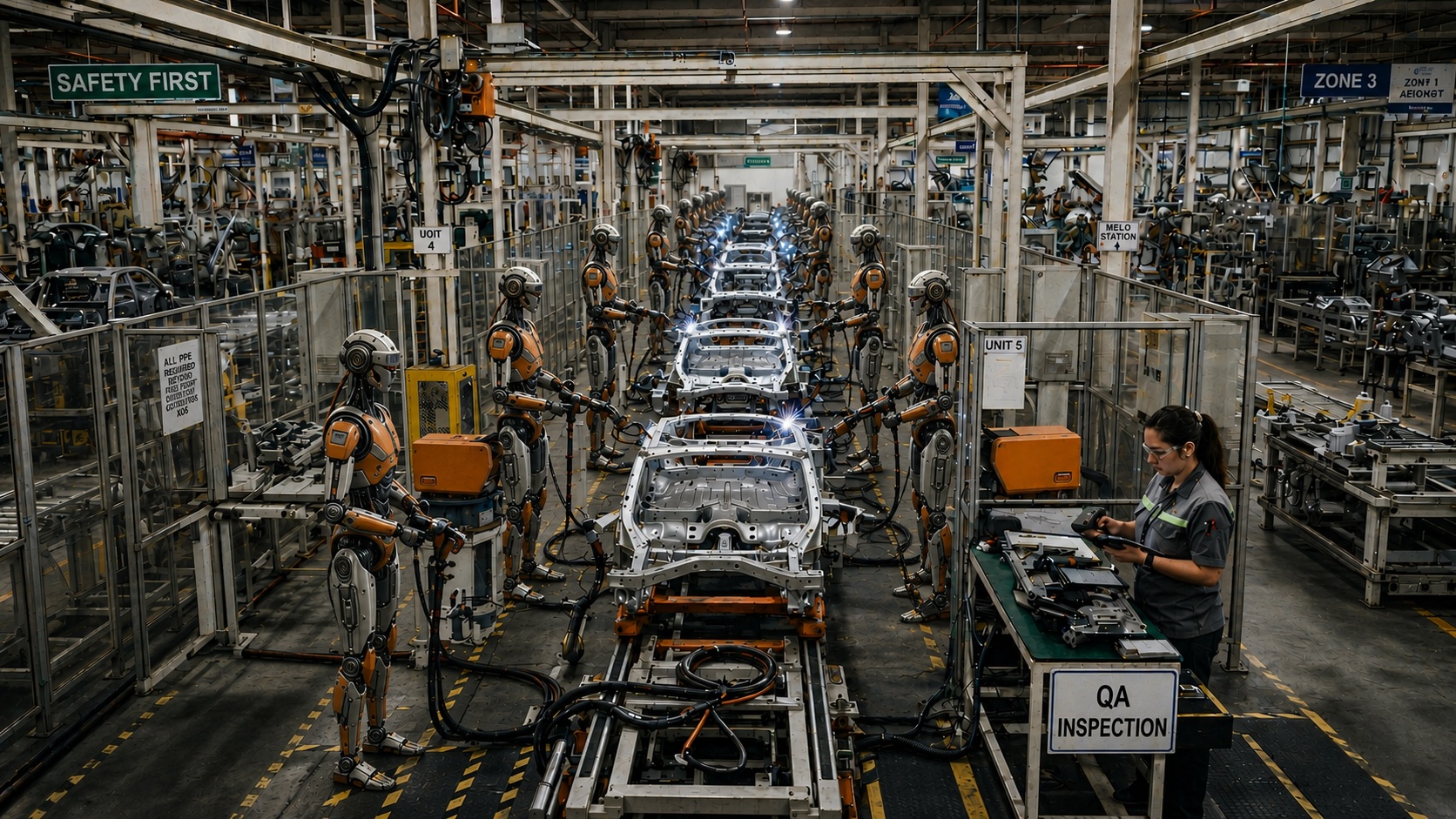
Most science fiction readers know that Isaac Asimov introduced his Three Laws of Robotics in the March 1942 issue of Astounding Science Fiction and later republished them in I, Robot. In an age when AI seems to threaten civilization itself, those laws feel more prescient than ever: a robot may not injure a human or allow harm through inaction; it must obey human orders unless they conflict with the First Law; and it must protect itself unless that conflicts with the first two. Yet almost no generative-AI company has embedded even the First Law into its core algorithms. Only Advanced Robotic Technologies Inc., which applies generative AI to large-scale industrial manufacturing, has adopted it as a foundational software principle. Without...
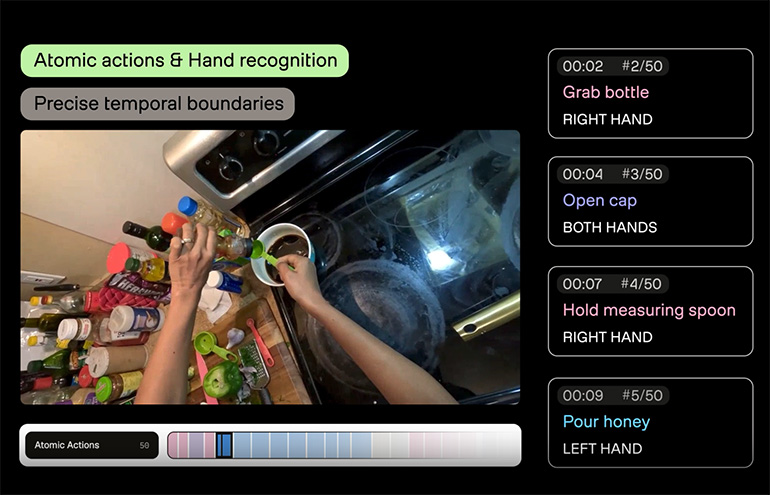
TwelveLabs said its latest video-understanding model, Pegasus 1.6, can now analyze first-person footage, more accurately identify people and objects, and process still images through the same API used for video, broadening its use for robotics, media and security customers. The model builds on Pegasus’s core function: converting video into structured, searchable text such as summaries, tags and timestamps that applications can use. The company said the biggest addition is support for egocentric video — footage shot from the perspective of a person or machine, including body cameras and robot-mounted cameras. Such data is increasingly used by robotics and embodied-AI teams for labeling and training, a category TwelveLabs previously did not support well. Pegasus 1.6 also improves entity recognition, making it...
Boston Dynamics has tapped ex‑Amazon AI executive Rohit Prasad to fill its chief executive role, nearly nine months after Robert Playter stepped down from the top post. The robotics firm stated Prasad’s appointment will take effect the day following the announcement. Previously serving as senior vice‑president and lead scientist for Alexa and Amazon’s artificial general intelligence initiatives, Prasad is tasked with accelerating Boston Dynamics’ physical‑AI roadmap. The firm notes his expertise will fuse robotic hardware with cutting‑edge AI to scale commercial deployment of intelligent machines. “Boston Dynamics holds a distinctive edge in advancing physical AI, built on its world‑renowned robotics engineering talent,” Prasad commented in an official press release. “I’m privileged to join the business at this defining turning point...
China’s ByteDance is preparing to launch an artificial intelligence (AI) model capable of generating spatial video in real time, according to people familiar with the matter, entering the world-model field with potential uses in robots and autonomous systems and competing with Meta and Google parent Alphabet. The new model builds on ByteDance’s existing cinematic video-generation model Seedance, the sources said. It is designed to let users create interactive virtual worlds for livestreaming, short dramas and games. The vision-based AI approach is viewed as critical to advances in robotics, gaming and self-driving cars. The sources spoke on condition of anonymity because the plans are not public.

 the 2026 Bund Summit