DexTeleop, an embodied-AI infrastructure provider, has closed a nine-figure RMB (tens of millions USD) Pre-A round led by Zhuzhou Industrial Investment, Feitu Capital, Future Margin Ventures, and Xineng Ventures. Proceeds will scale production of its robot hardware, upgrade real-world data collection pipelines, and advance its cloud operation platform. Maple Pledge continues as exclusive PE advisor.
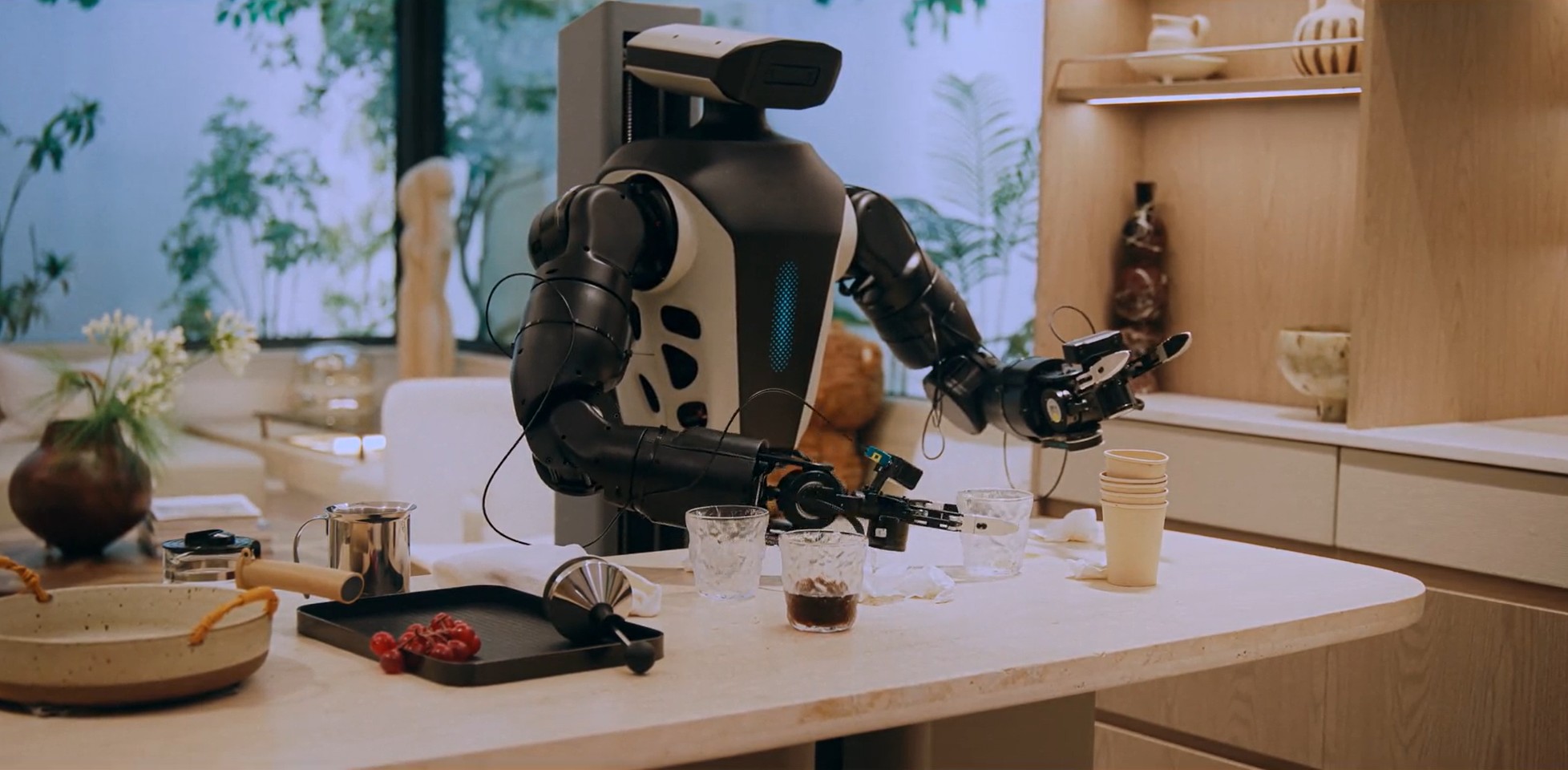 Robots Become Its “Data‑Collection Mother Machine” for Embodied AI" width="1956" height="960" />
This marks DexTeleop’s third funding round this year, following prior backers including InnoFund, CMC Capital, Galaxy Innovation, Futian Capital, Leaguer, and Tianying Capital—total financing now exceeds nine figures RMB.
As embodied AI moves from demos to commercial deep water in 2026, investor focus shifts from pure growth to the viability of “real-scenario data driving model evolution.” Founded in early 2025, DexTeleop builds full-stack infrastructure—robot bodies, data acquisition, and cloud orchestration—and has already deployed at scale in open retail, creating a closed loop from hardware to data.
The founding team blends academic depth and industry experience. Co-founder & Chief Scientist Mo Yilin is a tenured associate professor at Tsinghua’s Automation Department, mentored by robotics pioneer Richard M. Murray, with 10,000+ Google Scholar citations. Co-founder & CEO Jin Ge holds a Tsinghua B.E. and MBA, former managing partner at Yuanguang Ventures and VP at Aoliang Photonics, with cross-sector investment and management expertise. The core management—mostly Tsinghua undergraduates—share over two decades of collaboration, with prior stints at ByteDance, Kuaishou, Tencent, and Meituan.
DexTeleop’s thesis: embodied-AI infra must deliver a deliverable system comprising producible robots, physically-tagged data assets, and a cloud bridge linking machines and models. Real-world interaction data is the critical bridge to close the sim-to-real gap—simulation handles pretraining but cannot replicate infinite physical perturbations and long-tail edge cases.
The self-developed TA-series robots prioritize task reliability and high-quality data output over humanoid mimicry. Key trade-offs:
Cost – priced at 1/2 to 1/3 of peers, replacing expensive components with algorithms (e.g., current-feedback for six-axis force sensors) and using wheeled chassis + grippers instead of bipedal legs and dexterous hands, reducing complexity and energy.
Precision – achieves sub-millisecond temporal-spatial alignment across vision, joints, force, and control commands.
Stability – designed for continuous operation in challenging retail environments (crowds, Wi-Fi fluctuations), mitigating thermal drift and vibration accumulation.
Control latency – end-to-end latency (video + force/position hybrid control) compressed under 90ms by optimizing over 20 pipeline stages, enabling near-real-time teleoperation across cities. Store staff can operate independently after brief training.
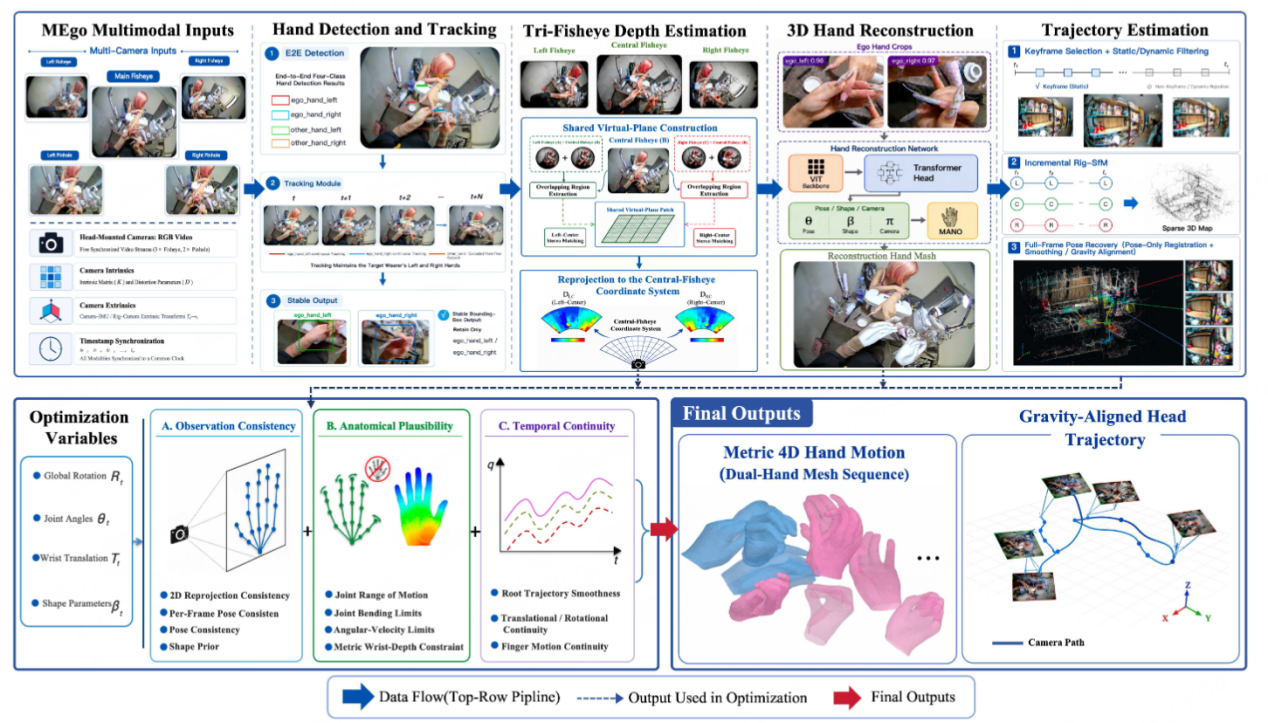
Data pipeline scales rapidly. Since June 2026, daily data output has grown from hours to hundreds of hours, targeting thousands of hours by year-end—roughly one month to match the world’s largest open-source dataset (~100k hours). But differentiation lies in force-rich labels (joint torque, contact force, end-effector curves) attached to every teleop sample—a dimension missing in most datasets (simulation has physical mismatch; human video lacks force feedback). These force cues are essential for real-world tasks like pushing resistive doors or grasping slippery objects.
With ~100 TA units deployed in JD Seven Fresh supermarkets, every physical interaction generates force data feeding back to the cloud. CEO Jin Ge plans to build a million-hour high-quality dataset within a year, fully time-synchronized, spatially calibrated, and force-labeled, ready for direct model training.
The Nexus cloud platform connects robots, operators, and models. Currently used for remote teleoperation across cities, Nexus is evolving into a human-machine collaborative system: robots handle routine tasks autonomously; operators intervene when confidence drops. Every intervention generates “demonstration data” (precise maneuvers, force adjustments, anomaly responses) that is annotated and fed back for model improvement. This mirrors autonomous driving’s progression—from one operator per three robots toward one per fifty, gradually lifting autonomy through real-world operation.
DexTeleop’s ultimate mission: not a universal humanoid, but a scalable hardware base, high-fidelity real-world data, and a communication fabric that connects machines to the cloud. With multi-city deployment accelerating and data costs declining, its role as a “data-collection mother machine” could become an indispensable piece of the embodied-AI ecosystem.


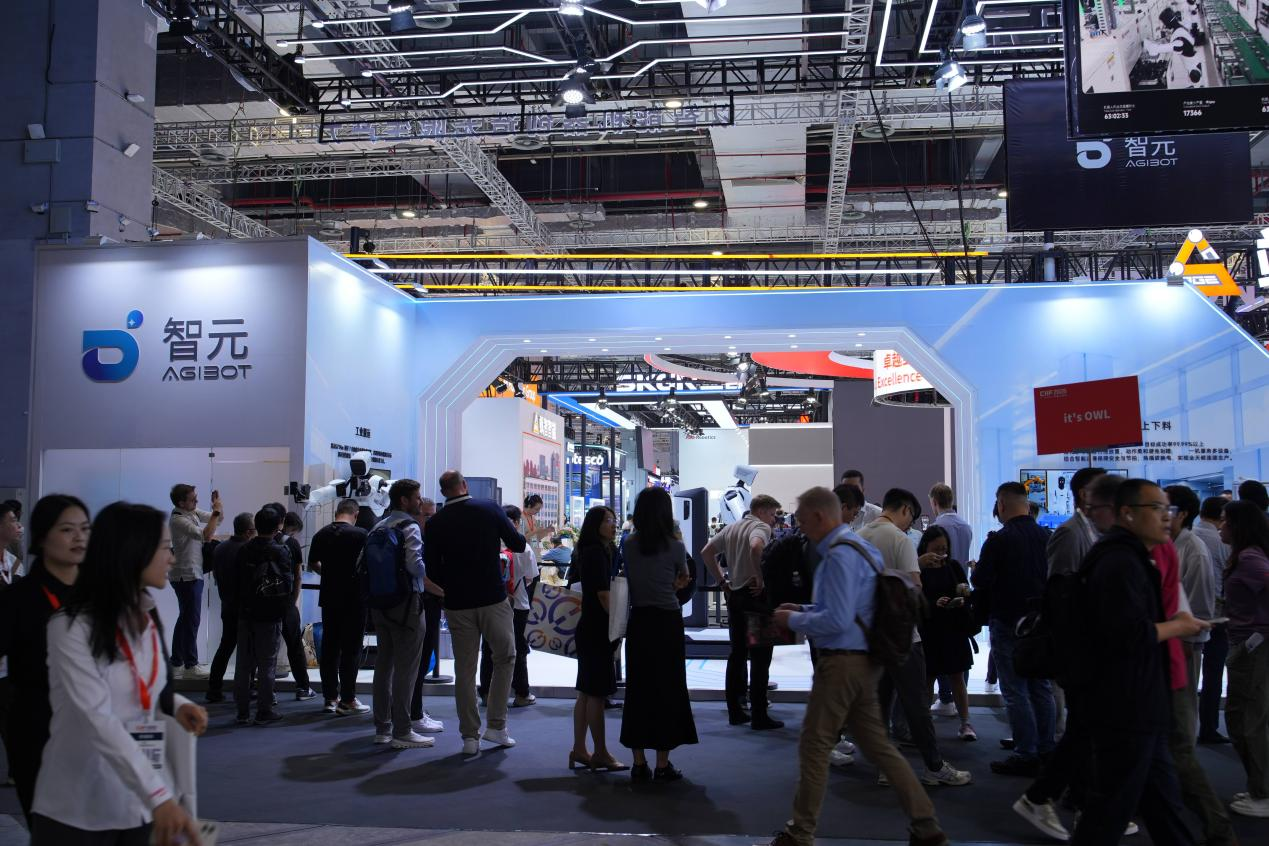

 AGIBOT
 Figure AI
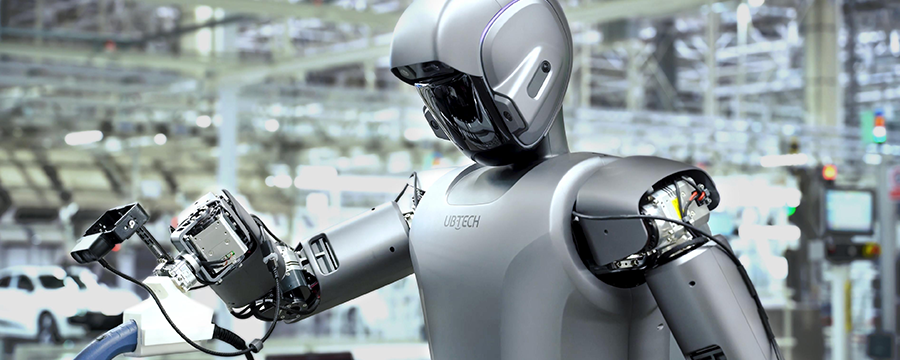 UBTECH