EY and Fudan University unveiled the winners of the 2026 Most Promising Enterprises awards, an annual selection programme themed “Breakthrough · Forging Ahead — Shatter shackles with hardcore innovation, iterate and pilot the future”. The initiative targets homegrown hard-tech innovators that deliver tangible commercialisation results, balancing technological breakthrough capacity with industrial influence.
RoboScience, the Chinese embodied AI firm, was named a 2026 EY Most Promising Seed Enterprise for its leading robotics technology portfolio.

Embodied artificial intelligence is moving toward large-scale commercial deployment as a key driver of new-quality productivity, addressing real-world industrial and societal pain points. For embodied AI developers, long-term potential lies not merely in completed task benchmarks, but in the model’s capability to adapt across different robot hardware platforms and port the same intelligence to diverse real-world environments.
RoboScience has built a full-stack technology stack spanning multimodal physical simulation, general embodied foundation models and robot hardware, adopting a hardware-software integrated strategy to accelerate scalable rollout of embodied AI.
-scaled.jpeg)
At the model layer, RoboScience developed Visics, its proprietary general embodied large model built on an innovative VLOA (Vision-Language-Object-Action) architecture. The framework creates an end-to-end pipeline from visual perception and natural-language command input down to physical robot motion output.
Visics runs on a dual-engine design. Its embodied world model perceives the physical environment and simulates 3D object motion trajectories, while a universal manipulation model translates those simulated trajectories into low-level physical control signals compatible with varied robot bodies.
The architecture fully decouples high-level semantic reasoning from underlying physical constraints. Pre-trained separately on massive video and simulation datasets, Visics gains generalization across three dimensions: robot hardware platforms, manipulated objects and task types.
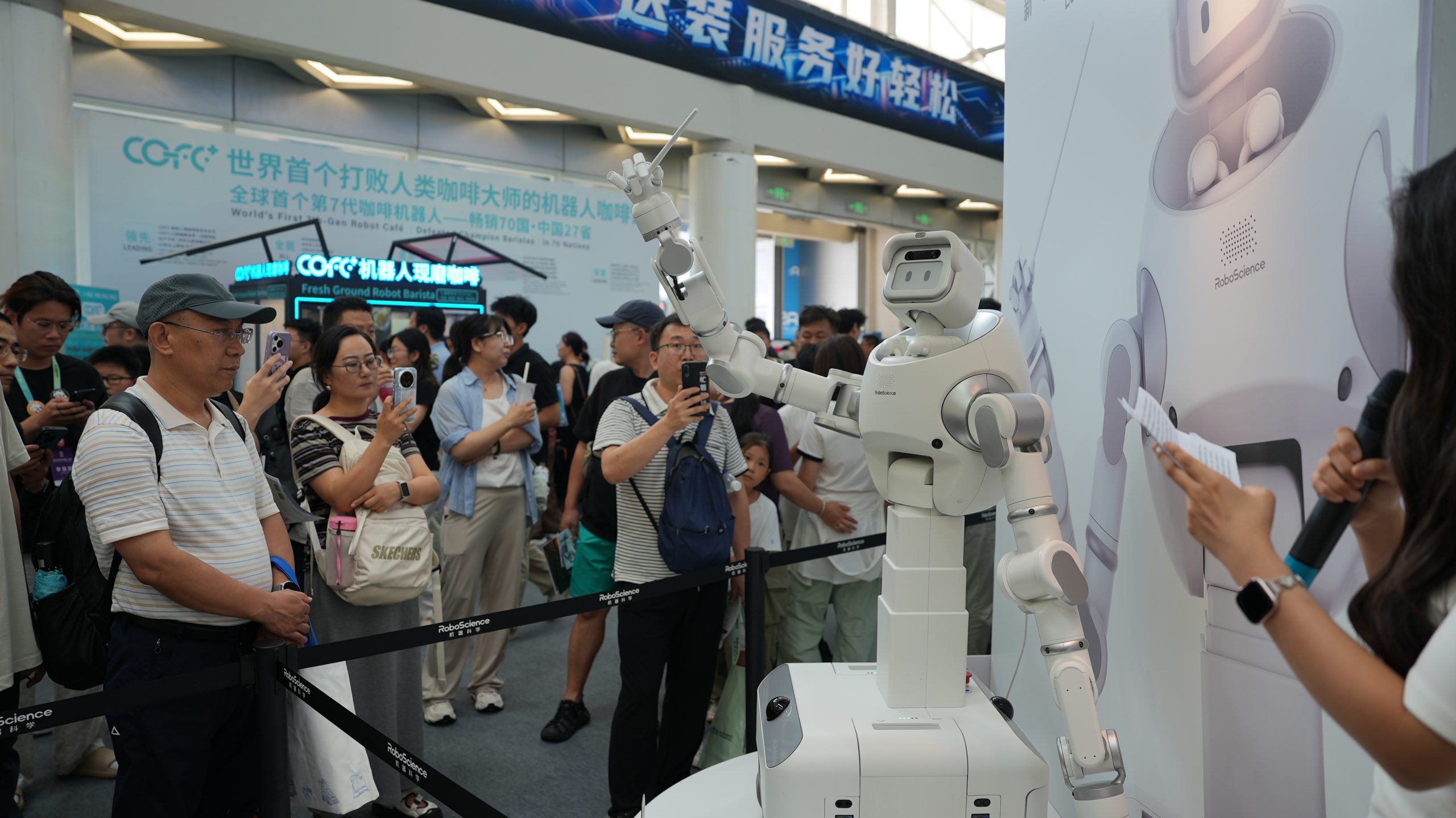
On the hardware front, RoboScience unveiled REX G1 in August this year, its first wheeled humanoid robot with bimanual manipulation capability, powered natively by the VLOA-based Visics embodied model. Built for logistics, retail, factory and domestic scenarios, REX G1 demonstrates a complete operational loop: task interpretation, motion planning and physical robot execution.
For commercialisation, the innovative VLOA architecture enables Visics to operate as the world’s first cloud-native general embodied foundation model. In July 2026, RoboScience sealed a strategic partnership with Tencent Cloud to launch the industry’s first cloud-based EaaS, or Embodied-AI-as-a-Service.
Developers can access Visics via cloud APIs without building embodied models from scratch or investing in dedicated data and computing infrastructure, plugging embodied intelligence into disparate robot hardware and custom tasks.
The value of this full-stack architecture lies in its closed-loop cycle: simulation and real-world data continuously refine model capabilities, while sensor data collected by deployed robots feeds back to further improve the model. From the Visics foundation model and REX G1 robot hardware to cloud-hosted EaaS, RoboScience is building a commercial ecosystem covering simulation, AI models and robotic hardware.
The EY award recognises RoboScience’s combined strengths in technical roadmap, full-stack capability and commercial viability. The firm said it will continue advancing Visics, REX-series robot platforms and EaaS offerings to deploy embodied AI into more real-world use cases.

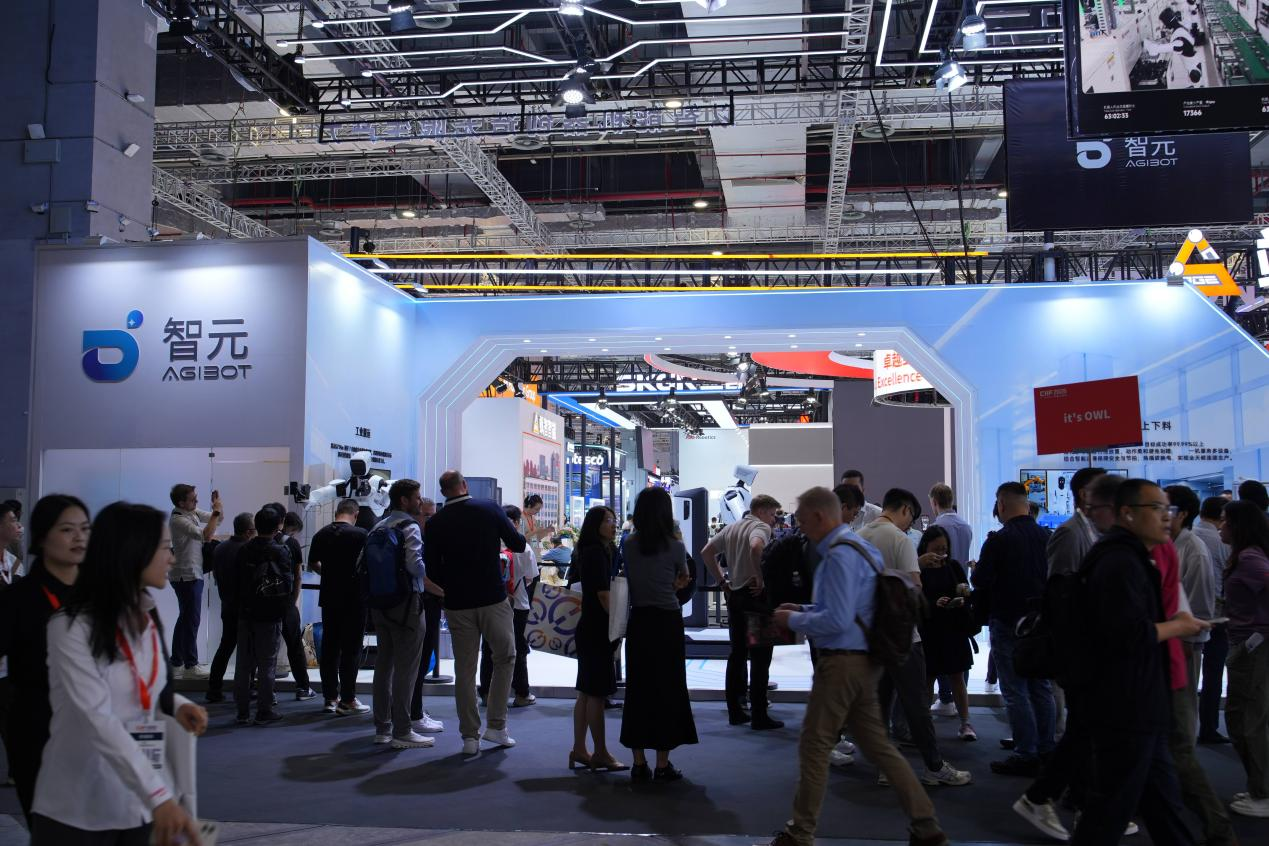


 AGIBOT