A real-robot operations team at China’s Maniformer has published a study warning that seemingly successful robot demonstrations can still teach embodied AI models the wrong actions, based on more than 200,000 hours of real-robot data and over 20,000 task records.
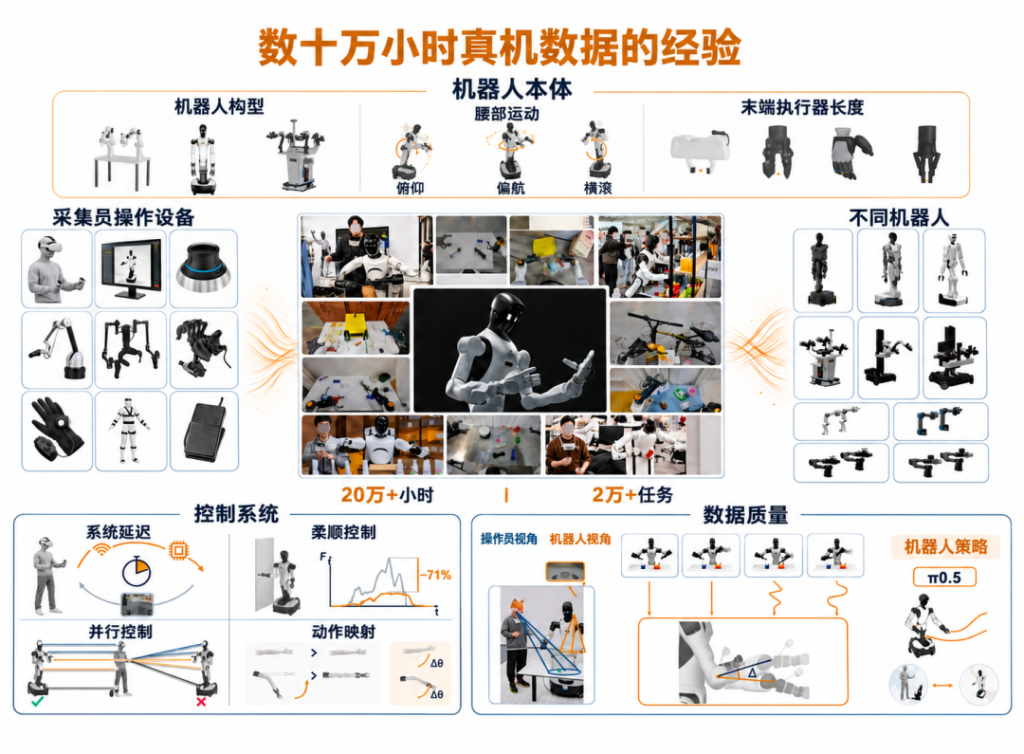
The paper, titled “Hidden Variables Behind Real-Robot Data Quality: Lessons from Hundreds of Thousands of Hours,” examines how post-training data from teleoperated dual-arm robots affects model performance. While pre-training on non-embodied data helps models acquire broad visual, language and task knowledge, post-training real-robot data aligns those capabilities with specific robots and physical interactions, leaving little room for error.
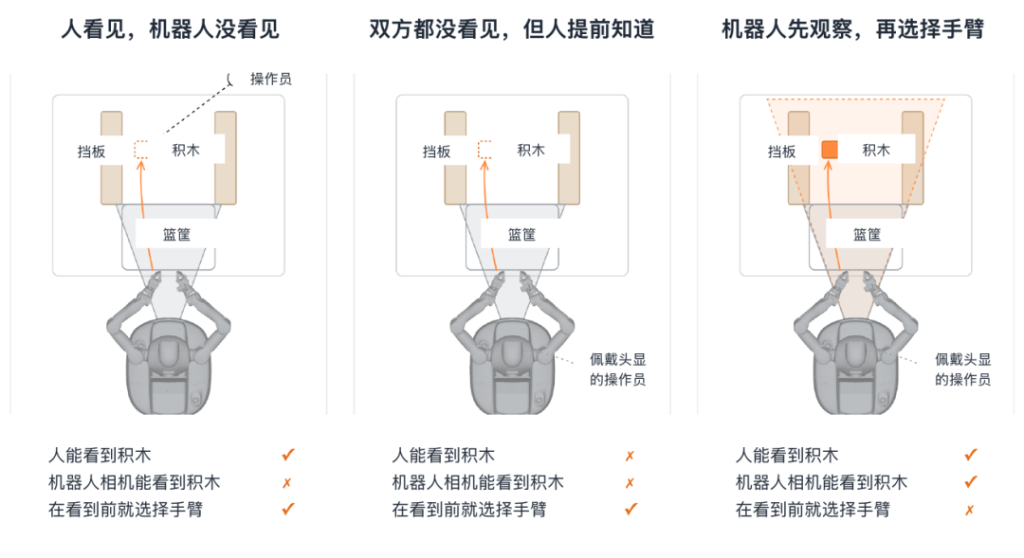
The study identifies three types of “successful” data that can still mislead models. First, observations may not cover the information needed for a decision: when a block was placed outside the robot’s initial field of view and an operator chose an arm based on their own view, models trained on such data selected the correct arm only about 50% of the time, close to random guessing. When the operator shared the robot’s viewpoint and located the block first, accuracy rose to 100%.
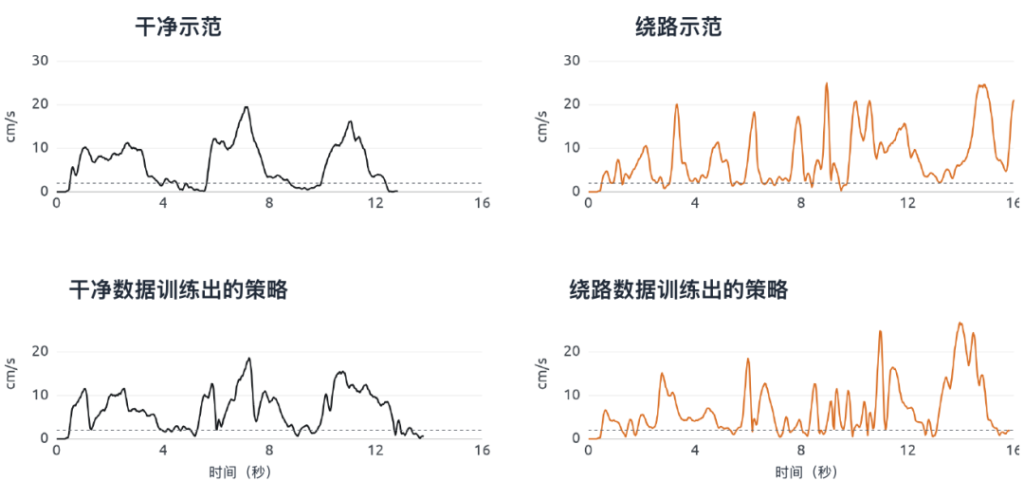
Second, calibration mismatches between data collection and deployment can break learned mappings. In tests, a deployment robot with joint zero-position errors failed all 30 real-robot trials. Third, unnecessary actions used by operators to compensate for system limitations can be learned as habits. Models trained on data with added pauses and detours retained about 90% of the extra path, increasing task completion time from 25.3 seconds to 32.6 seconds, or about 29%.
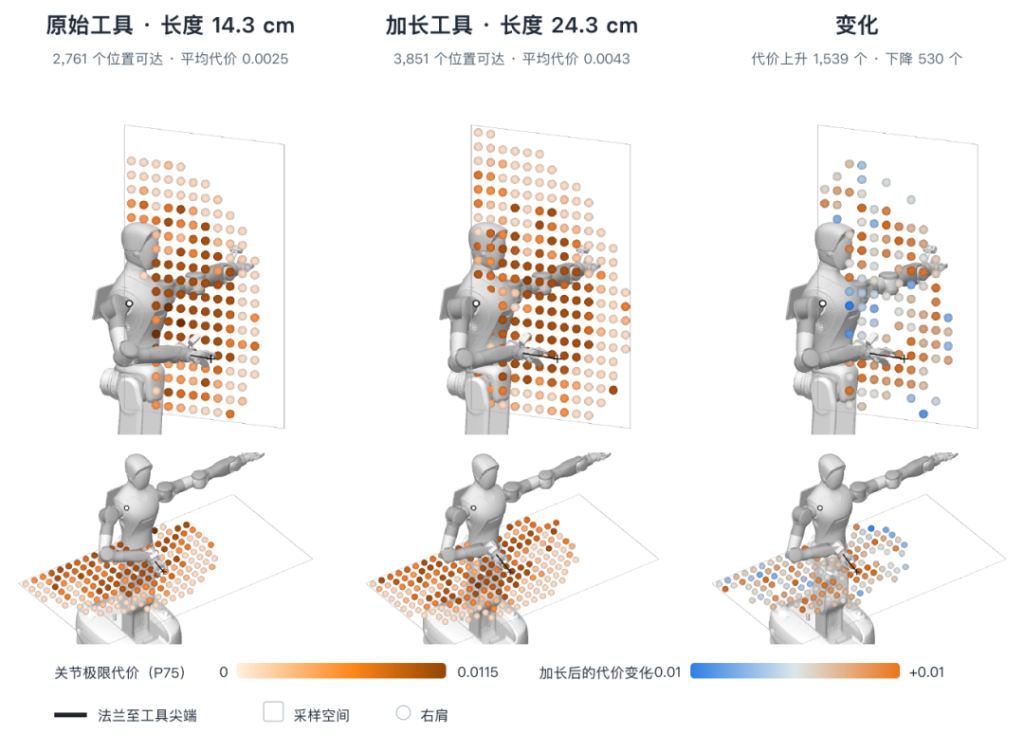
The study traces such “invisible bad data” to collection-system design. Analyzing 25 mainstream dual-arm robots, including models from AgiBot, Unitree, Galaxea, AgileX, ARX and Franka, researchers found that reachability alone overestimates a robot’s ability to complete tasks. Adding 10 cm to a gripper increased reachable positions by about 39.4% but reduced fine-adjustment margin, while waist movement expanded effective workspace to 3.4 to 5.5 times that of a fixed shoulder in some postures.
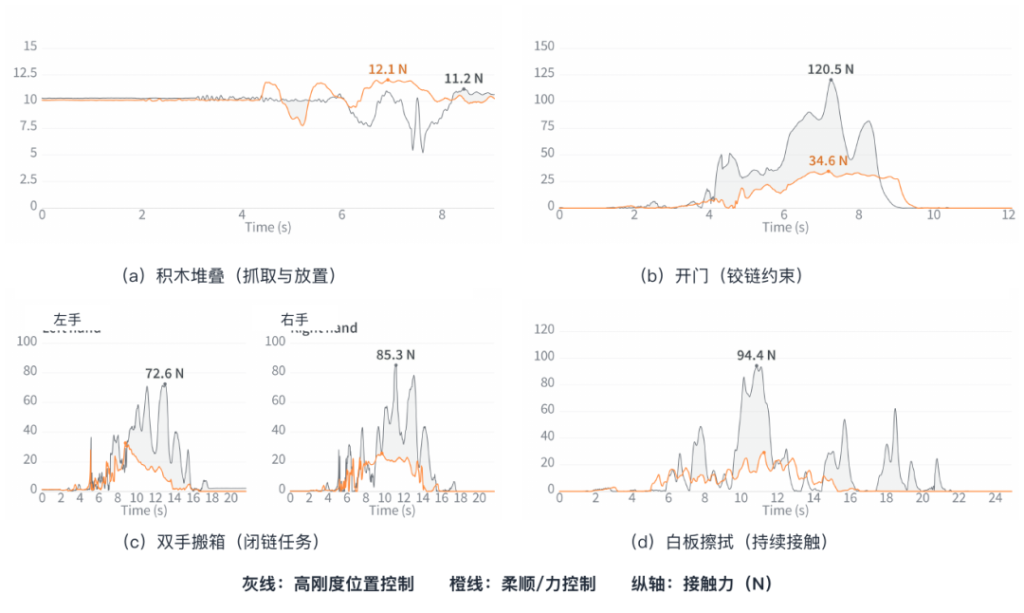
Control-system friction also injects spurious actions into data. Assigning waist control to inverse kinematics and head and chassis control to a headset allowed parallel body movement and cut task time by 43% to 53%. Compliant control improved success rates in contact tasks and reduced peak contact force in door-opening and wiping tasks by 71.3% and 69.1%, respectively. Latency is another hidden factor: a filtering algorithm completing in under 1 millisecond can introduce more than 200 milliseconds of phase lag, prompting operators to overshoot, wait and correct.
Maniformer said data quality must be managed across the entire collection pipeline, from robot and camera selection to monitoring latency, calibration and operator corrections, and to acceptance checks that go beyond task success to include completion time, trajectory length, motion continuity and whether the robot received complete decision information. The paper is available at https://arxiv.org/abs/2611.22388.





 AGIBOT
 Figure AI
 UBTECH