Boston Dynamics has tapped ex‑Amazon AI executive Rohit Prasad to fill its chief executive role, nearly nine months after Robert Playter stepped down from the top post. The robotics firm stated Prasad’s appointment will take effect the day following the announcement. Previously serving as senior vice‑president and lead scientist for Alexa and Amazon’s artificial general intelligence initiatives, Prasad is tasked with accelerating Boston Dynamics’ physical‑AI roadmap. The firm notes his expertise will fuse robotic hardware with cutting‑edge AI to scale commercial deployment of intelligent machines. “Boston Dynamics holds a distinctive edge in advancing physical AI, built on its world‑renowned robotics engineering talent,” Prasad commented in an official press release. “I’m privileged to join the business at this defining turning point...
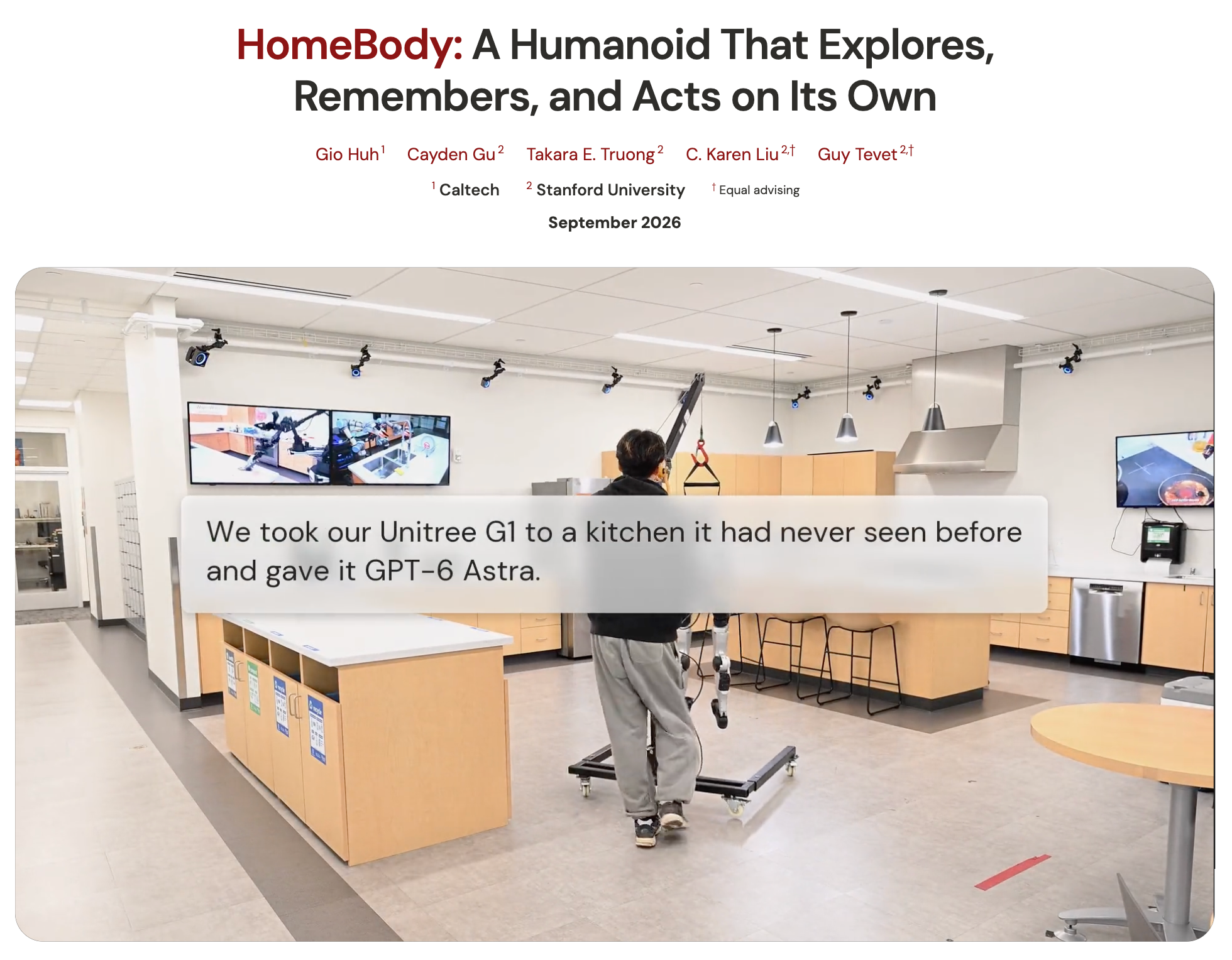
Researchers at Caltech and Stanford have unveiled HomeBody, a system that gives GPT Astra persistent spatial memory and the ability to execute compound humanoid actions for long-horizon tasks. In a kitchen demo, a Unitree G1 robot guided by Astra cleaned the room and retrieved remembered items from ambiguous requests. The team said the system requires no environment-specific training or additional policy learning. HomeBody replaces the trained intermediate VLA layer in conventional three-part architectures—System2 VLM for vision and instructions, System1 VLA for control commands, and System0 for coordinated motion. As frontier models such as Astra improve, the researchers argue trained VLAs are no longer necessary and System2 can directly manage reusable motion skills. A plug-and-play VLM calls a composable skill library....
SiMa.ai, a leader in Physical AI, announced $150 million in Series C financing, bringing the total capital raised to $500 million and valuing the company at $1.45 billion. The round was co-led by Fidelity Management & Research Company and Amplify, with participation from Alter Venture Partners, Dell Technologies Capital, Maverick Capital, +ND Capital, Point72 and StepStone Group. AllianceBernstein, Baron Capital, J.P. Morgan, and the State of Michigan also joined the round as new investors. The global market for Physical AI devices, including robotics, automotive, and drones, is set to explode with cumulative shipments projected to hit 145 million units by 2035, according to Counterpoint Research. This surge marks AI’s transition from software applications into tangible, real-world consumer and industrial hardware,...
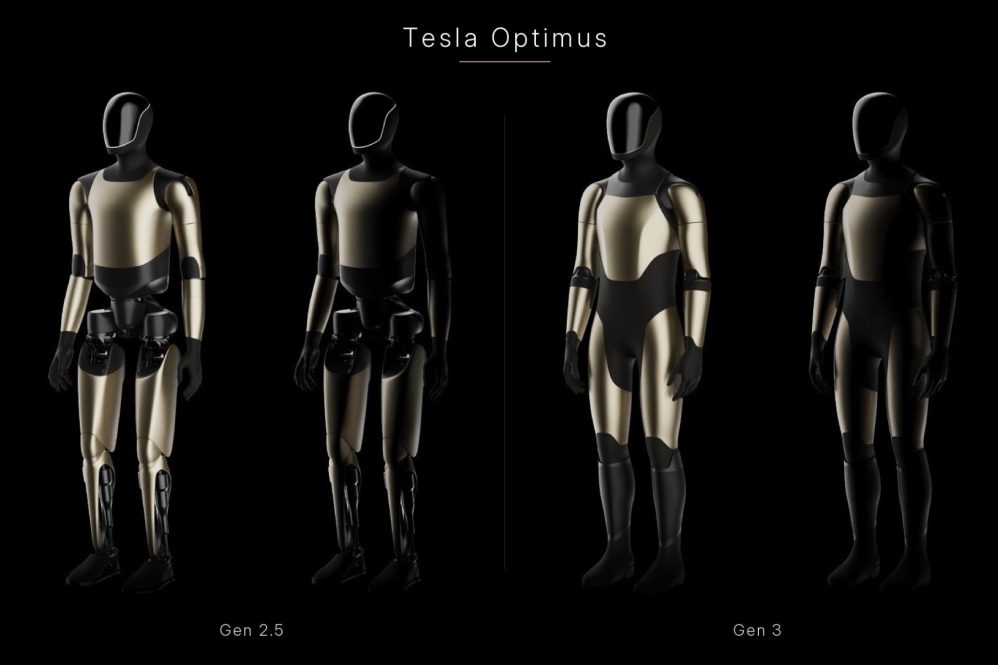
A robotics enthusiast accidentally unpacked Tesla Inc’s (TSLA.O) Android app package and discovered unreleased designs for the company’s third-generation Optimus humanoid robot, according to a now-deleted post on X. User @wholemars said in a post on Tuesday, which has since been deleted, that he extracted the material from Tesla’s app. The files included renderings labeled “gen3” and side-by-side images of Optimus 2.5 and Gen 3 to distinguish the two generations. The images were not concept sketches or fan renderings, but internal material Tesla embedded in a publicly distributed app package, according to the post. According to the leaked images, the Gen 3 Optimus appears more streamlined and designed for factory assembly lines rather than the laboratory. Compared with Optimus 2.5,...
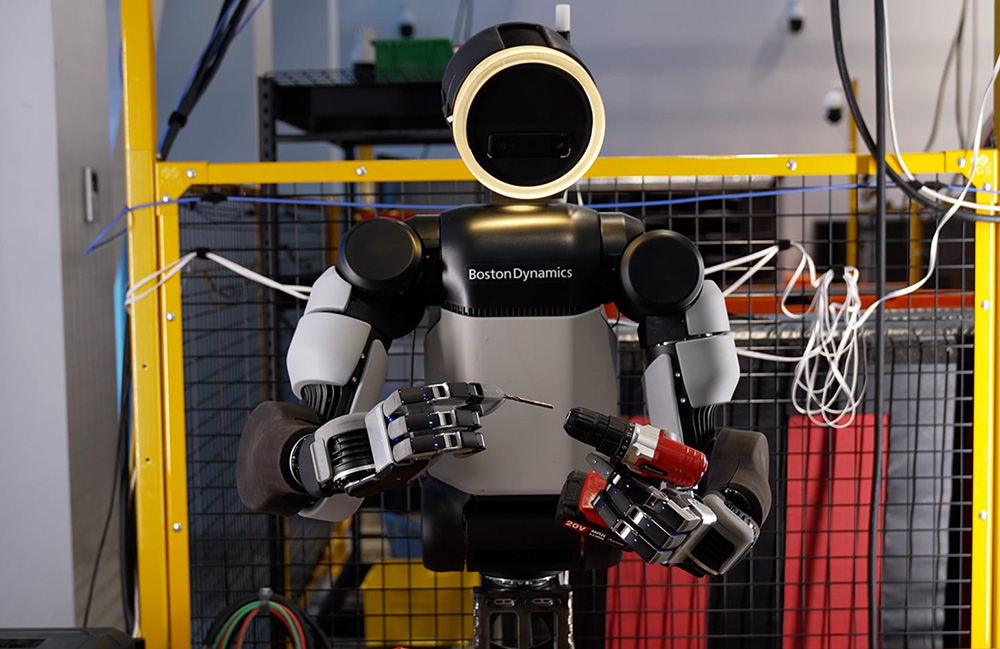
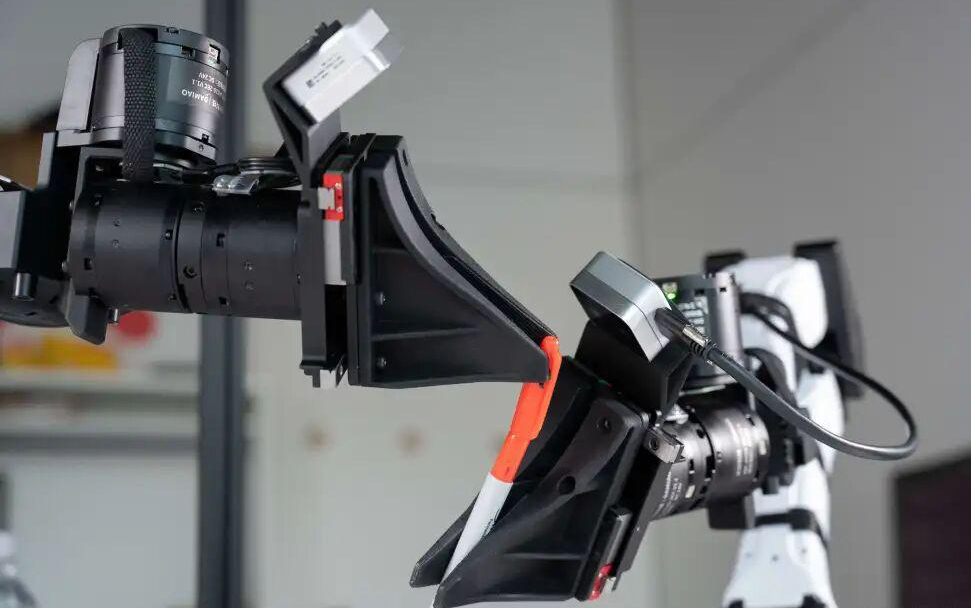
Boston Dynamics has introduced a new four-fingered hand for its Atlas humanoid, a 13-degree-of-freedom, directly actuated design intended for mass production. The hand marks a strategic shift. Earlier Atlas hands had seven degrees of freedom and were designed to grasp a wide range of objects. The new version focuses on manipulating them. “We considered many, many designs,” said Alberto Rodriguez, director of robot behavior for Atlas. “It boils down to a trade-off of competing objectives.” The design omits a pinky and is tailored for high-fidelity simulation and sim-to-real reinforcement learning. It uses a single actuator type, fully encapsulated joints and no fragile cables crossing joints. Boston Dynamics said the hand can slide the thumb tip along and across the other...
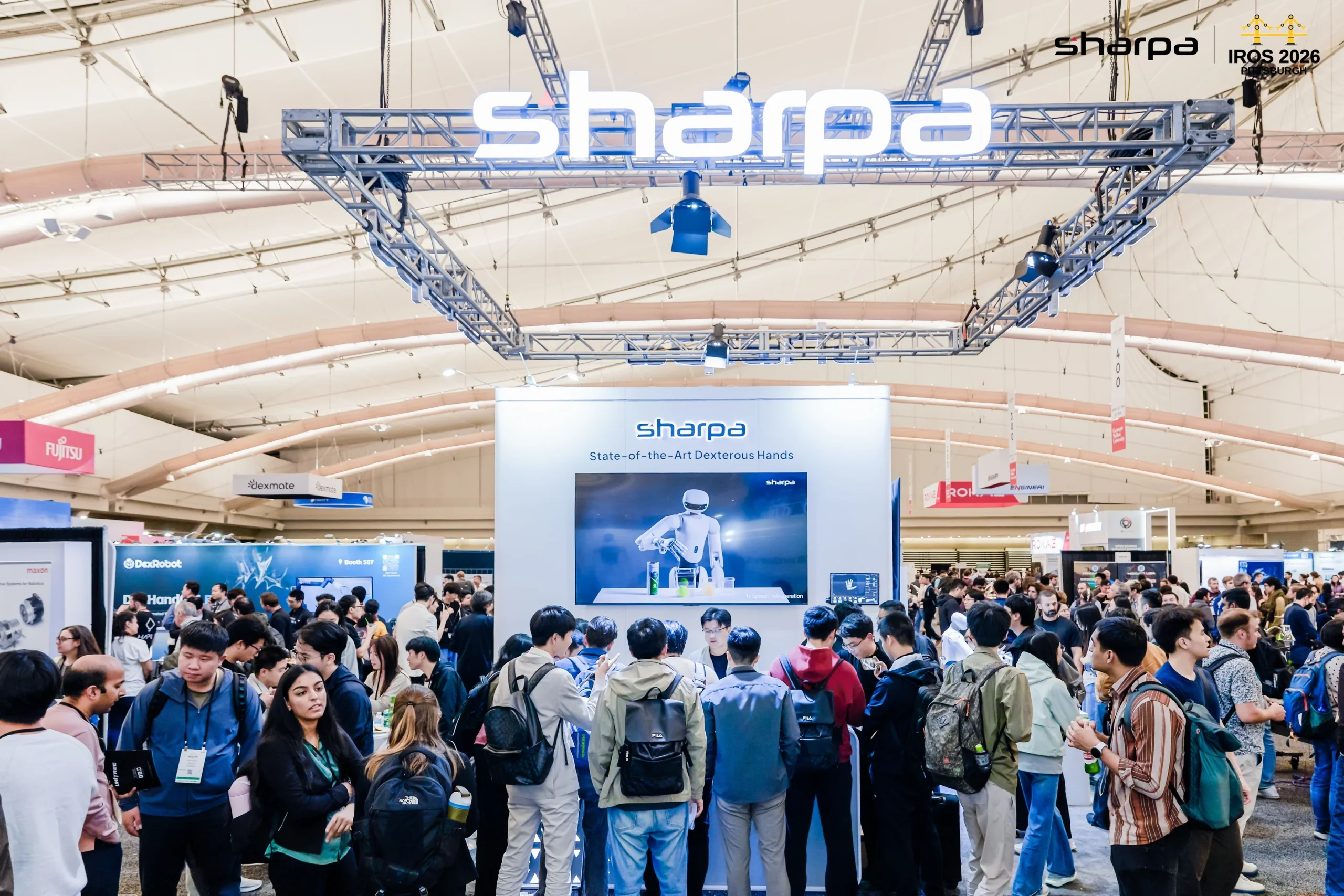
Sharpa unveiled three major proprietary new products at the IEEE/RSJ International Conference on Intelligent Robots and Systems (IROS): D01, the first integrated tactile-sensing robot built for dexterous manipulation; W02, a next-generation fully tactile, ultra-compact, lightweight dexterous hand; and AE01, a high-fidelity haptic exoskeleton data glove. Designed respectively for whole-body task execution, fine manipulation, and high-quality data capture, the three products address three critical aspects of robotics: how robots move, how they make contact with and manipulate objects, and how natural human motion can enable teleoperation and data collection. Together, Sharpa provide a complete hardware stack for complex, contact-rich manipulation in real-world environments. D01: the first integrated tactile-sensing robot built for dexterous manipulation. As Sharpa’s first integrated tactile-sensing dexterous manipulation robot,...
Toyota Motor Corp is launching a sweeping global factory upgrade that will put 400,000 robots to work, including a semi-humanoid model designed to learn tasks alongside humans, as the automaker seeks to build plants where people and machines coexist. The push includes ELEY, short for Embodied Learning robot for Enhanced Yield, a Toyota-developed semi-humanoid robot. ELEY has two fingers on each robotic hand, weighs about 50 kg, runs on battery or external power and moves on a wheeled base, according to Toyota’s website. Toyota said ELEY’s joints are designed on the same principles as human joints, with all dimensions based on the average Japanese adult male. The aim is to use large-model-based physical AI to let the robot directly imitate...
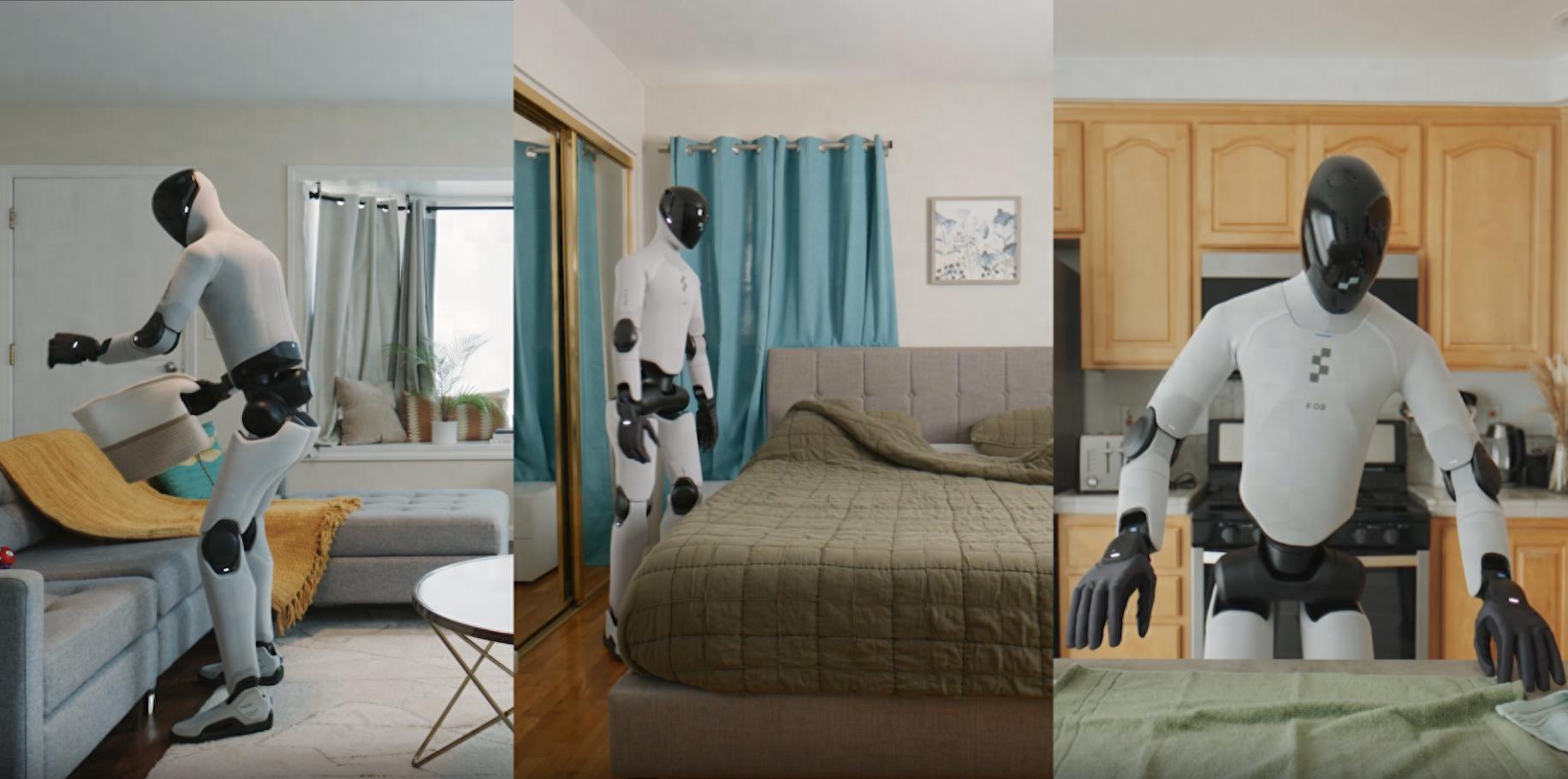
Figure, the U.S. humanoid robot developer, has released Helix 2.5, its most advanced neural network model to date, and said it enabled zero-shot whole-body autonomy in 30 real homes. Figure called it the first demonstration at that scale of zero-shot whole-body behaviour generalisation for a humanoid robot. The company said a single pre-trained foundation model was applied to three types of behaviour: locomotion; manipulation of rigid and deformable objects; and bimanual coordination, as well as active perception. Figure said that, with task-specific data, architecture, training method and evaluation unchanged, pre-training on Index alone raised zero-shot recognition success to 56% from 9%. Index is Figure’s robot dataset project built for global scale. The model also validated a Human-to-Humanoid Robot Transfer Scaling...
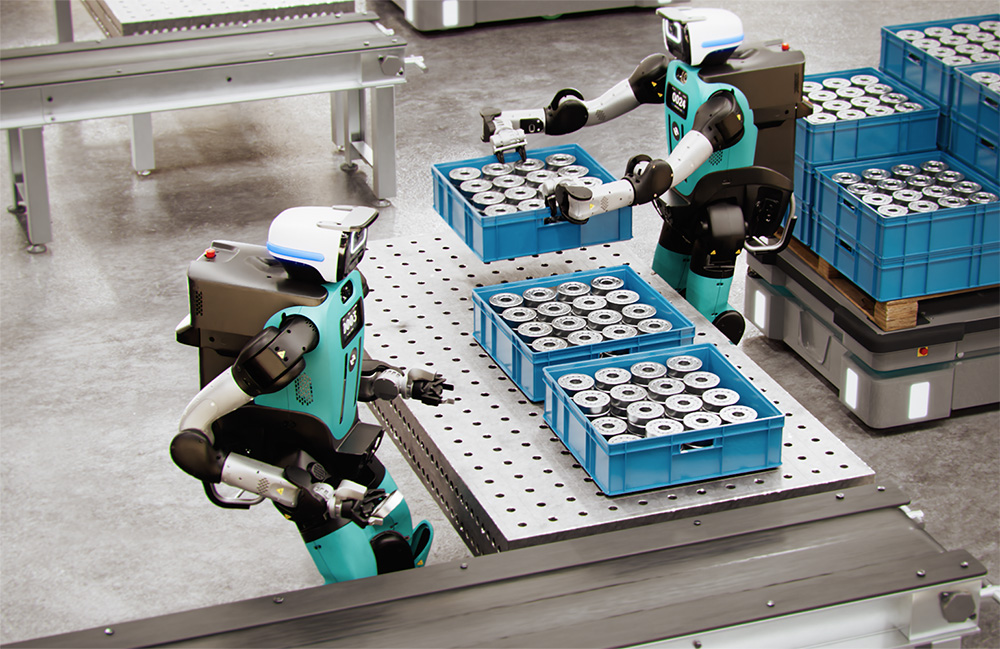
Agility Robotics unveiled Digit 5, its latest humanoid robot, as the firm advances plans to go public via a proposed SPAC merger with Churchill Capital Corp. XI. Digit 5 features new legs, upgraded batteries and a more comprehensive safety architecture, and can work in close proximity to people without physical safety barriers, Agility said. CEO Peggy Johnson said“a major barrier to scaling humanoid robots in industrial environments,” adding that the market has responded with more than $300 million in multi-year orders across manufacturing, warehousing and logistics. Agility reported $1.8 million in net sales in 2025, according to a recent SEC filing. The company expects early access to Digit 5 in the first half of 2027 and general availability for manufacturing,...
Robot training data startup XDOF is in late-stage talks for a Series B round at a valuation of about $1.2 billion, led by 8VC, just three months after closing a $70 million Series A. Annualized revenue has approached $50 million, serving about 20 clients, including several frontier AI labs. Founded in 2024 by UC Berkeley researchers Philipp Wu (CEO) and Fred Shentu (CTO), XDOF collects real-world teleoperation data to train general-purpose robots. Unlike large language models, robots have no internet-scale off-the-shelf data to draw on. XDOF’s business is to fill that gap.
China Telecom's TeleAI incubates embodied AI startup Gamma Robotics
China Telecom's Artificial Intelligence Research Institute (TeleAI) has incubated Gamma Robotics, an embodied AI company that has recently registered in Shanghai's Xuhui district and moved into Mosu Space, according to company information.
Gamma Robotics is an independent market-oriented entity invested by China Telecom Group and incubated by TeleAI. It will co-build a humanoid robot laboratory with TeleAI.
MIRACLE AUTOMATION's Jiangsu robot data center amasses PB-scale embodied AI data
MIRACLE AUTOMATION, the automotive equipment maker operating the Jiangsu Province Embodied Intelligent Robot Industrial Data Collection and Training Center, has accumulated nearly 20,000 hours and PB-scale multimodal embodied AI data, the company said.
The center has built 36 first-level application scenarios and 163 second-level segmented data-collection scenarios. MIRACLE AUTOMATION is seeking to translate its long-standing production-line experience into data and technology capabilities that can support the industrial deployment of embodied AI.
Shenzhen's YITA DYNAMICS raises over 100 mln yuan in seed funding
Shenzhen-based embodied intelligence operation platform and power system company YITA DYNAMICS said it has completed seed and seed-plus funding rounds totaling more than 100 million yuan ($14 million). The rounds were jointly invested by Matrix Partners China, SenseTime Guoxiang Capital, CCB International, L2F Light Source Entrepreneur Fund, Galbot and Fourier Intelligence. Founded in May 2026, YITA DYNAMICS is focused on building underlying infrastructure for embodied intelligence hardware and has developed compliant force-controlled dual arms and high-performance joint modules.
Robot Warriors Challenge held in Beijing E-Town with 29 teams competing
The autumn edition of the 2026 Robot Warriors Challenge was held on Oct. 18 at the Nanhaizi Park waterfront plaza in the Beijing Economic-Technological Development Area, also known as Beijing E-Town, with 29 teams from across China taking part. As an independent event IP created by Beijing E-Town, the competition aims to push robots beyond running and jumping demonstrations toward real-world operational tasks. MirrorMe Technology, GENISOM AI Milk Long Team B, Xingyuan Dynamics Team A and AK Brothers Team B won their respective categories.
AGIBOT has partnered with Wuhan Culture and Tourism Group and Zhongyun Weixun to build the world's first smart retail warehouse operated by full-size bipedal humanoid robots. Its Expedition A3 Ultra robot has begun offering self-service retail services at Jiangyushang on the Wuhan riverside. The project has completed 827 orders in its phase to date, with a robot grasping success rate of more than 97%.
Tesla's third-generation Optimus robot ready for mass production
Tesla's third-generation Optimus humanoid robot is ready for mass production, refocusing market attention on the sector. Artificial intelligence is moving from the digital world into physical space, with humanoid robots viewed as one of the most important embodiments of physical AI.
China launches National Data Group in Xiong'an to boost data sector
China established National Data Group Co., Ltd. in Xiong'an New Area, Hebei province, on Oct. 20. The group is a central state-owned enterprise whose main responsibility is the development and utilization of data resources, with headquarters in Xiong'an.
The group was set up to advance data resource development and utilization, unlock the value of data elements, support artificial intelligence development and foster the data industry ecosystem, according to the company. After its establishment, it will strengthen central-local coordination and industrial collaboration under the guidance of relevant authorities, promote shared capabilities, experience and business expansion, and work to grow data value, strengthen the data industry and improve the data ecosystem.
Galileo's E1 quadruped robot wins gold at 2026 Canton Fair design awards
Galileo (Tianjin) Technology Co., Ltd.'s E1 series intelligent bionic quadruped robot has won a gold award at the 2026 Canton Fair Design Innovation Award (CF Award). The E1 series is fully self-developed by Galileo, with its complete machine structure, integrated servo joints and bionic gait and posture control algorithms 100% independently controllable. It holds more than 300 independent intellectual property rights. Equipped with all-terrain adaptive posture adjustment and force-sensing technology, the robot can autonomously identify unstructured complex terrain such as stairs, ramps and rubble. It is designed for applications including petrochemicals, power operation and maintenance, rail transit, emergency rescue and security patrol inspection.
RobotHOT brings China & Global Robotics Insights. Explore robotics, embodied‑intelligence updates, startup news and industry analysis for professionals worldwide.


 AGIBOT
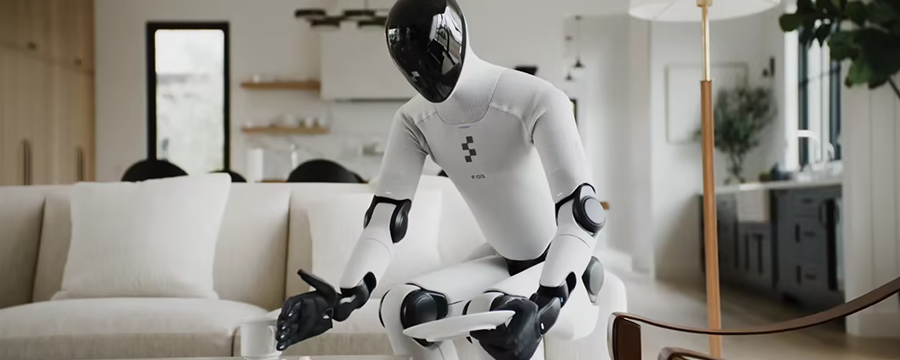 Figure AI
 UBTECH