RoboScience, a Chinese general-purpose embodied AI company, unveiled its first wheeled humanoid general-purpose robot REX G1 at the 2026 World Robot Conference (WRC) in Beijing, while claiming an industry first by publicly displaying real-time visual reasoning from its cloud-based world model — breaking the long-standing convention of keeping inference processes opaque in public demonstrations.
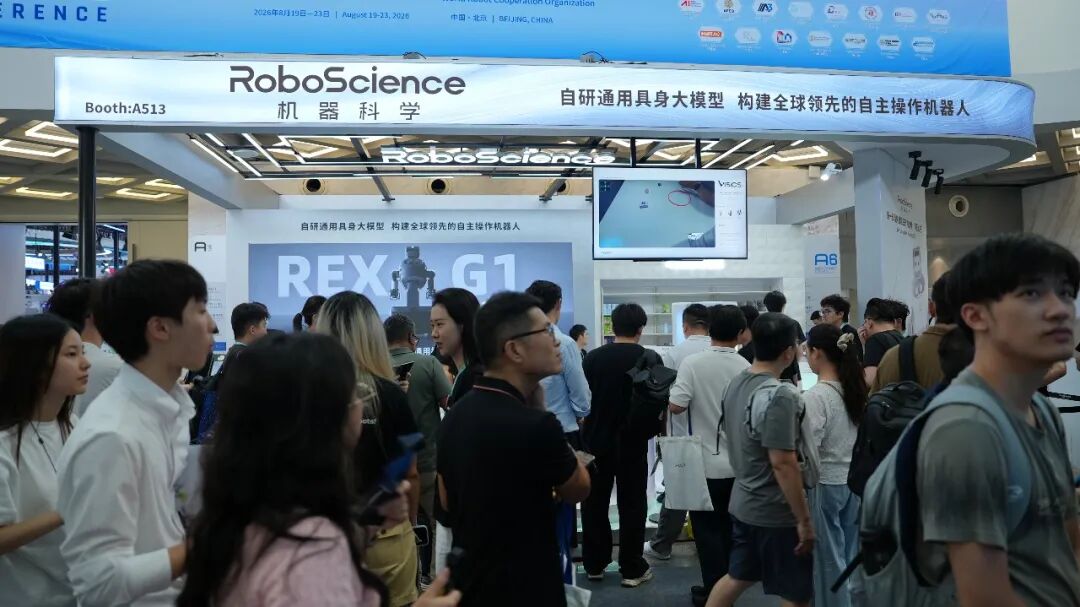
The 22-degree-of-freedom REX G1, which features a dual-arm configuration with a 10 kg payload capacity and repeat positioning accuracy of ±0.1 mm, performed a “lighting conductor” show at the company’s booth. The robot’s operating height ranges from 0.1 to 2.0 meters, with an adjustable width between 540 and 640 mm.
World model visualization breaks industry convention
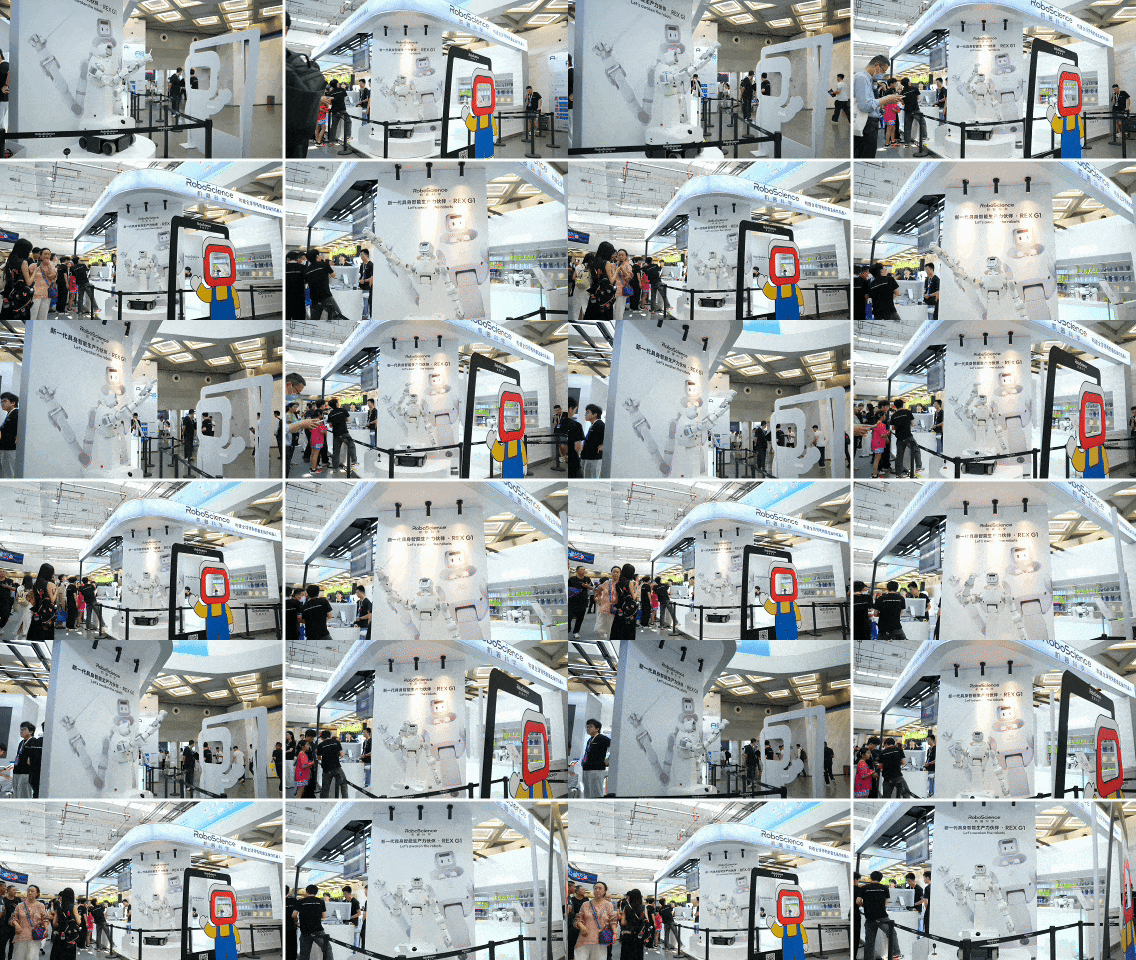
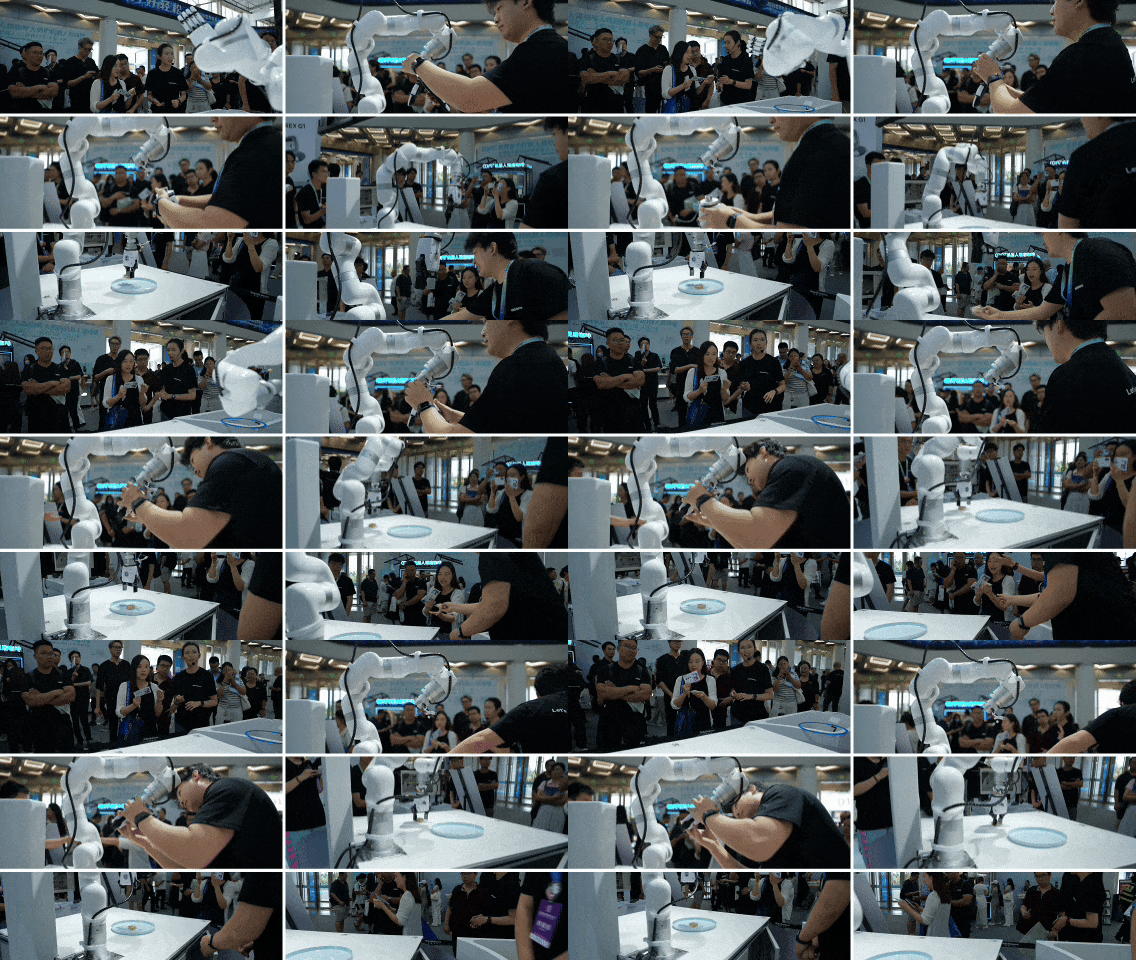
At the RoboScience booth, multiple dexterous hands of varying configurations ran on the same Visics general-purpose embodied AI model. The booth was set up as an open “testing ground” where visitors could place any personal items — rigid or flexible, regular or irregular shapes such as headphones, lipstick or hats — and issue voice commands in natural language, such as “put the cup to the left of the tissue”.
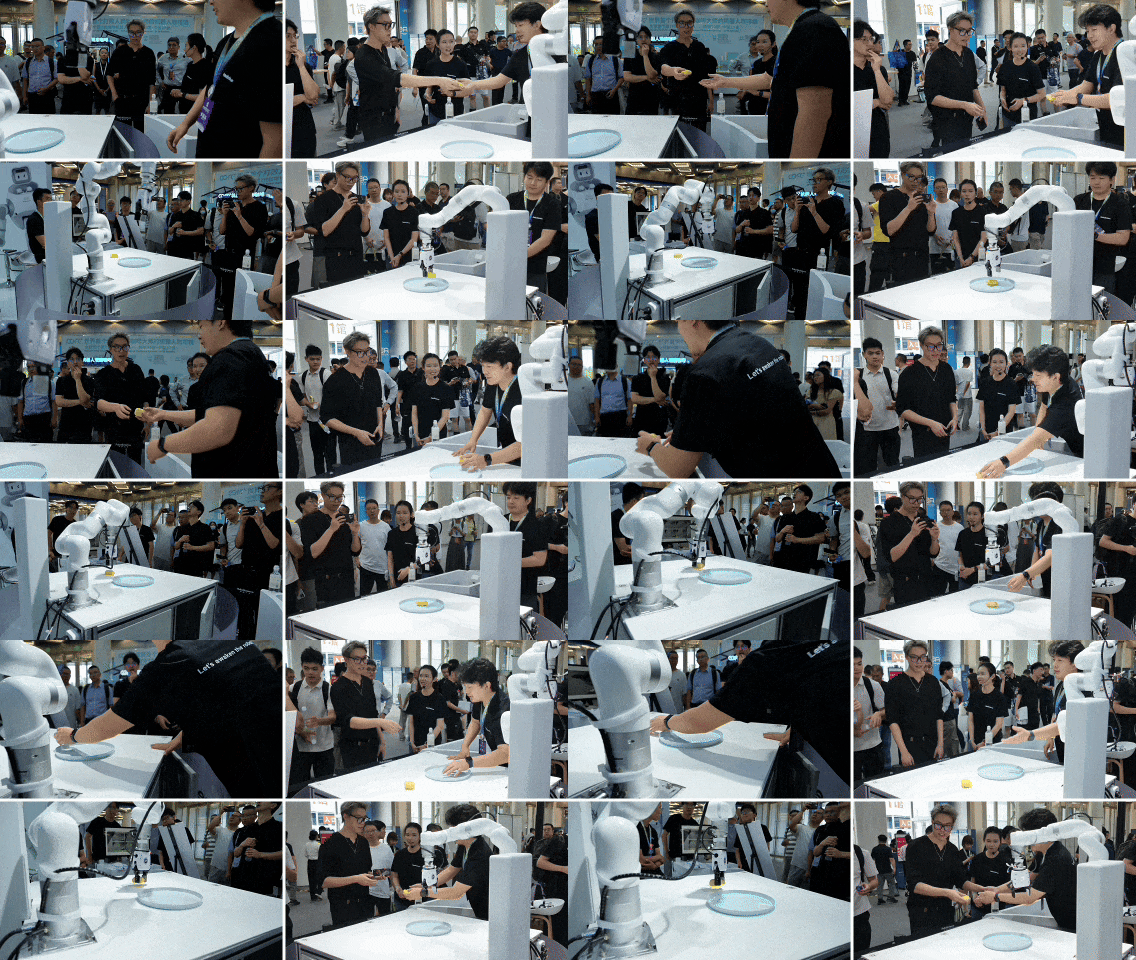
After confirming the command, the system calls upon an embodied world model and a general-purpose operation model deployed on Tencent Cloud via API, jointly interpreting visual information and natural language instructions to generate real-time operation strategies that drive the dexterous hand to complete grasping and placement tasks.
In what the company claims as an industry first, RoboScience made the world model’s reasoning process publicly visible. Previously, embodied AI demonstrations have long operated under a “results visible, process invisible” paradigm — audiences could see robots completing actions but had no way to verify whether the actions stemmed from the model’s autonomous reasoning, backend intervention, or preset scenarios.
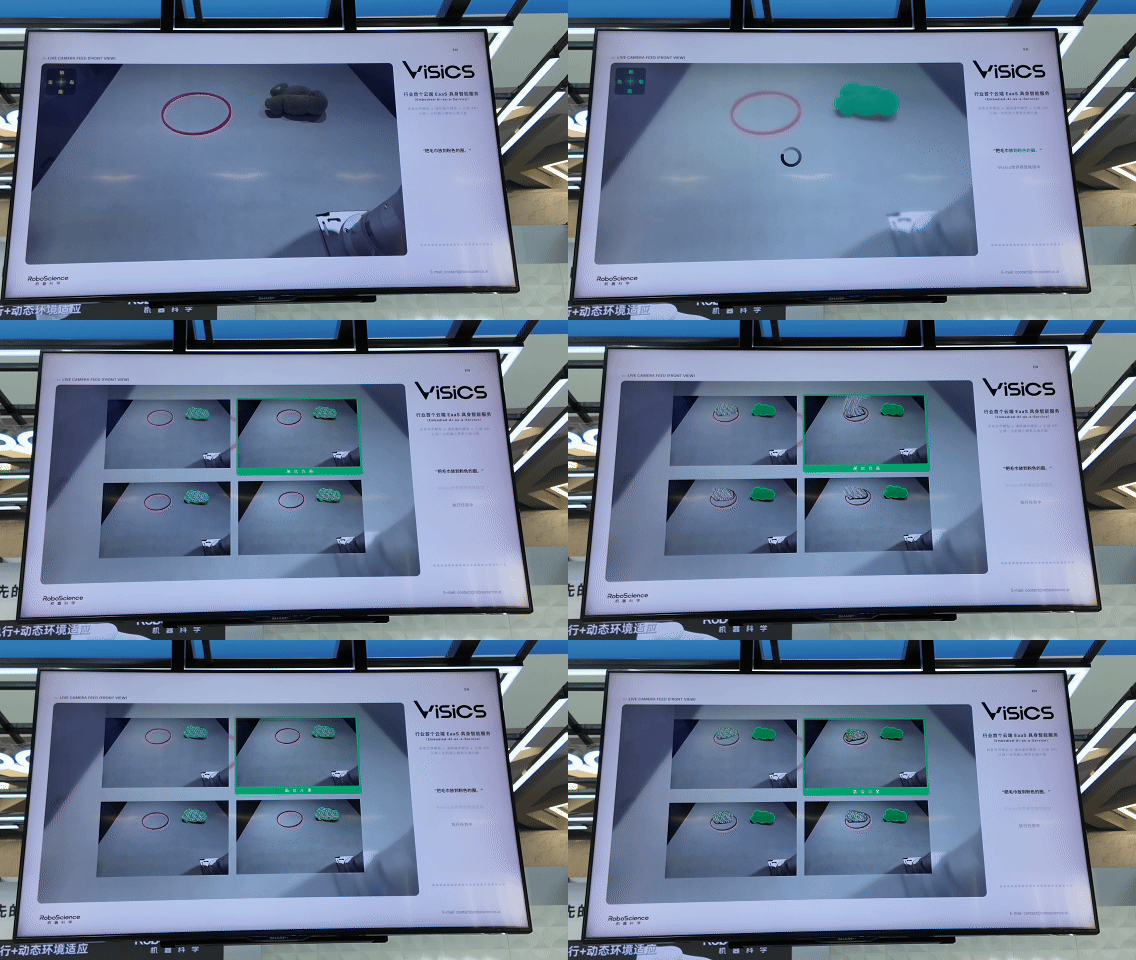
After a user issues a voice command, the cloud-based embodied world model completes its inference within seconds. A screen displays four reasoning outcomes in real time through 3D point cloud dynamic trajectories: the model identifies object positions, computes motion trajectories for delivering various items to designated locations, and selects the trajectory with the highest success probability for execution by the lower-level operation model.
“What is visualized is not the execution result, but the decision-making process itself — how the model evaluates spatial relationships and how it chooses among four candidate trajectories,” the company said.
The trajectory appears on screen before the physical action takes place at the booth, allowing visitors to verify the correspondence between inference and execution in real time. Every time a visitor rearranges an object, the position and pose are reset; voice commands are not drawn from any preset list. No pre-recorded trajectories are available for invocation — Visics’ understanding of the task and generation of strategies are completed on the spot.
Unlike technical approaches centered on 2D pixel prediction, RoboScience’s world model is a 3D dynamic world model that predicts and infers 3D point cloud trajectories of objects, enabling results that satisfy physical constraints and offer stronger interpretability. The world model and lower-level operation model together form a “reasoning-action-reasoning-action” dynamic closed loop to handle uncertainties in real-world deployment.
Cross-embodiment generalization and rapid hardware switching
On the hardware front, RoboScience demonstrated rapid swapping of dexterous hands: switching to a different configuration within 30 seconds, with no need for retraining or fine-tuning for specific hardware. The same model continues to operate seamlessly. The three variables — arbitrary objects, random instructions, and multiple embodiments — correspond to Visics’ generalization capabilities across objects, tasks, and embodiments.
The company said the demonstrations show the complete technical chain from perception to execution has achieved a closed loop.
Company background
RoboScience, officially known as Beijing Jike Future Technology Co., Ltd., was established in December 2024 and began operations in March 2025. The company was co-founded by Tian Ye, former technical lead of Apple’s AI Platform team, and Shao Lin, assistant professor at the National University of Singapore. The company raised 1 billion yuan in a Series A financing round in June 2026.
The REX G1, positioned as a “next-generation embodied AI productivity partner,” was officially released on August 17, 2026, just ahead of the WRC show.
 AGIBOT
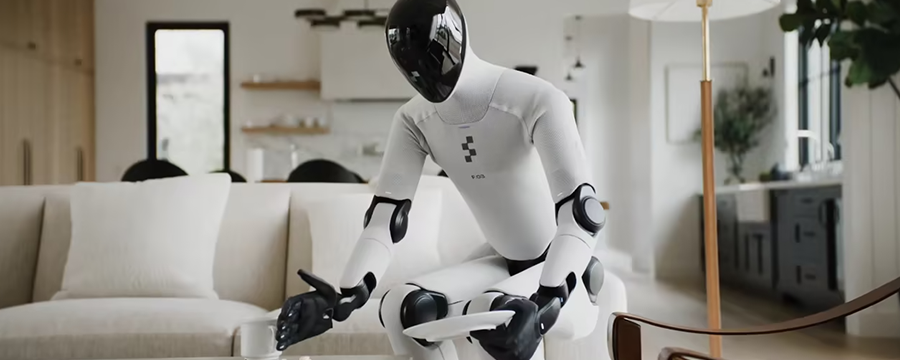 Figure AI
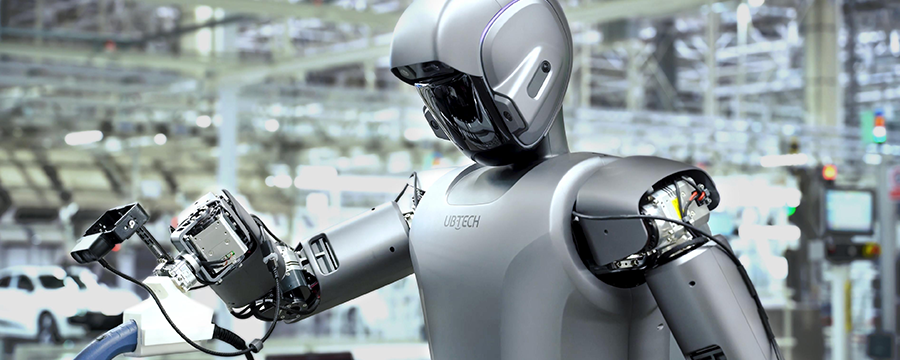 UBTECH