Foundation Future Industries, a U.S. humanoid robot startup seeking a $3 billion valuation, has failed to pay staff on time for the second time this year, CNBC reported, as the company races to raise new funding.
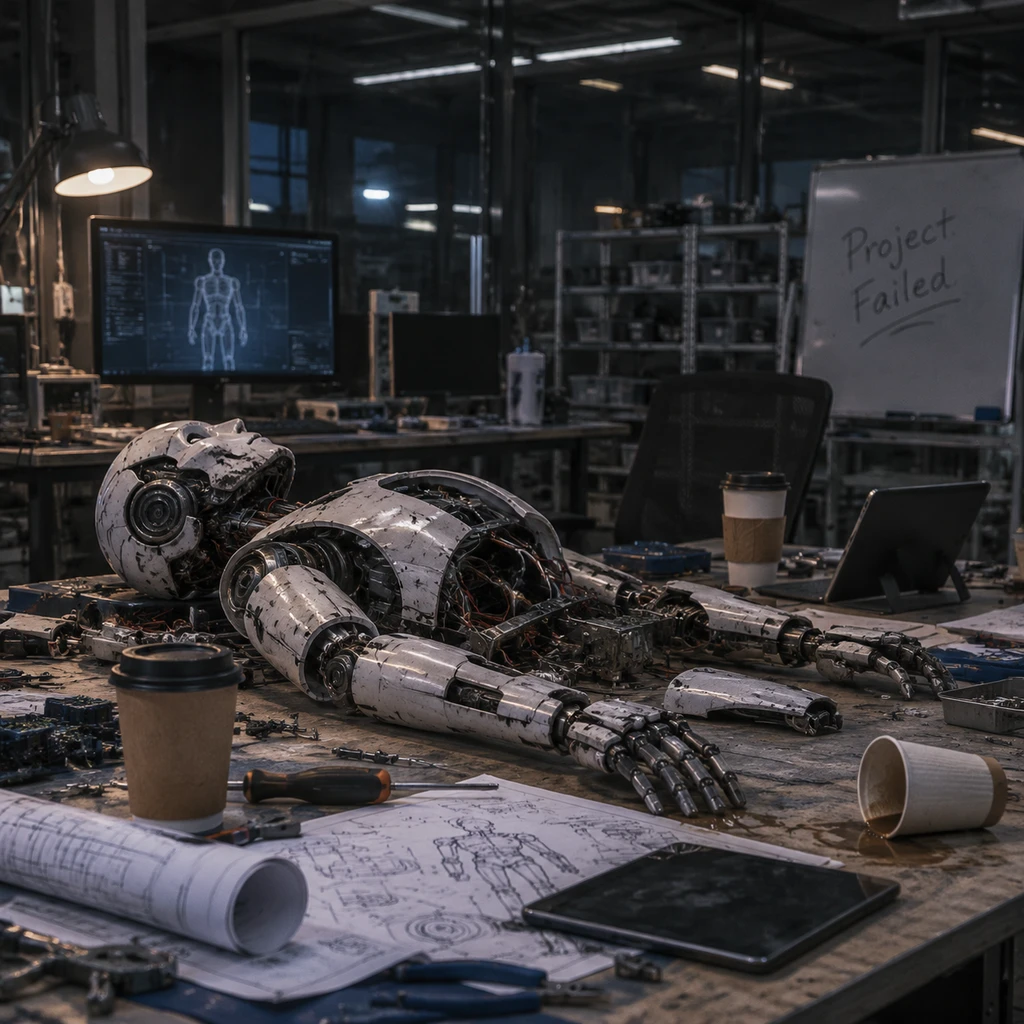
Wages due on Oct. 30 had not been paid as of CNBC’s Nov. 14 report. Founder Sankaet Pathak told employees in an internal memo that the company was trying to raise funds to cover the missed payroll, according to the report. In August, Foundation delayed pay before an existing investor provided a bridge loan and staff were paid about two days late.
The cash crunch comes as governance concerns mount. Pathak borrowed $4.6 million from the company in 2025 to buy a home in Sausalito, California, and it was unclear whether the loan had been repaid, CNBC reported. He is also Foundation’s majority shareholder and sole board member, meaning outside investors learned of the loan through financial disclosures.
Foundation, founded in April 2024 by Pathak, Tribe Capital’s Arjun Sethi and former U.S. Marine Mike LeBlanc, raised $11 million in pre-seed funding in August 2024. It sought $100 million at a $1 billion valuation in May 2025 and is now targeting $3 billion while raising hundreds of millions of dollars, according to the report.
The startup has pivoted toward defense. It acquired Florida-based Boardwalk Robotics in late 2024, and its Phantom MK-1 robot has been shown performing tasks including loading mortar shells. In 2026, Eric Trump became an investor and chief strategy adviser. In July, Foundation said it would use AMD processors in its second-generation Phantom and outlined plans for factories producing 5,000 robots a year from October 2026 and 50,000 a year from the following year.
Foundation has said it would lease robots to industrial customers for about $100,000 a year and sell military versions for about $300,000 each. On Nov. 11, the Financial Times reported that co-founder LeBlanc said Foundation was discussing supplying up to 1,000 robots to the Israeli military for tasks including patrols of tunnels in Gaza, a deal that could be worth about $300 million at its military price. At the Phantom MKII launch on Nov. 18, Pathak denied that a formal deployment contract was being negotiated with Israel, saying the two sides had only very early exploratory discussions. The MKII has a payload of about 91 kg and is slated for production in early 2027, subject to delivery checks.
Questions remain over Foundation’s order book. An April television appearance described a $24 million Pentagon contract, but public federal procurement records showed no direct award to Foundation, according to local media. Boardwalk holds four public government contracts totaling about $3.22 million, while a $24.8 million Navy contract belongs to Boardwalk research partner IHMC. Pathak has said Foundation has performed more than $70 million of work through prime contractors and subcontracting, a figure media could not independently verify. In 2024 fundraising materials, Foundation cited a pending General Motors investment and a potential $300 million purchase order; GM denied the investment claim, and LeBlanc later acknowledged the materials overstated the relationship.
At a July demonstration, a Phantom MK-1 robot failed for 15 minutes to load a plastic mortar shell, the local media report said.


 AGIBOT
 Figure AI
 UBTECH