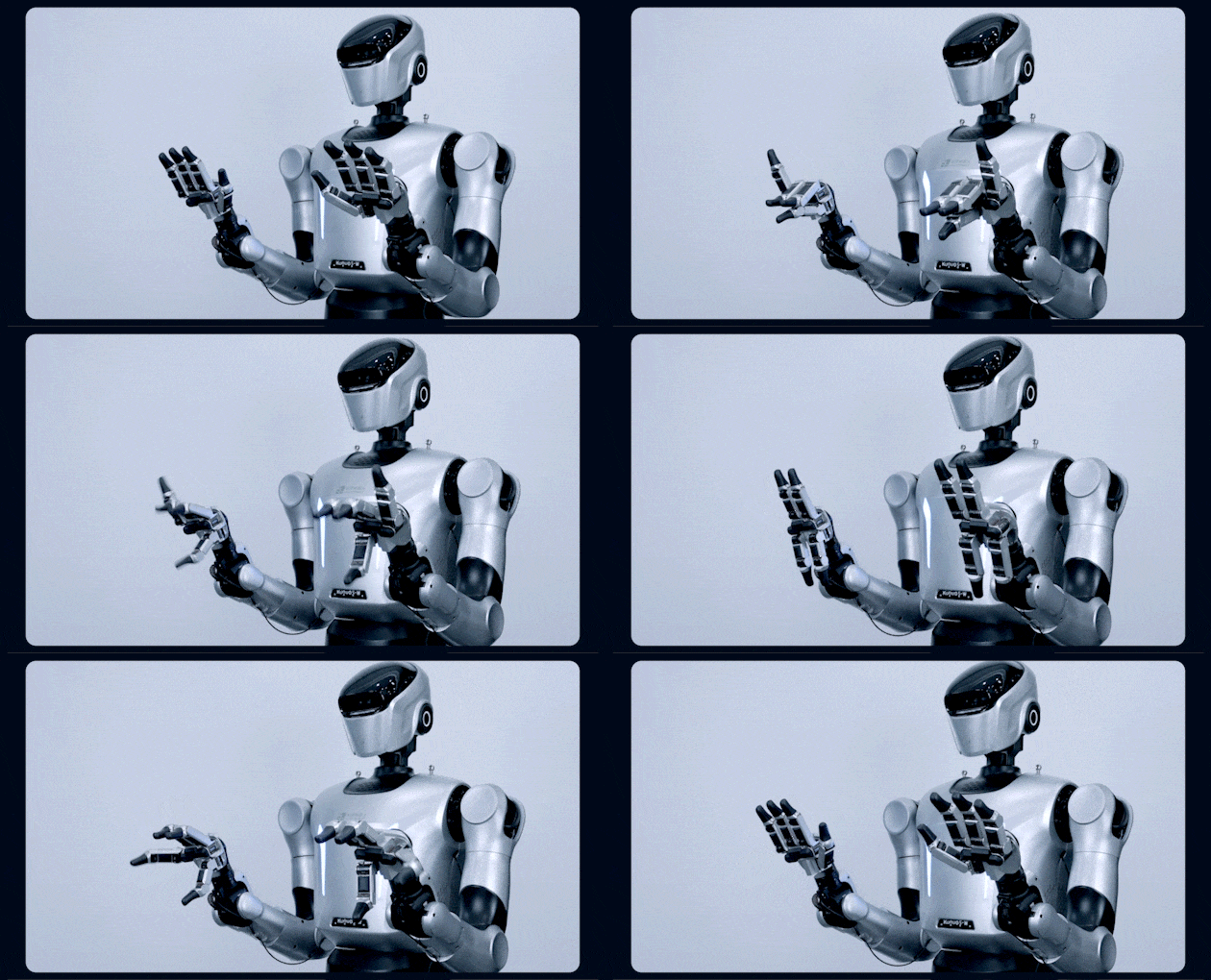
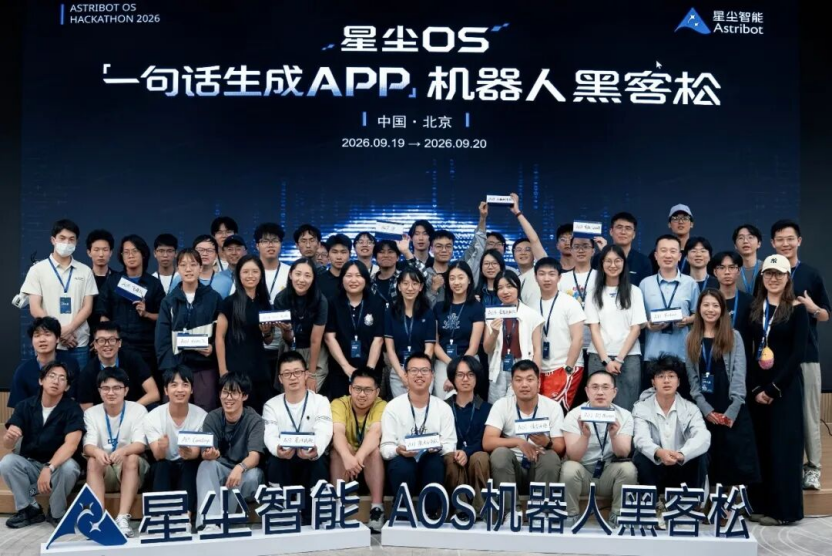
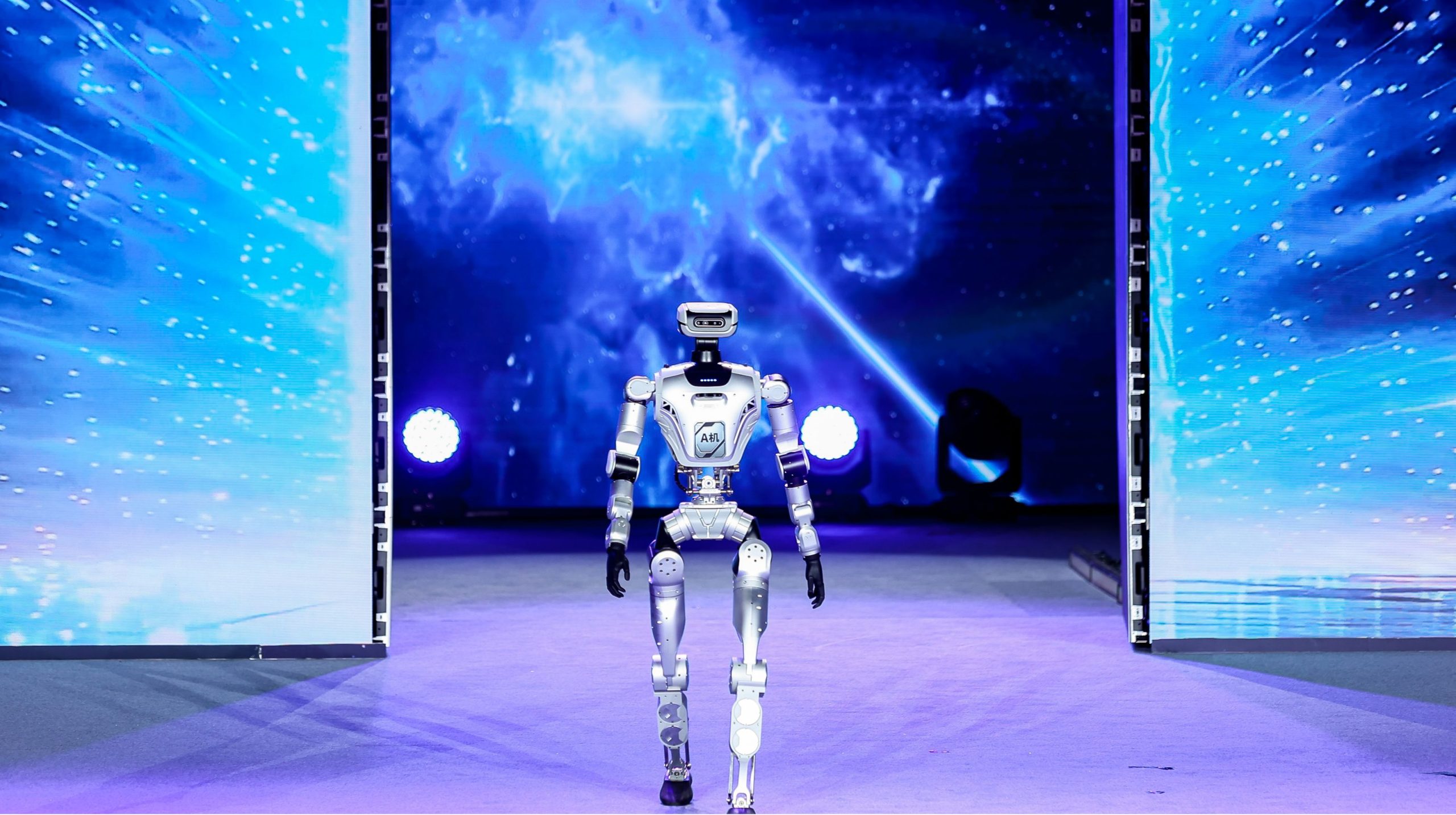
BEIJING, Sept 28 – Chinese embodied AI company Astribot announced the winning apps from the second stop of its Astribot OS hackathon, where 15 teams produced runnable robot applications in 36 hours under a format that generates robot apps from a single sentence.
The apps covered elderly care, entertainment and scientific research. Astribot said all were deployed on real robots without teams writing low-level control systems from scratch, marking a step from embodied AI research toward scenario-based applications.
Organizers and mentors said the event showed a shift from expert customization to platform assembly. Developers built on Astribot OS’s packaged Meta/Skill modules, SDK, motion control and safety capabilities, rather than handling motion control, communications and hardware drivers themselves.
“This is not just simplification of development tools, but a lowering of the innovation threshold,” a mentor said.
First prize of 20,000 yuan went to CareLoop, which links medicine delivery, water delivery, trash collection and assisted turning into a self-evolving elderly-care loop.
Second prize of 10,000 yuan went to Galaxy Fleet, a building butler that controls lights, access and crowd patrols while guiding visitors, and DJ Master, which maps audio signals to physical DJ movements and won the audience popularity award.
Third prize of 5,000 yuan went to Momo, a mahjong robot with emotional feedback; No Powder, a chemical lab assistant handling weighing, mixing and drying; and Mood Toast, which recognizes facial expressions and body conditions to produce food with emotional symbols.
Astribot said the results suggest robot app development is decentralizing, with participants ranging from undergraduates to interdisciplinary researchers and creators without robotics backgrounds. It said competition is shifting from coding ability to scenario-definition ability as a robot “app store” takes shape.
The Shenzhen finals will be held on Oct. 24-25, 2026, open to product managers, designers, industry practitioners and developers. Judging will focus on creativity, scenario value, technical completeness, distributability and commercial potential rather than algorithm difficulty alone.



 the 2026 Bund Summit