Astribot, a Chinese embodied-AI company, has released CoMind – Be My Eye, a multi-robot collaboration framework it describes as the industry’s first to actively share and curate task context.
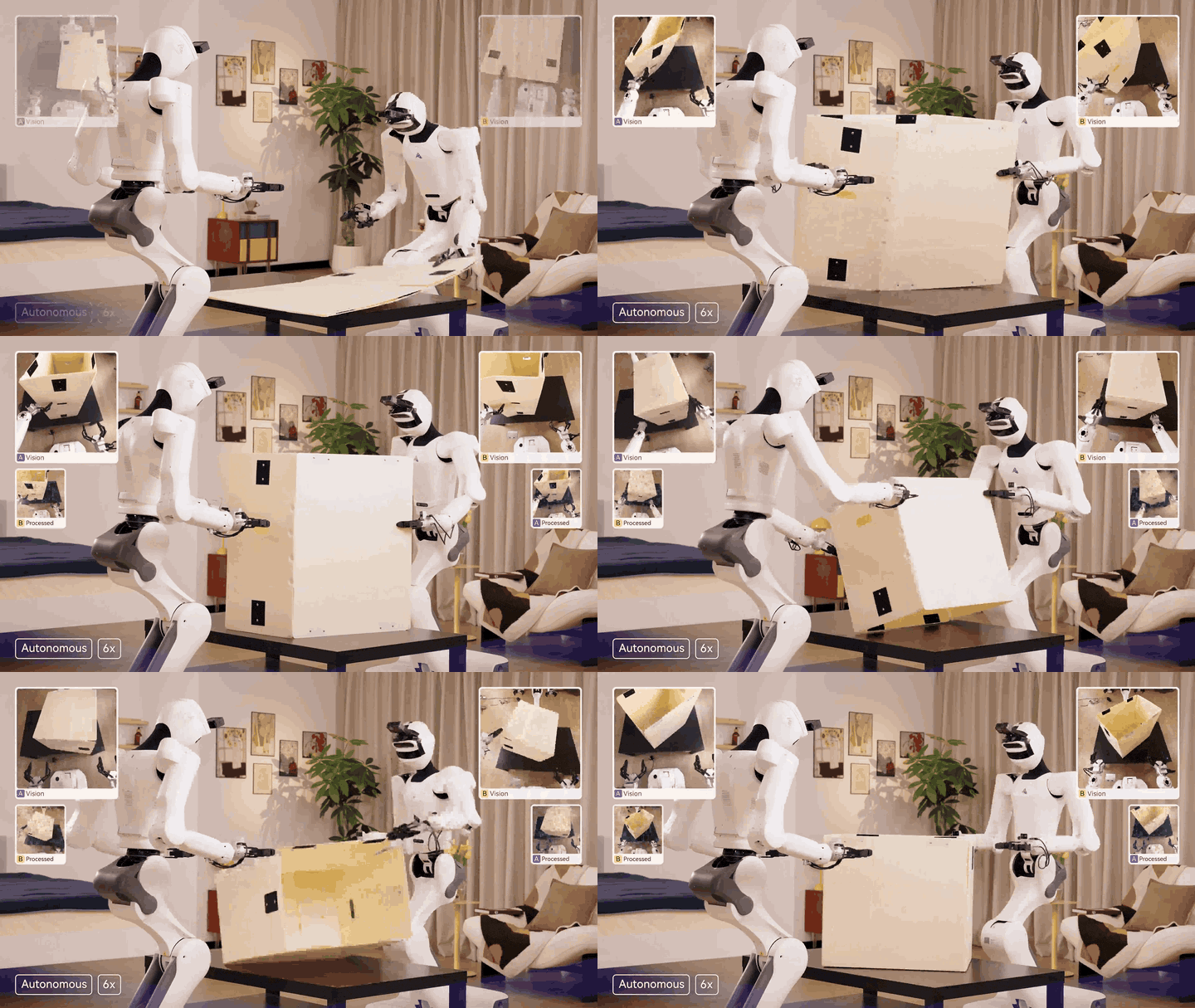
Astribot said the framework establishes a new collaboration model in which robots do not share everything but actively pass on key information that affects decisions.
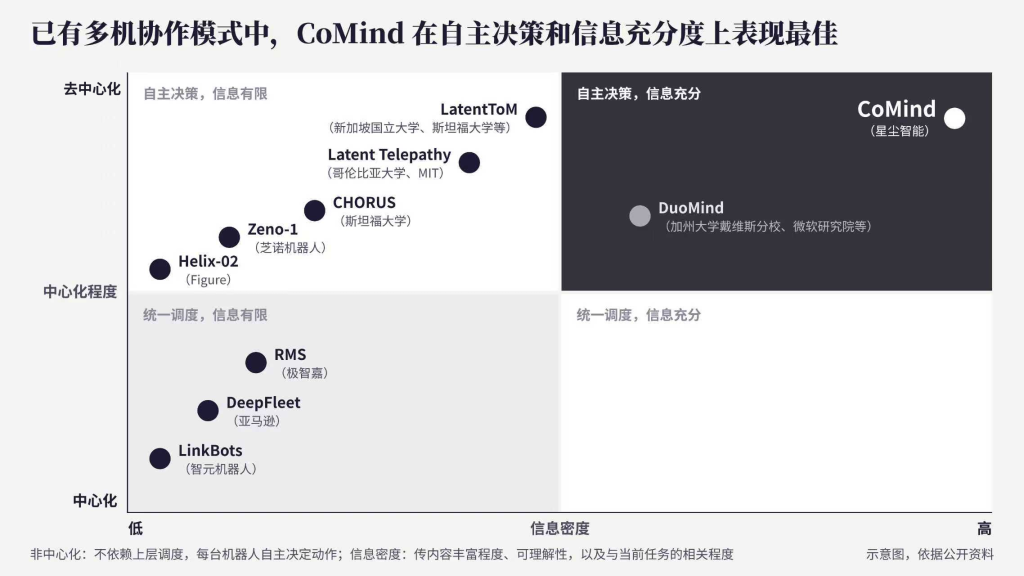
CoMind has two core features. The first is decentralized active sharing, which allows robots to exchange task context in real time and move away from passive, centralized scheduling. The second is curated information, which filters and compresses decision-relevant information before sharing it, rather than forwarding noise.
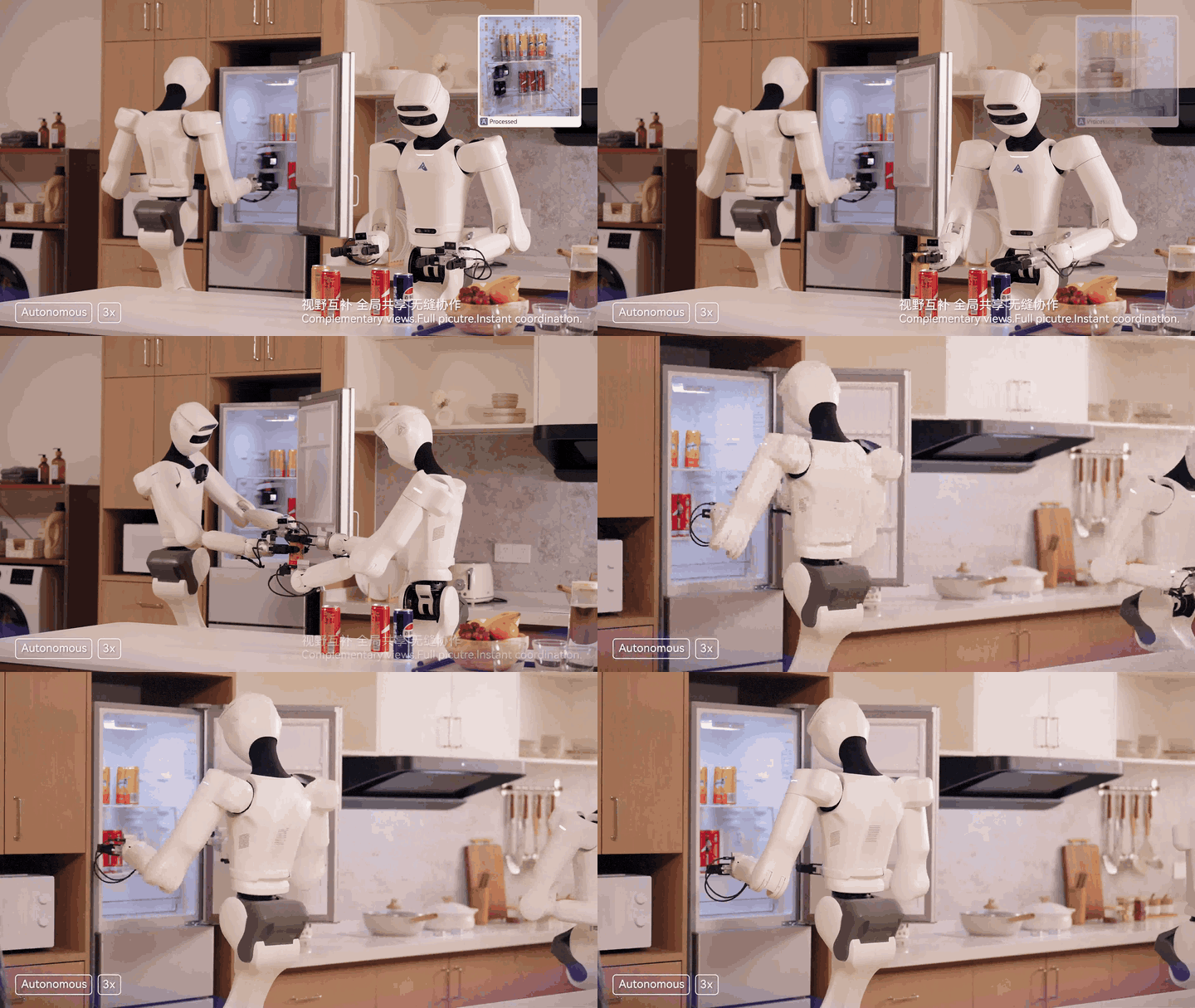
Astribot said the framework improved coordination in complex household tasks including assembling cardboard boxes and dumbbell plates, folding and storing bedding, and restocking refrigerators.
In an extreme test with vision completely blocked, two robots following each other across a wall to pick up a pen achieved a 100% success rate, up from 0%, the company said. In a designated-box placement task, accuracy rose to 88.9% from 38.9% under blind guessing, while data transmission fell by 80%.
Astribot said current multi-robot systems face a dilemma between slow centralized scheduling and shallow decentralized communication. Centralized scheduling can plan macro tasks but becomes a bottleneck in millisecond-level coordination, while existing decentralized plans often lack sufficient information density.
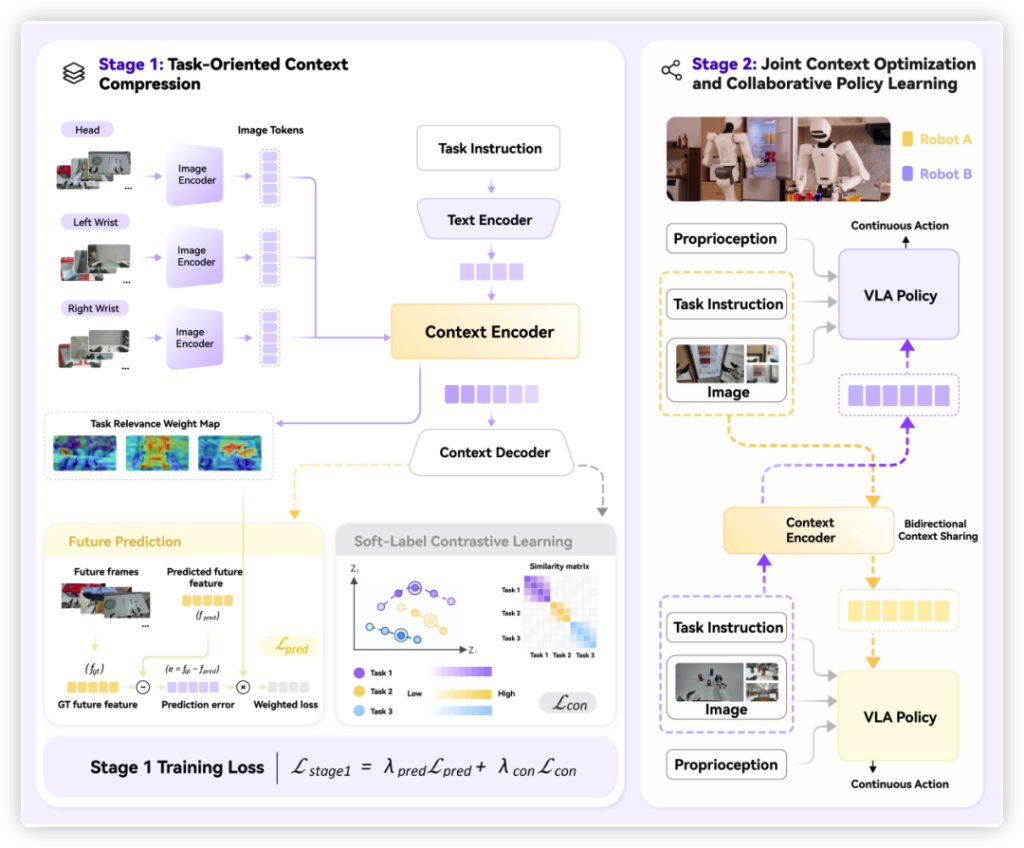
CoMind works in two stages. First, it builds active context by prioritizing visual information valuable for future actions and learning task-progress stages. Second, it uses a bidirectional feedback mechanism with symmetric context encoders and action-policy interfaces. Each robot can extract and send key information and receive information from teammates. The receiving robot fuses shared context, local visual observations, task instructions and its own state into a pre-trained vision-language-action policy to generate continuous actions.
Astribot said an action-level backpropagation mechanism uses the outcome of one robot’s actions as a supervision signal to train another robot’s encoder on what to send. This means information extraction is trained to serve final collaboration decisions, not just perception.
The company plans to extend CoMind from sharing information to sharing intent, allowing robots to anticipate each other’s future intentions and fill gaps proactively rather than react after the fact.
CoMind is backed by Astribot’s AI models, including Lumo-1 for explicit reasoning and Lumo-2, which predicts how actions change the world to improve action. Astribot said it is iterating a full-stack system covering AI models, an embodied operating system and a rope-driven body.
The technical report and unedited real-robot videos are available at www.astribot.com/AI/CoMind.


 AGIBOT
 Figure AI
 UBTECH