Astribot, a Chinese embodied AI and robotics company, held the finals of its Astribot OS (AOS) robotics hackathon in Shenzhen on Oct. 25, as it seeks to lower the barrier for non-specialists to build robot applications.
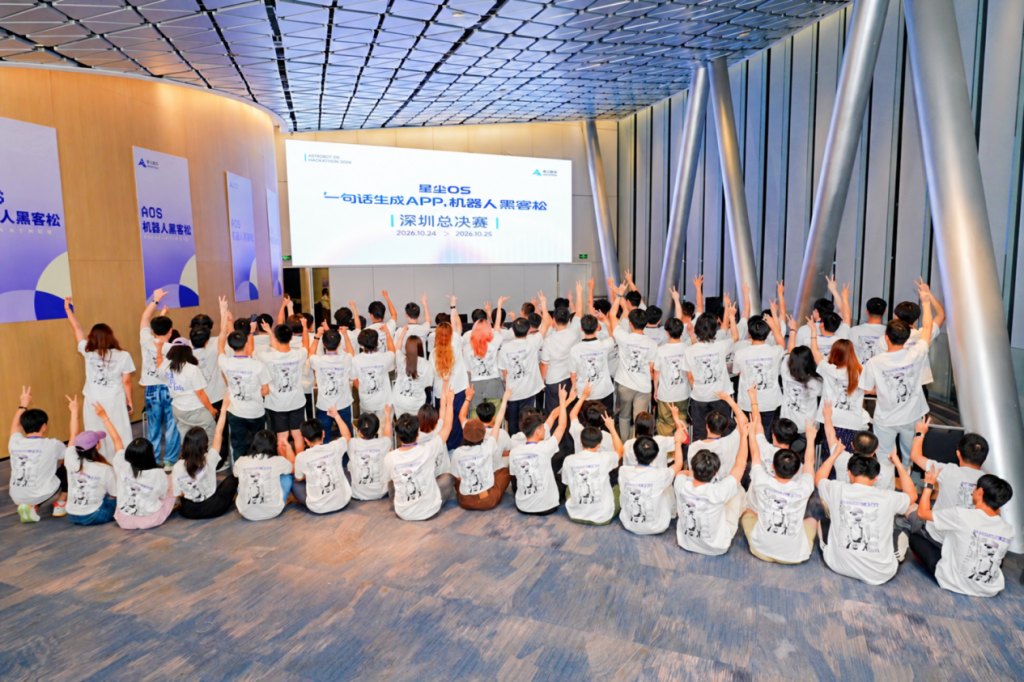
Seventeen teams competed over 36 hours. Sixteen apps moved from simulation to real-robot testing, a real-machine validation rate of 94%, according to the organizer. The event, described by Astribot as China’s largest robotics app hackathon for creators from diverse backgrounds, drew 47 teams across Beijing, Shenzhen and the finals. Participants included students, product managers and independent developers, with the youngest born in 2006.
Astribot’s AOS packages perception, mobility, manipulation and interaction into callable “Meta” skill modules. Creators can combine these with large models such as GPT and DeepSeek and AI coding tools to build app interfaces, back-end code and task flows without writing low-level robot control code. Apps are tested in simulation before being debugged on humanoid robots.
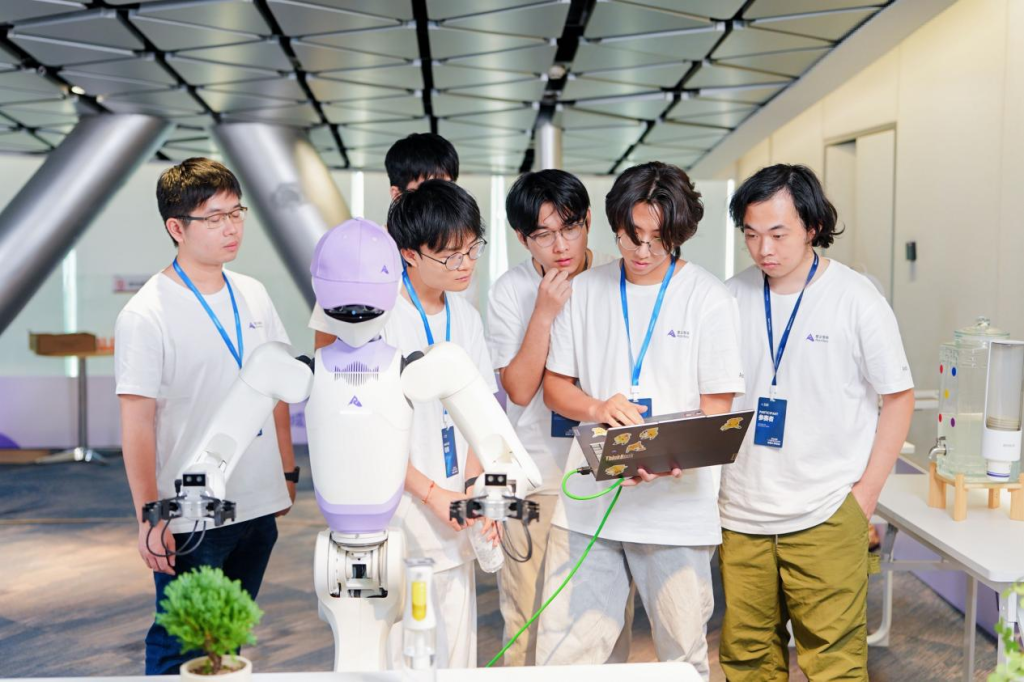
The winning team, “Remote Avatar,” used AOS modules to build a two-way real-time control link between a phone and a robot in 36 hours. Its system handled tasks including cleaning a cat litter box, watering plants, pouring water, collecting parcels and chatting. The two runners-up, GowithFlow and Bi Zou Long She, explored robotic camera tracking and Chinese calligraphy.
Other projects included a robot that removes finished parts from 3D printers, a chess-playing application and a light-painting tool. The popularity award went to CatDance, whose “travel steward” idea came from a cat litter box failure while its owners were traveling.
Astribot founder and CEO Lai Jie said AOS was designed for both human developers and AI models. “When designing AOS interfaces, we have to consider whether GPT can understand them, not just whether developers can,” Lai said in an interview after the contest.
The company has been building a full-stack architecture spanning AI models, an embodied operating system and robot hardware. It has developed the Lumo-2 embodied foundation model, described as the industry’s first household implicit world-action model, and the T1 robot, a second-generation high-precision manipulation robot starting at 89,900 yuan ($12,600). Astribot says it is preparing capacity for 10,000 units.
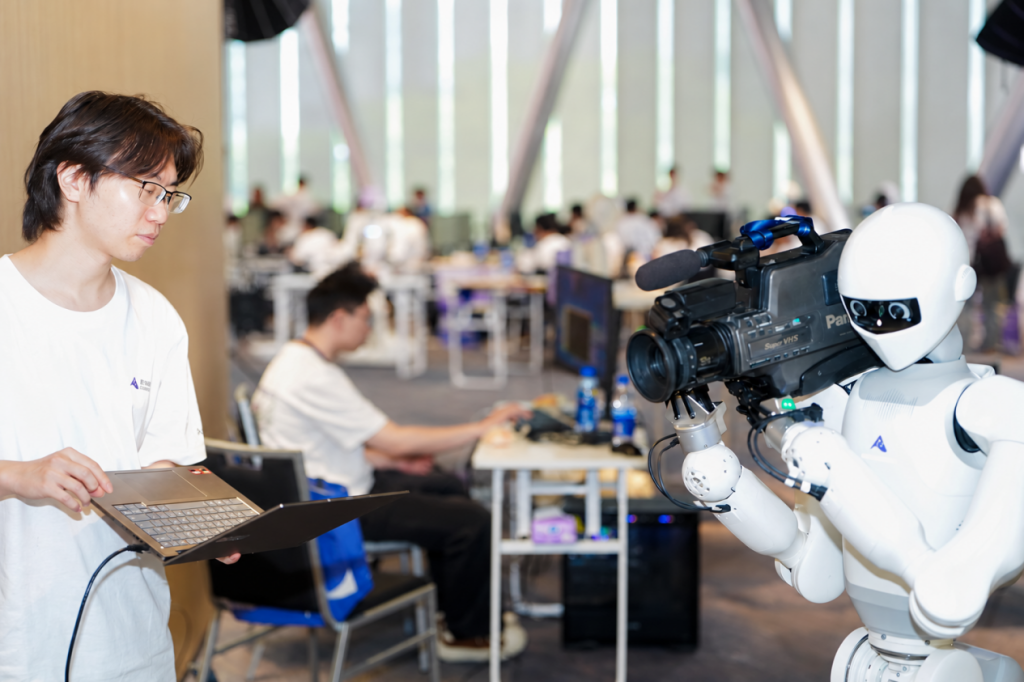
Astribot says its “Design for AI” approach coordinates models, software and robot bodies from the outset, rather than adding AI to conventional robots. The company is positioning AOS as a possible robotics-era equivalent of Apple’s iOS and App Store, though it acknowledges that an app ecosystem will not form automatically.
The hackathon was intended to reduce development barriers, not bypass engineering processes. Complex applications still require adaptation and real-robot validation because robots must handle physical objects, space and safety constraints.
“To expand value, I first need to expand the audience and users,” Lai said. The company hopes more software developers, product managers and industry practitioners will bring real-world needs into robot app development.


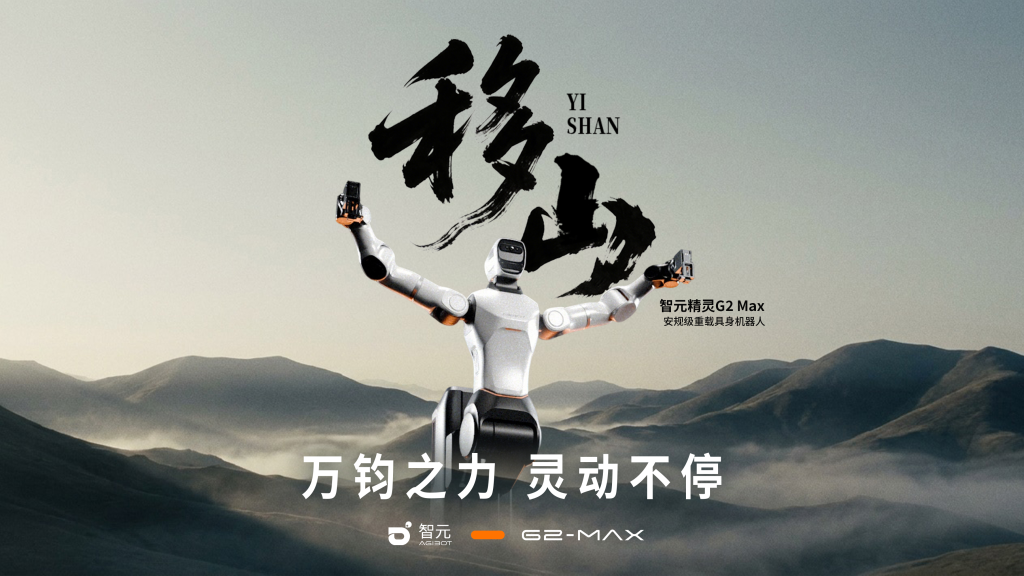
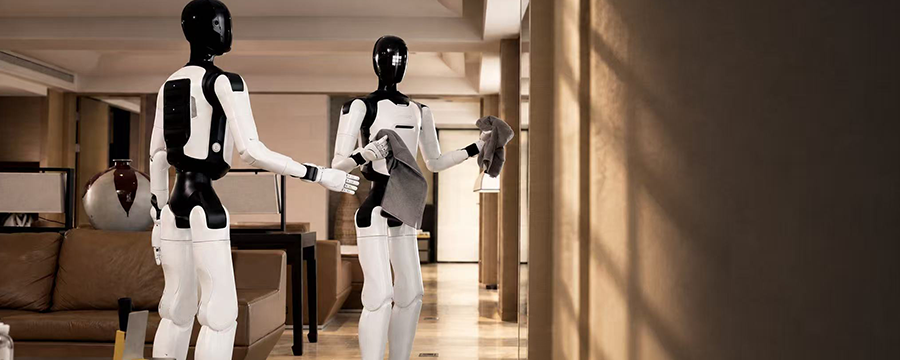 AGIBOT
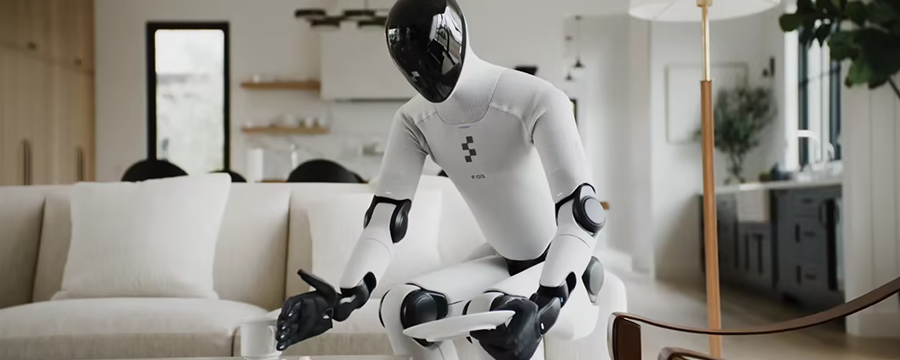 Figure AI
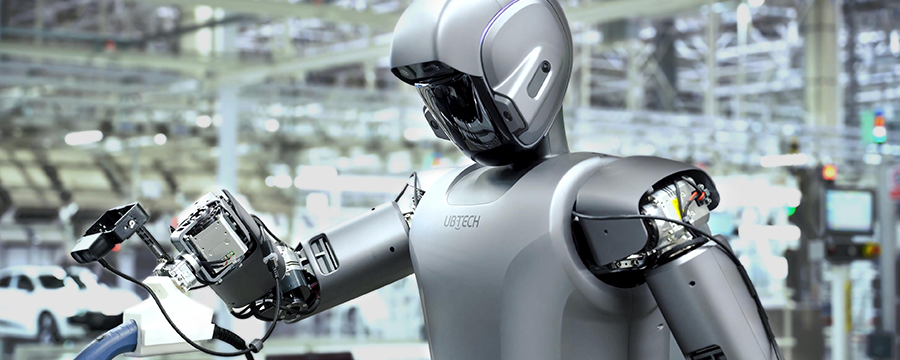 UBTECH