Maniformer will hold its largest launch event since its founding in Shanghai on Sept 23, unveiling “Maniformer Pai” globally and formally launching a body-free embodied data crowdsourcing platform for the general public. Maniformer Pai converts everyday human actions into training data for robots, the company said, allowing ordinary people without professional backgrounds to use spare time to participate in embodied intelligence data collection and earn income. The platform is intended to move robot training data collection from specialized work to broader social collaboration, the company said.
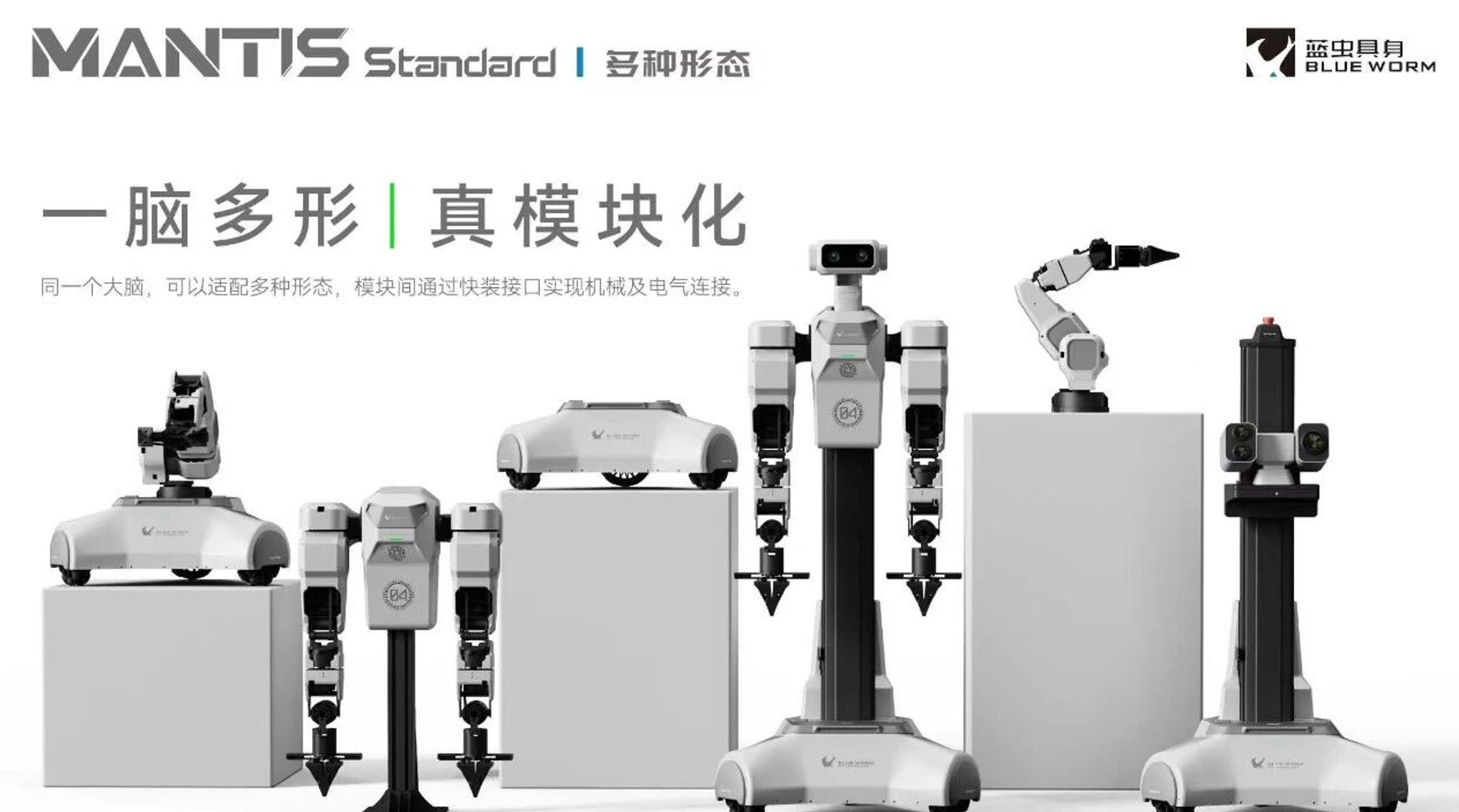
BlueWorm Embodied Intelligence, a technology commercialization enterprise of Xi’an Jiaotong University, today unveiled its next-generation modular humanoid robot, the Mantis Standard “Xiaobai,” priced from 9,800 yuan. The company said the product is not merely a “humanoid robot,” but an embodied intelligence platform that can transform into various forms. The Mantis Standard “Xiaobai” features standard modules for its chassis, arms, waist and head, with mechanical and electrical connections completed between modules via quick-install interfaces. In terms of specifications, the robot has 22 total degrees of freedom, a single-arm payload of 7kg, an arm span of 663mm and teleoperation latency of less than 10ms; its waist has a lifting range of 550mm, while the chassis supports 3-DOF omnidirectional movement, a forward speed...
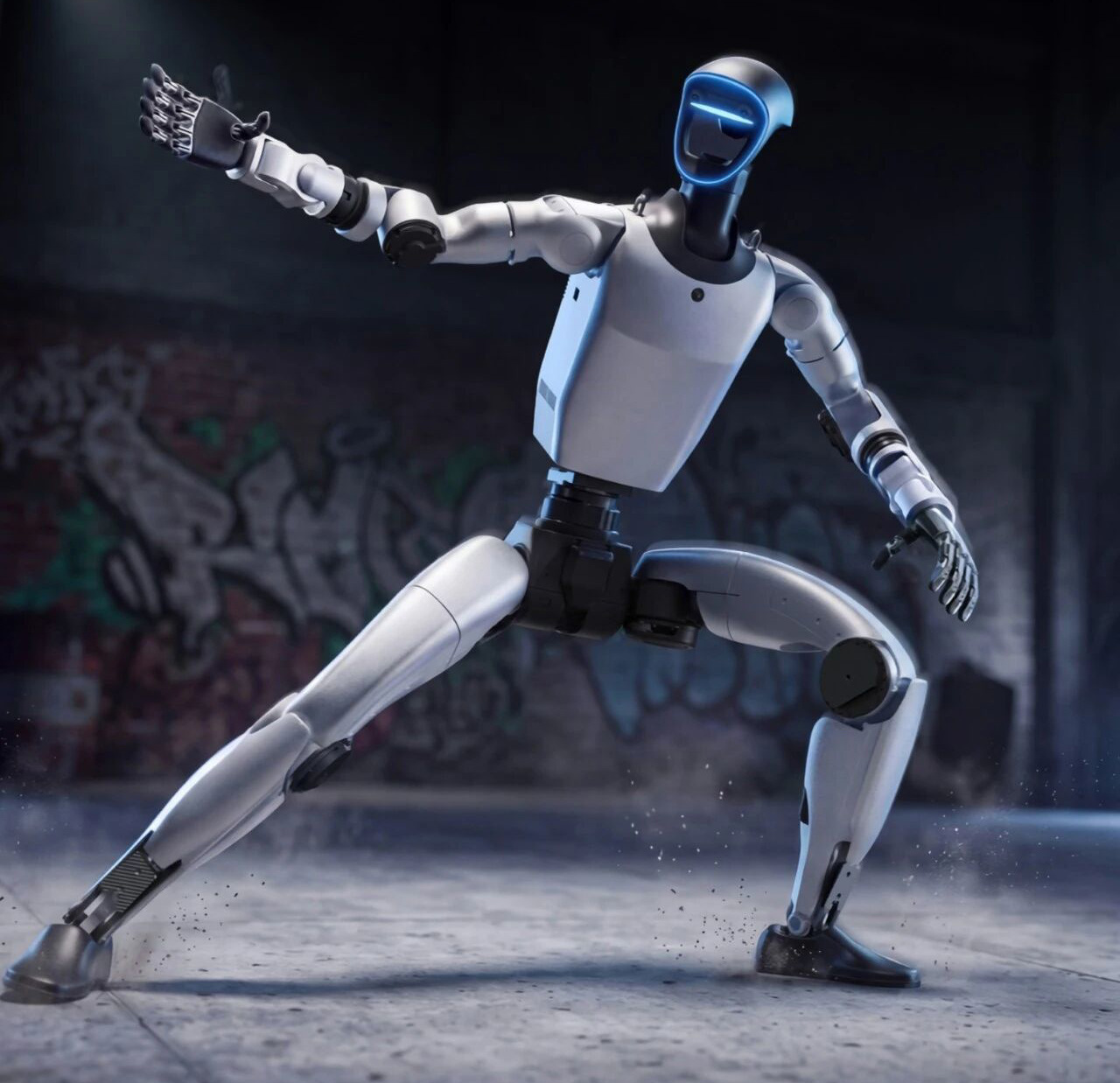
Chinese robot maker Unitree has unveiled the G1+, an upgraded version of its G1 humanoid robot, delivering six improvements across motion performance, perception and interaction while retaining the G1’s affordability at 95,000 yuan including tax. The G1+ gains two extra degrees of freedom in the neck, giving a pitch range of -25 to 36 degrees and a yaw range of plus or minus 110 degrees for flexible head movement, the company said. Motors across the robot have been comprehensively upgraded: peak torque of the shoulder and waist motors rose 110%, with heat generation down 72% at the same torque; arm motors saw peak torque up 43% and heat reduced 30%; and thigh motors cut heat generation by 28% at the...
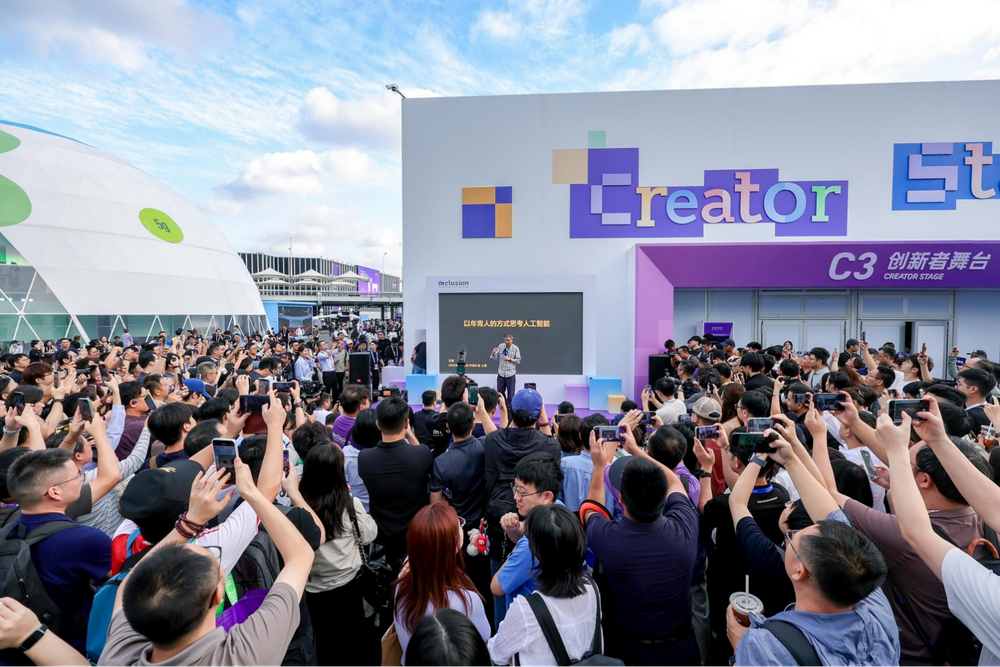
The 2026 Inclusion Bund Summit closed on Friday after a four-day run in Shanghai’s Huangpu World Expo Park, showcasing AI’s accelerated shift from technological iteration to large-scale commercial implementation, industrial empowerment and inclusive public application. Bringing together more than 600 scholars, scientists, entrepreneurs and investors, alongside over 300 global tech exhibitors, the event consolidated industry consensus on AI-driven real economic growth amid evolving industrial and market landscapes. Hosted under the theme “Building the AI Economy Together”, the summit featured a 15,000-square-meter tech exhibition and a full lineup of industrial activities, including thematic forums, Developer Day, Innovators’ Stage, tech competitions, a venture capital meetup, a specialized job fair and the inaugural Inclusion AI Art Festival. Over 50 cutting-edge technologies, products and...
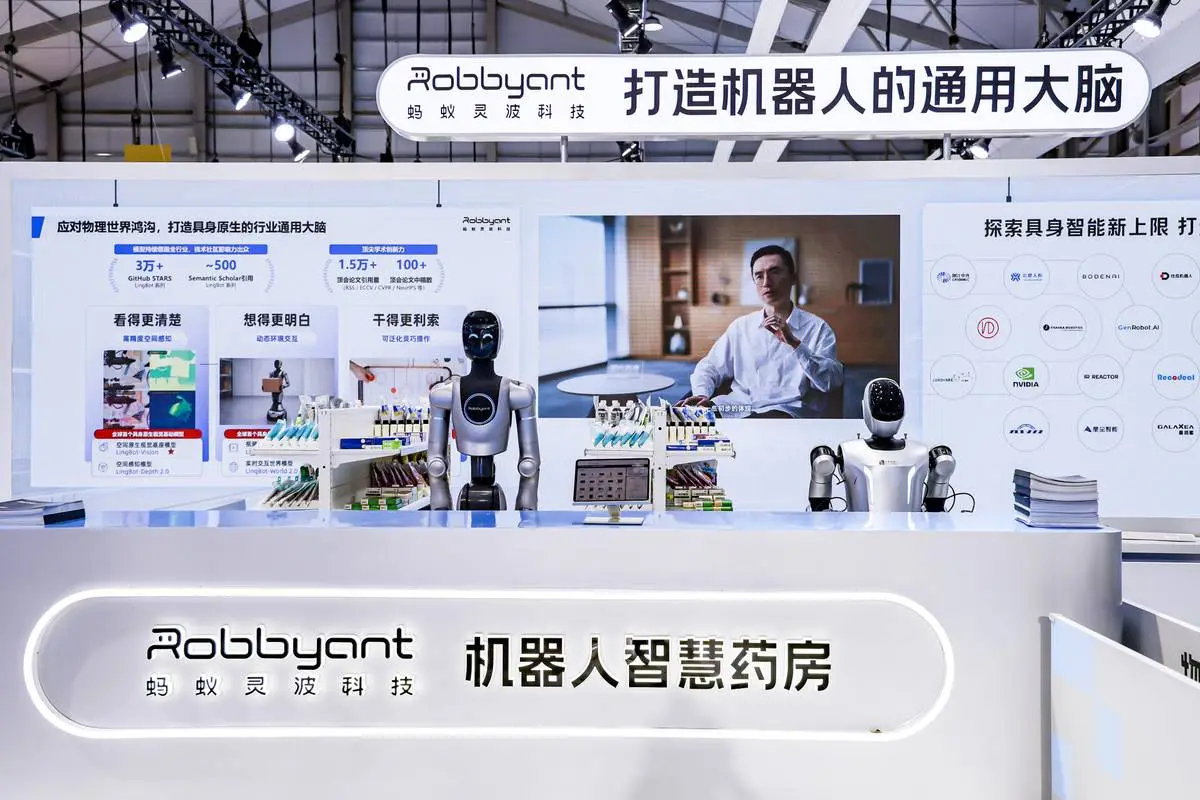
Robots on display at this year’s 2026 Inclusion · Conference on the Bund are not performing flashy stunts. Instead, Ant Lingbo Technology showcased practical deployments: autonomous medicine picking for pharmacies, logistics sorting and industrial loading tasks, highlighting a pivotal shift in the robotics industry. For years, the sector’s most eye-catching demos centred on dynamic robot movements. Yet rolling robots into pharmacies, warehouses and factories demands more than pre-programmed motions. Machines must interpret unstructured environments, understand tasks, adapt to unexpected changes and operate reliably around the clock — the core challenge Ant Lingbo aims to address with its natively embodied general AI brain. The centrepiece exhibit is a replica smart pharmacy, built in partnership with Shanghai Guoda Pharmacy and already live...
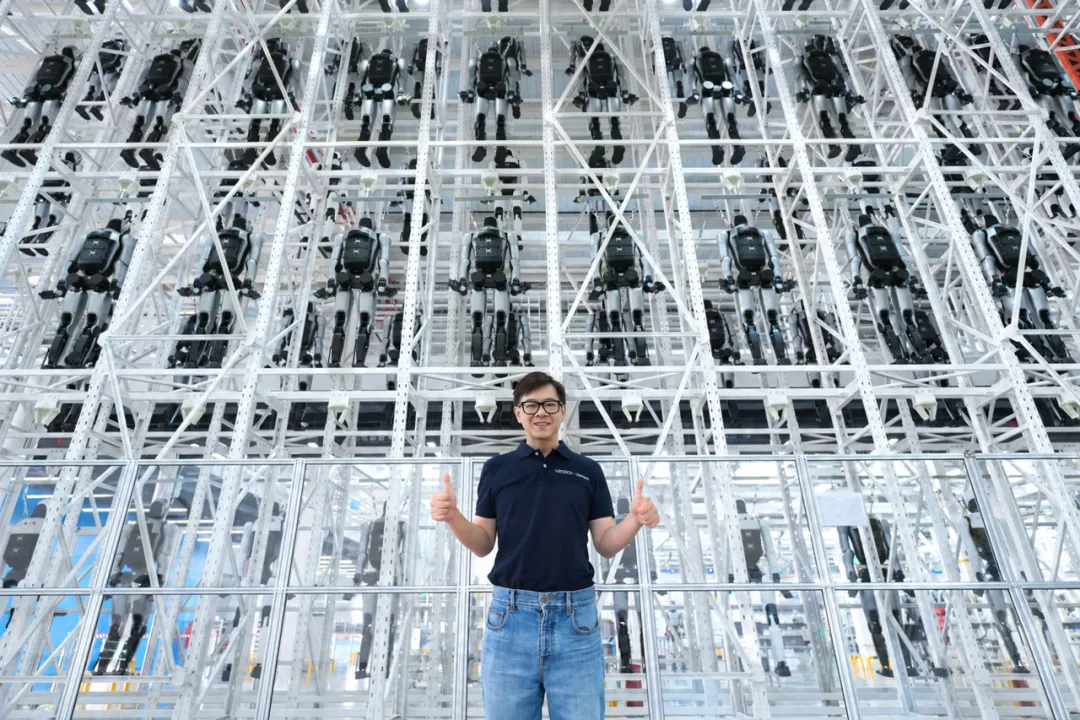
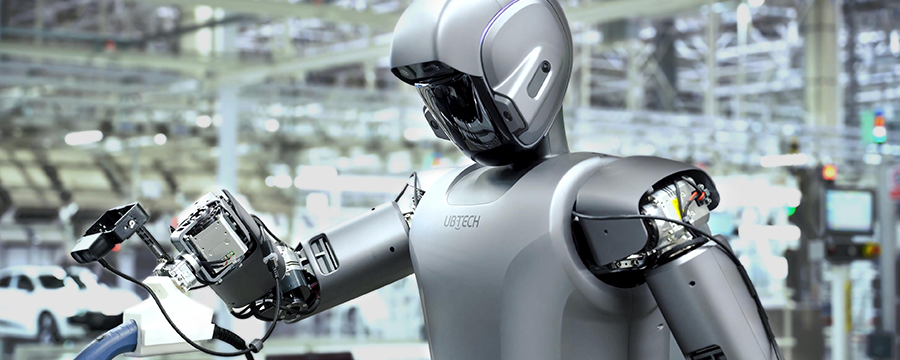
UBTECH Robotics has officially opened its super smart factory for industrial humanoid robots in Liuzhou, Guangxi, billed globally as the first benchmark manufacturing facility built to support annual output of up to 10,000 humanoid units. Spanning 14,000 square meters with a height of 13.8 meters, the plant will primarily produce the firm’s Walker S and Cruzr series embodied AI industrial humanoid robots. Under its designed production cycle, one humanoid robot can roll off the assembly line every 10 minutes, with a planned annual capacity exceeding 10,000 units. Powered by intelligent planning via industrial simulation systems and full-domain orchestration through a digital “smart brain”, the facility realises a new quality productive forces model of “robots building robots”. The milestone marks China’s...
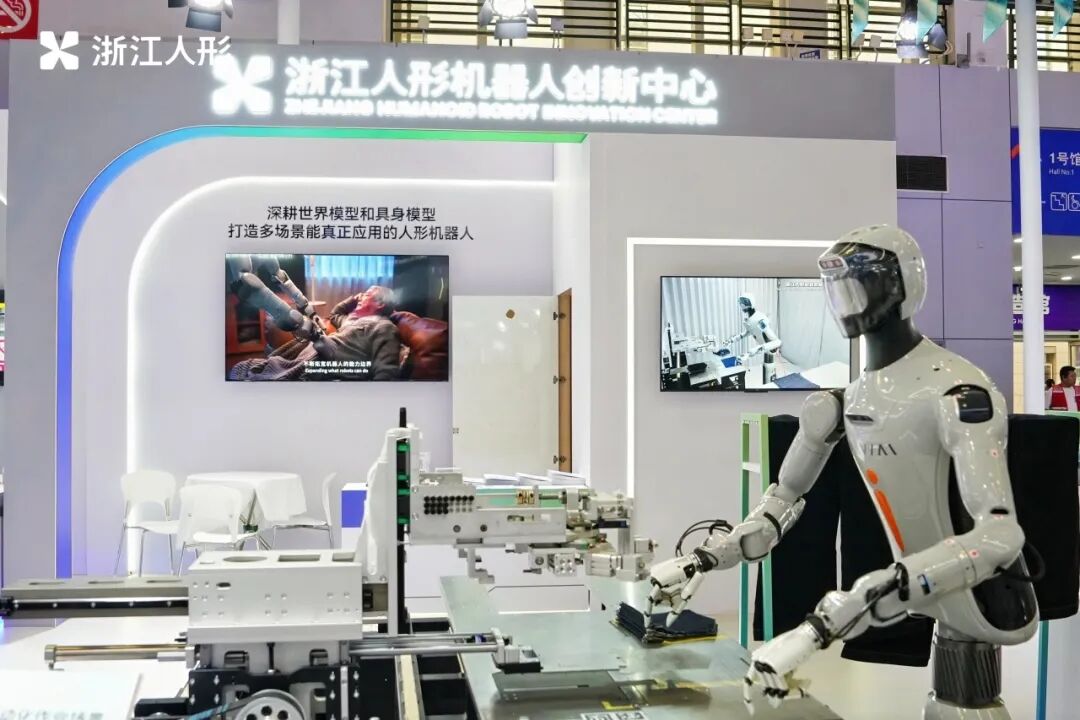
Zhejiang Humanoid Robot Innovation Center Co., Ltd. brought its NAVIAI humanoid robots to the 16th Smart City and Intelligent Economy Expo, which opened in Ningbo on Friday, showcasing real-world applications in apparel manufacturing and smart retail. The company said its robots are moving into real scenarios to perform real tasks, backed by a full-stack, self-developed product system. It is targeting two ends of the market: production sites that demand efficiency, precision, production-line compatibility and stable operation, and consumer settings that require natural interaction, environmental adaptability and flexible service. In apparel manufacturing, Zhejiang Humanoid has focused on flexible production, where soft fabrics are prone to wrinkling, collapsing and unpredictable deformation. Over two years, it said it moved from template-machine operations to...
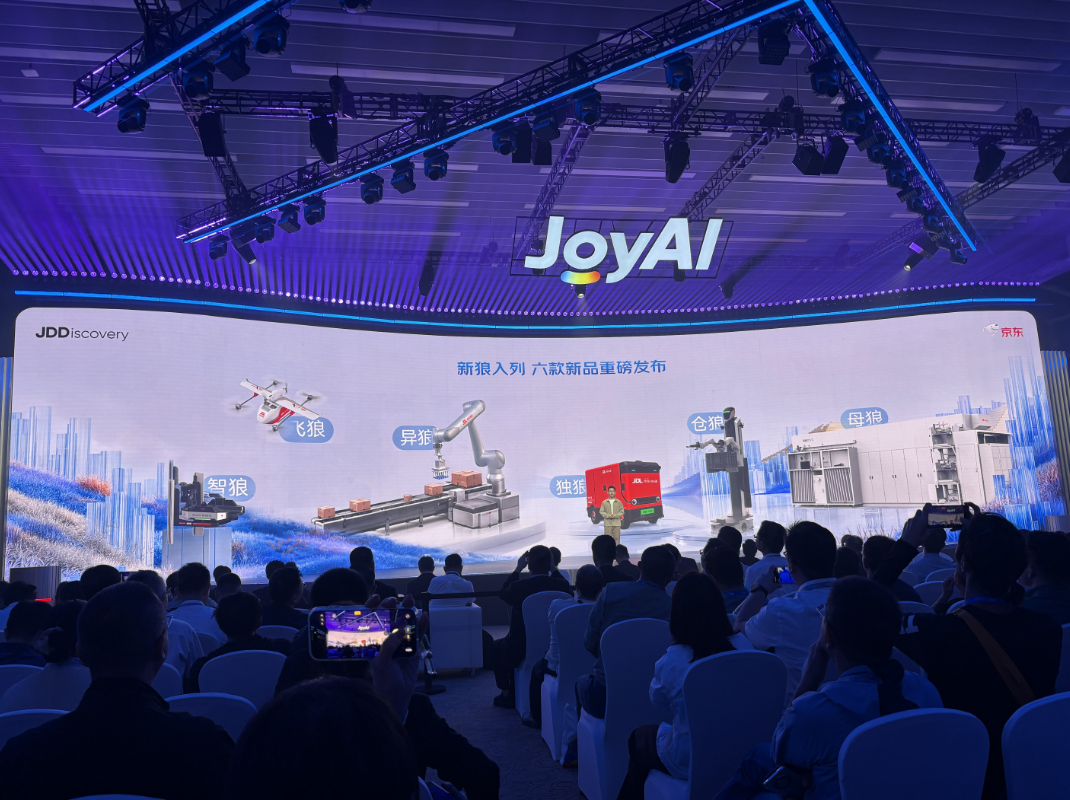
At the JDDiscovery 2026 main forum, JD.com projected its five-year procurement targets on screen: 3 million robots, 1 million autonomous vehicles and 100,000 drones. The audience included more than 100 hardware manufacturers and dozens of investment firms, many expecting humanoid robots to feature on the list. None appeared. On exhibition zones flanking the stage, JD’s Wolf-series machines handled warehouse tasks: Dilang shuttled goods between racks, Canglang picked orders in narrow aisles, and Dulang completed campus deliveries. Not a single bipedal robot was on display. JD unveiled six new Wolf-series robot models at the event. The omission of humanoids was no oversight. With China’s largest fulfillment network, JD’s procurement blueprint signals a clear verdict: humanoid robots are not yet commercially viable...
What happens if robot model training data is expanded from 300 hours to 30,000 hours? Can robotic systems, similar to large language models, continuously gain new capabilities as datasets grow? AGIBOT’s newly released native World Action Model (WAM), GE-Act 2.0, systematically answers that question for the first time. Unlike mainstream approaches that build upon existing video generation models, every parameter of GE-Act 2.0 — including core modules for visual representation, future prediction and action forecasting — is initialized from scratch and trained end-to-end on embodied manipulation data. After pre-training, the model undergoes zero-shot real robot tests on unfamiliar scenes and unseen objects without fine-tuning or demonstration for benchmark tasks. The evaluation covers 100 atomic tasks, 20 skill categories and two...
Chinese robotics company Unitree said it has fully open-sourced an upgraded version of its general-purpose humanoid foundation model, UnifoLM-WLA-1.0, setting new state-of-the-art results on multiple global open-source embodied model benchmarks. The model can perform both tabletop manipulation and whole-body mobile manipulation with a single model, enabling cross-task and cross-end-effector generalization, Unitree said. It achieves a “one-model-driven, whole-body coordination” effect, the company added. Unitree said UnifoLM-WLA-1.0 was trained on large-scale general-purpose multimodal perception and understanding datasets and incorporates interaction-centric world modeling, significantly strengthening spatial perception and scene understanding. It outperformed several open-source competitors in China and overseas on multiple embodied reasoning benchmarks, with some capabilities comparable to mainstream closed-source models, according to the company. In real-robot tests, a single model completed...
China Telecom's TeleAI incubates embodied AI startup Gamma Robotics
China Telecom's Artificial Intelligence Research Institute (TeleAI) has incubated Gamma Robotics, an embodied AI company that has recently registered in Shanghai's Xuhui district and moved into Mosu Space, according to company information.
Gamma Robotics is an independent market-oriented entity invested by China Telecom Group and incubated by TeleAI. It will co-build a humanoid robot laboratory with TeleAI.
MIRACLE AUTOMATION's Jiangsu robot data center amasses PB-scale embodied AI data
MIRACLE AUTOMATION, the automotive equipment maker operating the Jiangsu Province Embodied Intelligent Robot Industrial Data Collection and Training Center, has accumulated nearly 20,000 hours and PB-scale multimodal embodied AI data, the company said.
The center has built 36 first-level application scenarios and 163 second-level segmented data-collection scenarios. MIRACLE AUTOMATION is seeking to translate its long-standing production-line experience into data and technology capabilities that can support the industrial deployment of embodied AI.
Shenzhen's YITA DYNAMICS raises over 100 mln yuan in seed funding
Shenzhen-based embodied intelligence operation platform and power system company YITA DYNAMICS said it has completed seed and seed-plus funding rounds totaling more than 100 million yuan ($14 million). The rounds were jointly invested by Matrix Partners China, SenseTime Guoxiang Capital, CCB International, L2F Light Source Entrepreneur Fund, Galbot and Fourier Intelligence. Founded in May 2026, YITA DYNAMICS is focused on building underlying infrastructure for embodied intelligence hardware and has developed compliant force-controlled dual arms and high-performance joint modules.
Robot Warriors Challenge held in Beijing E-Town with 29 teams competing
The autumn edition of the 2026 Robot Warriors Challenge was held on Oct. 18 at the Nanhaizi Park waterfront plaza in the Beijing Economic-Technological Development Area, also known as Beijing E-Town, with 29 teams from across China taking part. As an independent event IP created by Beijing E-Town, the competition aims to push robots beyond running and jumping demonstrations toward real-world operational tasks. MirrorMe Technology, GENISOM AI Milk Long Team B, Xingyuan Dynamics Team A and AK Brothers Team B won their respective categories.
AGIBOT has partnered with Wuhan Culture and Tourism Group and Zhongyun Weixun to build the world's first smart retail warehouse operated by full-size bipedal humanoid robots. Its Expedition A3 Ultra robot has begun offering self-service retail services at Jiangyushang on the Wuhan riverside. The project has completed 827 orders in its phase to date, with a robot grasping success rate of more than 97%.
Tesla's third-generation Optimus robot ready for mass production
Tesla's third-generation Optimus humanoid robot is ready for mass production, refocusing market attention on the sector. Artificial intelligence is moving from the digital world into physical space, with humanoid robots viewed as one of the most important embodiments of physical AI.
China launches National Data Group in Xiong'an to boost data sector
China established National Data Group Co., Ltd. in Xiong'an New Area, Hebei province, on Oct. 20. The group is a central state-owned enterprise whose main responsibility is the development and utilization of data resources, with headquarters in Xiong'an.
The group was set up to advance data resource development and utilization, unlock the value of data elements, support artificial intelligence development and foster the data industry ecosystem, according to the company. After its establishment, it will strengthen central-local coordination and industrial collaboration under the guidance of relevant authorities, promote shared capabilities, experience and business expansion, and work to grow data value, strengthen the data industry and improve the data ecosystem.
Galileo's E1 quadruped robot wins gold at 2026 Canton Fair design awards
Galileo (Tianjin) Technology Co., Ltd.'s E1 series intelligent bionic quadruped robot has won a gold award at the 2026 Canton Fair Design Innovation Award (CF Award). The E1 series is fully self-developed by Galileo, with its complete machine structure, integrated servo joints and bionic gait and posture control algorithms 100% independently controllable. It holds more than 300 independent intellectual property rights. Equipped with all-terrain adaptive posture adjustment and force-sensing technology, the robot can autonomously identify unstructured complex terrain such as stairs, ramps and rubble. It is designed for applications including petrochemicals, power operation and maintenance, rail transit, emergency rescue and security patrol inspection.
RobotHOT brings China & Global Robotics Insights. Explore robotics, embodied‑intelligence updates, startup news and industry analysis for professionals worldwide.



 AGIBOT
 Figure AI
 UBTECH