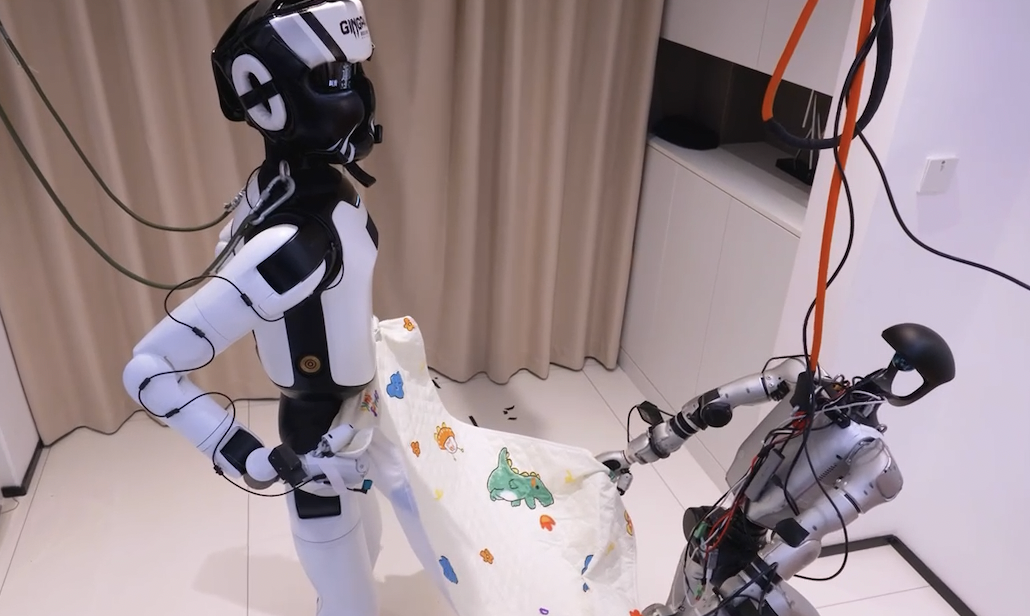
A mysterious Chinese artificial intelligence team has released a series of uncut, one-take videos showing humanoid robots performing household tasks with fluid, human-like coordination, reigniting online speculation that embodied intelligence might be nearing a “ChatGPT moment.” The clips, which went viral last week, depict robots adapting to external physical disturbances while carrying a water glass, tidying a living room in a single long-horizon sequence, collaborating to smooth a bedsheet, and carrying multiple items at once – all without visible teleoperation, according to the developers. The underlying model, internally codenamed MVP – short for “Make Veritable People” – is designed to endow machines with physical reasoning and autonomous decision-making rather than probabilistic imitation, the team said in response to inquiries. In...
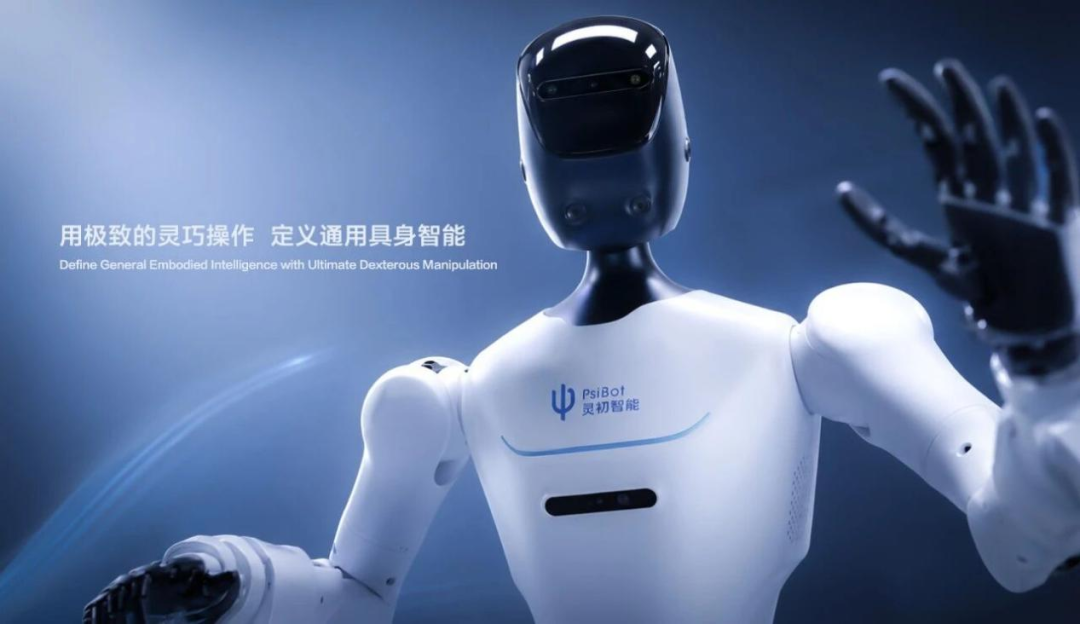
PsiBot has officially closed a new round of financing worth more than $100 million, according to an August 27 update. The round brings together industrial leaders and institutional investors including Tuopu Group, Ruicheng Fund under Chery Holdings, Lens Technology, Sanqi Interactive Entertainment, Wuhu Investment Holding Group and Fosun Chuangfu. Existing shareholder Zhuhai Science and Technology Industry Group made a further over‑subscribed follow‑on investment. Following previous backing from state‑affiliated investors, this financing round draws capital from multiple leading real‑economy enterprises. It marks dual authoritative recognition of PsiBot’s technical roadmap and commercial value from both state‑owned capital and industrial players. The firm has built a multi‑dimensional development framework featuring national policy guidance, real‑world industrial deployment and long‑term capital support. As China’s first...
AI robotics firm Sharpa has completed financing totaling over 4.5 billion RMB, backed by a lineup of top industrial and financial investors. The investor consortium includes industrial giants Alibaba, Meituan, Tencent, JD.com and Transsion Holdings, as well as leading investment institutions such as Sequoia China, Qiming Venture Partners, Meituan Longzhu Capital and Photosynthesis Venture Capital. The raised funds will be dedicated to core technology R&D, global talent recruitment and cultivation, and advancing the real-world deployment of general-purpose robots from technical verification to large-scale commercial application. Marking a key milestone for real-scene robotic implementation, the world’s first fully autonomous, renovation-free, year-round robotic restaurant — jointly built by Sharpa and DQ — officially launched on August 29 at DQ’s Wujiang Road store...
DexTeleop, an embodied-AI infrastructure provider, has closed a nine-figure RMB (tens of millions USD) Pre-A round led by Zhuzhou Industrial Investment, Feitu Capital, Future Margin Ventures, and Xineng Ventures. Proceeds will scale production of its robot hardware, upgrade real-world data collection pipelines, and advance its cloud operation platform. Maple Pledge continues as exclusive PE advisor. This marks DexTeleop’s third funding round this year, following prior backers including InnoFund, CMC Capital, Galaxy Innovation, Futian Capital, Leaguer, and Tianying Capital—total financing now exceeds nine figures RMB. As embodied AI moves from demos to commercial deep water in 2026, investor focus shifts from pure growth to the viability of “real-scenario data driving model evolution.” Founded in early 2025, DexTeleop builds full-stack infrastructure—robot bodies, data acquisition,...
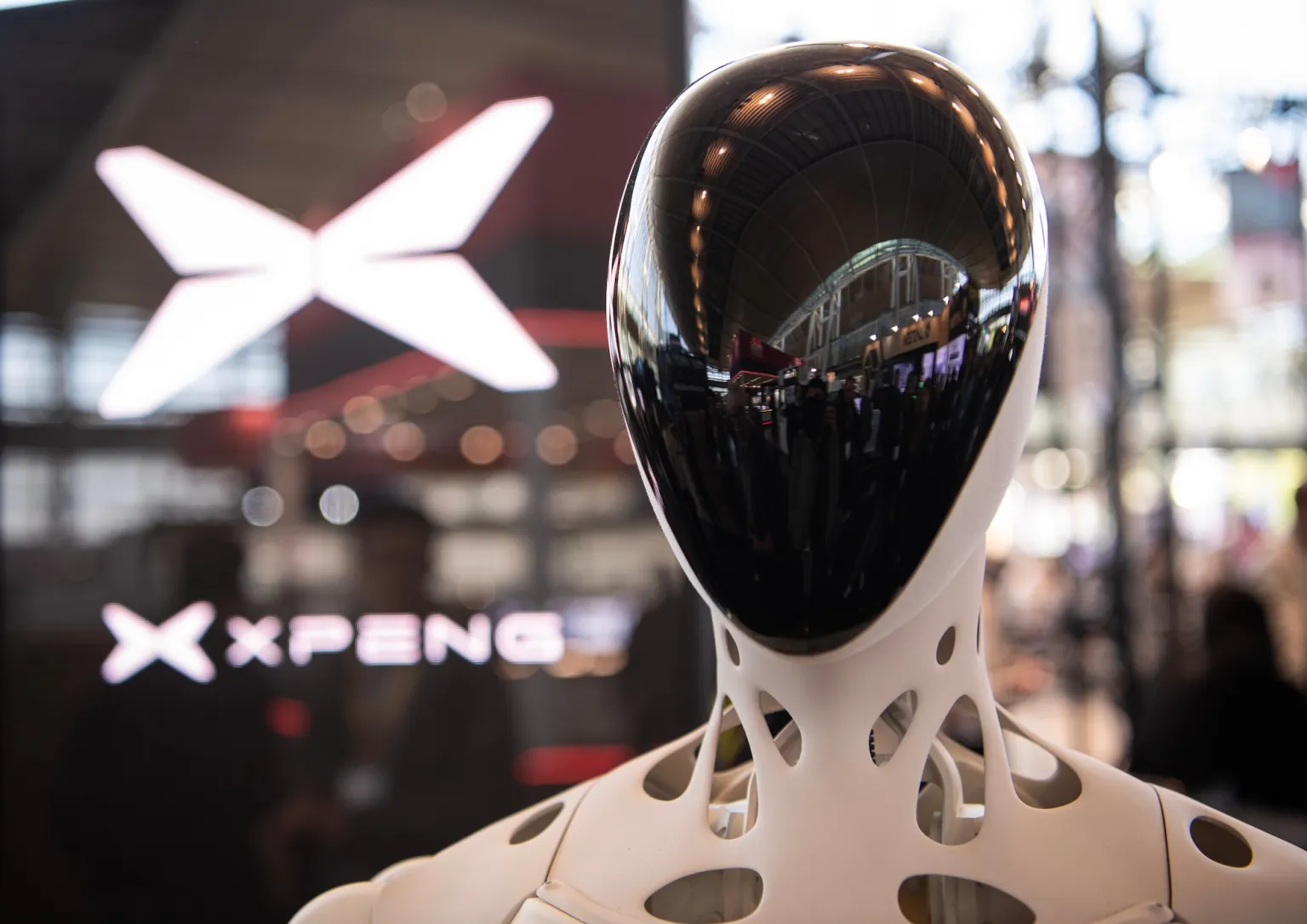
The hype surrounding humanoid robots is hardly new, fueled largely by Tesla’s Optimus and viral demo clips from Boston Dynamics’s Atlas. Beneath the buzz lies tangible technical progress: robot physical performance keeps improving, and LLM‑derived AI enables complex robots to learn diverse real‑world tasks. Driven by these advances, a wave of new entrants — notably Chinese automakers — are betting big on commercial profits from humanoid robots. Xpeng’s robotics division secured over $900 million in fresh funding, hitting a $6.3‑billion post‑money valuation. Backed by IDG Capital, Gaorong Ventures, Tencent and Alibaba, it marks China’s largest‑ever single financing round for embodied AI. Xpeng’s founders He Xiaopeng and Brian Gu also personally invested roughly $100 million in this round to back Iron,...
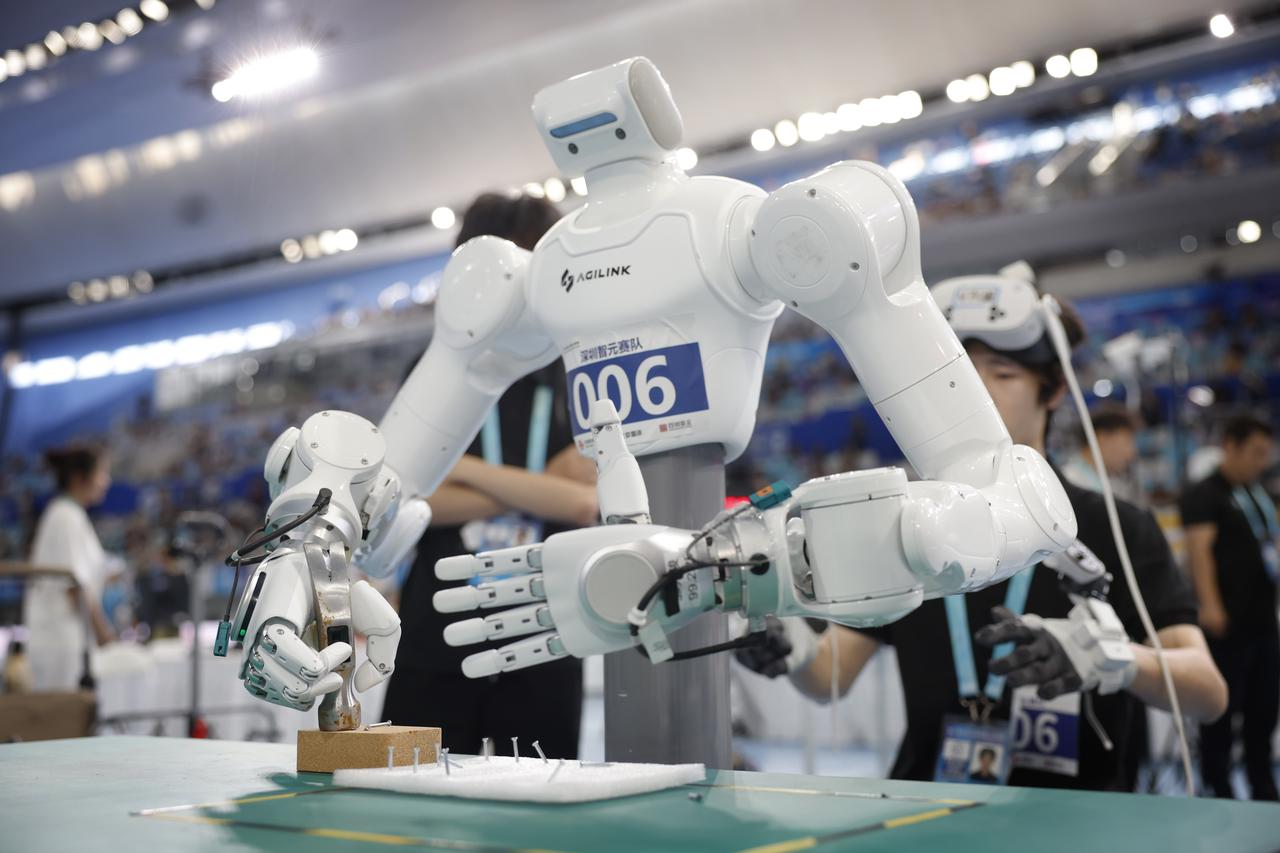
AGIBOT made its debut at the 2nd World Humanoid Robot Games, securing 18 gold, 16 silver and 12 bronze medals. With 46 medals in total, AGIBOT ranked first on both the gold medal table and the overall medal table. The World Humanoid Robot Games is an international competition designed to test humanoid robots across sports, dexterous manipulation and real-world scenario-based tasks. This year’s events ranged from athletics, martial arts and dance to hotel services, library operations, emergency response and industrial applications. AGIBOT’s medal wins spanned dexterous manipulation, scenario-based tasks and motion-control events, including titles in martial arts, dance and obstacle racing. Notably, AGIBOT’s competition lineup, including OmniHand, G2, A3 and X2, consists of robots already in mass production or deployed in...
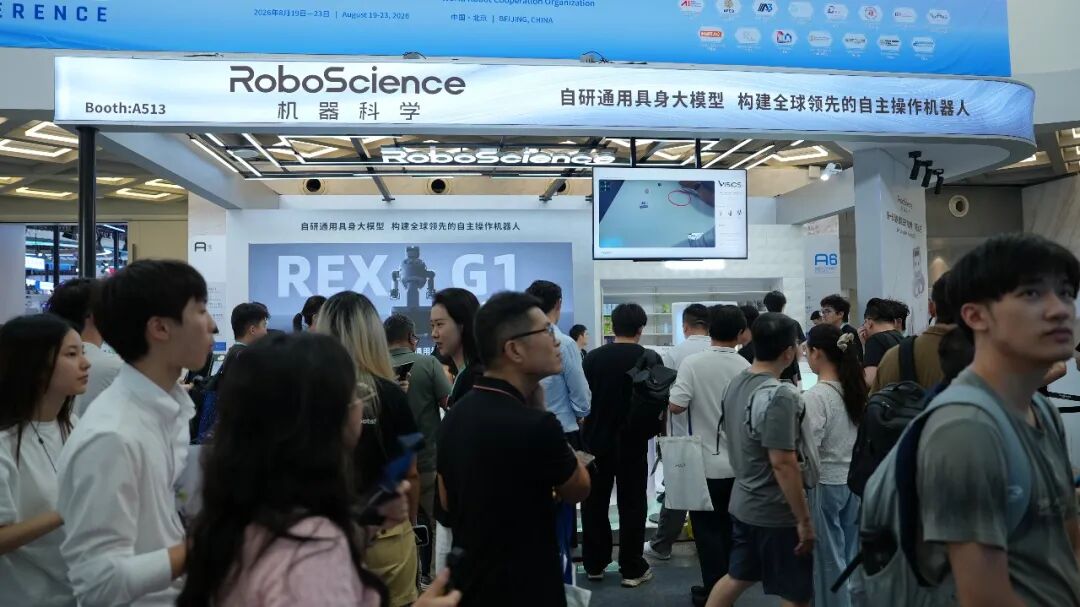
RoboScience, a Chinese general-purpose embodied AI company, unveiled its first wheeled humanoid general-purpose robot REX G1 at the 2026 World Robot Conference (WRC) in Beijing, while claiming an industry first by publicly displaying real-time visual reasoning from its cloud-based world model — breaking the long-standing convention of keeping inference processes opaque in public demonstrations. The 22-degree-of-freedom REX G1, which features a dual-arm configuration with a 10 kg payload capacity and repeat positioning accuracy of ±0.1 mm, performed a “lighting conductor” show at the company’s booth. The robot’s operating height ranges from 0.1 to 2.0 meters, with an adjustable width between 540 and 640 mm. World model visualization breaks industry convention At the RoboScience booth, multiple dexterous hands of varying configurations...
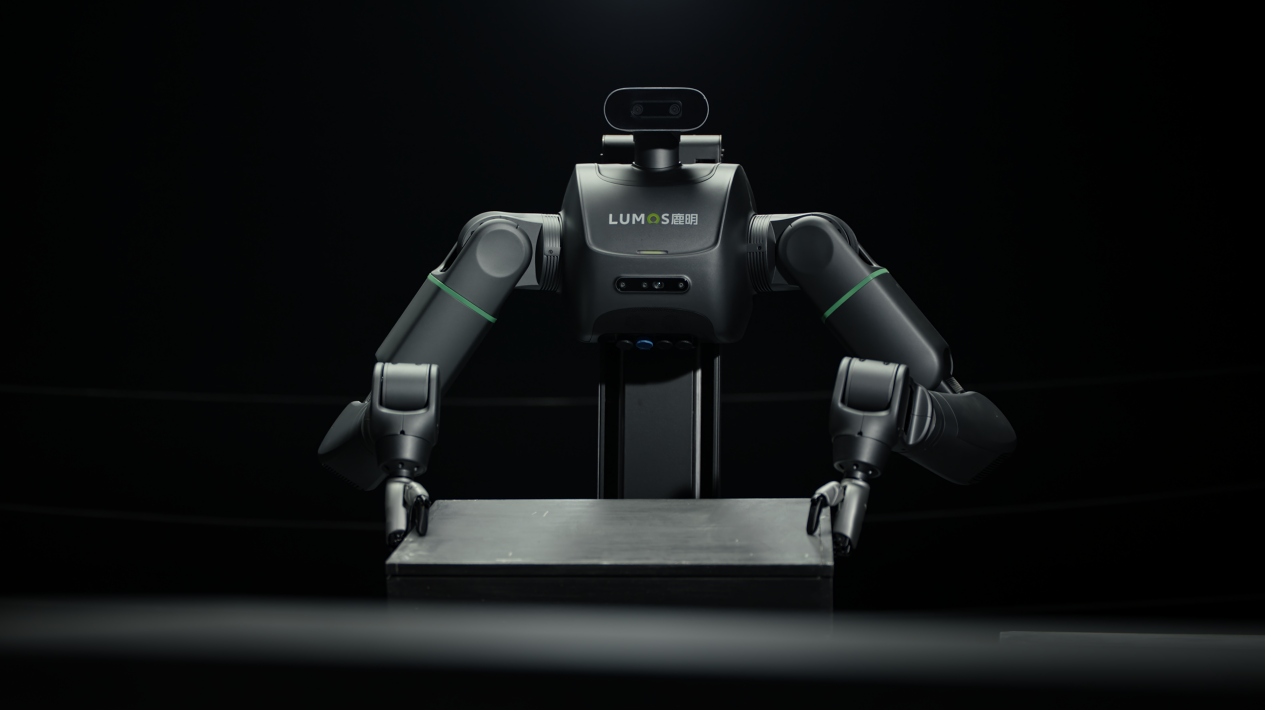
Lumos Robotics on Thursday launched its new heavy-duty wheeled-arm embodied intelligence robot Lumos MOS2, targeting real-world industrial scenarios with a 50 kg dual-arm payload capacity and upgrades in mobility, perception, and control architecture. The 1.65-metre-tall robot, which occupies a floor space of roughly 0.5 square metres and requires a passage width of about 0.8 metres, features 22 degrees of freedom, including a two-degree-of-freedom head and an omnidirectional chassis. It is equipped with dual multi-line lidar on the chassis, dual wrist cameras, dual six-axis force sensors, and a binocular camera on the head, with optional top rear lidar and chest depth vision modules. “We are seeing embodied intelligence accelerate into industrial deployment,” said Yu Chao, founder and CEO of Lumos Robotics....
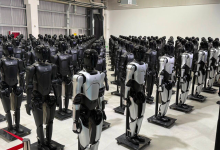
Global humanoid robot shipments reached approximately 19,100 units in the first half of 2026, more than tripling from 5,100 units a year earlier, according to data from U.S.-based market research firm Smart Analytics Global (SAG), with Shanghai-based AGIBOT overtaking Hangzhou-based Unitree to claim the top market share. AGIBOT shipped 8,400 units in the first half of the year, accounting for 44% of global shipments, while Unitree ranked second with 5,900 units, SAG said. Both Chinese companies substantially outsold major U.S. players including Tesla, Figure AI and Agility Robotics, underscoring the rapid development of China’s humanoid robotics industry. SAG, headquartered in California, projects global humanoid robot shipments will reach approximately 60,000 units this year and rise to 500,000 units by 2030....
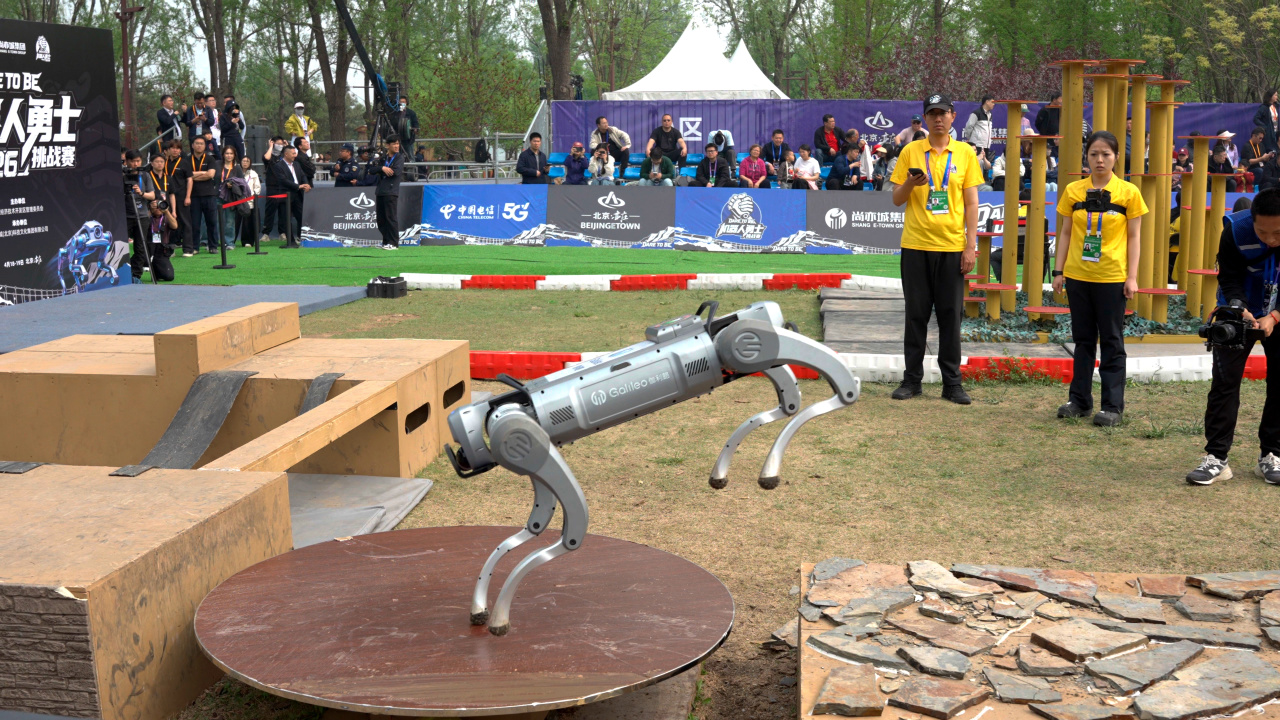
On April 18, 2026, the Batulu Robotics Challenge concluded successfully in Beijing E-Town. Galileo (Tianjin) Technology fielded two self-developed robot teams: the quadruped Iron Sirius and wheel-legged Iron Tianlong. Competing against top national teams, the firm claimed championships in both divisions, plus Speed and Clearance Awards, topping the elite contest with its proprietary technology. The 2026 Batulu Robotics Challenge simulated real emergency rescue scenarios with 17 tough obstacle courses to test robots’ motion control, all-terrain traversal, rapid response and environmental adaptability, serving as a top domestic testbed for embodied intelligence. Galileo won national championships in both quadruped and wheel-legged robot divisions, marking the first enterprise to claim dual titles in the event’s history. Galileo’s self-developed bionic balance algorithm enables full-range...
China Telecom's TeleAI incubates embodied AI startup Gamma Robotics
China Telecom's Artificial Intelligence Research Institute (TeleAI) has incubated Gamma Robotics, an embodied AI company that has recently registered in Shanghai's Xuhui district and moved into Mosu Space, according to company information.
Gamma Robotics is an independent market-oriented entity invested by China Telecom Group and incubated by TeleAI. It will co-build a humanoid robot laboratory with TeleAI.
MIRACLE AUTOMATION's Jiangsu robot data center amasses PB-scale embodied AI data
MIRACLE AUTOMATION, the automotive equipment maker operating the Jiangsu Province Embodied Intelligent Robot Industrial Data Collection and Training Center, has accumulated nearly 20,000 hours and PB-scale multimodal embodied AI data, the company said.
The center has built 36 first-level application scenarios and 163 second-level segmented data-collection scenarios. MIRACLE AUTOMATION is seeking to translate its long-standing production-line experience into data and technology capabilities that can support the industrial deployment of embodied AI.
Shenzhen's YITA DYNAMICS raises over 100 mln yuan in seed funding
Shenzhen-based embodied intelligence operation platform and power system company YITA DYNAMICS said it has completed seed and seed-plus funding rounds totaling more than 100 million yuan ($14 million). The rounds were jointly invested by Matrix Partners China, SenseTime Guoxiang Capital, CCB International, L2F Light Source Entrepreneur Fund, Galbot and Fourier Intelligence. Founded in May 2026, YITA DYNAMICS is focused on building underlying infrastructure for embodied intelligence hardware and has developed compliant force-controlled dual arms and high-performance joint modules.
Robot Warriors Challenge held in Beijing E-Town with 29 teams competing
The autumn edition of the 2026 Robot Warriors Challenge was held on Oct. 18 at the Nanhaizi Park waterfront plaza in the Beijing Economic-Technological Development Area, also known as Beijing E-Town, with 29 teams from across China taking part. As an independent event IP created by Beijing E-Town, the competition aims to push robots beyond running and jumping demonstrations toward real-world operational tasks. MirrorMe Technology, GENISOM AI Milk Long Team B, Xingyuan Dynamics Team A and AK Brothers Team B won their respective categories.
AGIBOT has partnered with Wuhan Culture and Tourism Group and Zhongyun Weixun to build the world's first smart retail warehouse operated by full-size bipedal humanoid robots. Its Expedition A3 Ultra robot has begun offering self-service retail services at Jiangyushang on the Wuhan riverside. The project has completed 827 orders in its phase to date, with a robot grasping success rate of more than 97%.
Tesla's third-generation Optimus robot ready for mass production
Tesla's third-generation Optimus humanoid robot is ready for mass production, refocusing market attention on the sector. Artificial intelligence is moving from the digital world into physical space, with humanoid robots viewed as one of the most important embodiments of physical AI.
China launches National Data Group in Xiong'an to boost data sector
China established National Data Group Co., Ltd. in Xiong'an New Area, Hebei province, on Oct. 20. The group is a central state-owned enterprise whose main responsibility is the development and utilization of data resources, with headquarters in Xiong'an.
The group was set up to advance data resource development and utilization, unlock the value of data elements, support artificial intelligence development and foster the data industry ecosystem, according to the company. After its establishment, it will strengthen central-local coordination and industrial collaboration under the guidance of relevant authorities, promote shared capabilities, experience and business expansion, and work to grow data value, strengthen the data industry and improve the data ecosystem.
Galileo's E1 quadruped robot wins gold at 2026 Canton Fair design awards
Galileo (Tianjin) Technology Co., Ltd.'s E1 series intelligent bionic quadruped robot has won a gold award at the 2026 Canton Fair Design Innovation Award (CF Award). The E1 series is fully self-developed by Galileo, with its complete machine structure, integrated servo joints and bionic gait and posture control algorithms 100% independently controllable. It holds more than 300 independent intellectual property rights. Equipped with all-terrain adaptive posture adjustment and force-sensing technology, the robot can autonomously identify unstructured complex terrain such as stairs, ramps and rubble. It is designed for applications including petrochemicals, power operation and maintenance, rail transit, emergency rescue and security patrol inspection.
RobotHOT brings China & Global Robotics Insights. Explore robotics, embodied‑intelligence updates, startup news and industry analysis for professionals worldwide.
 AGIBOT
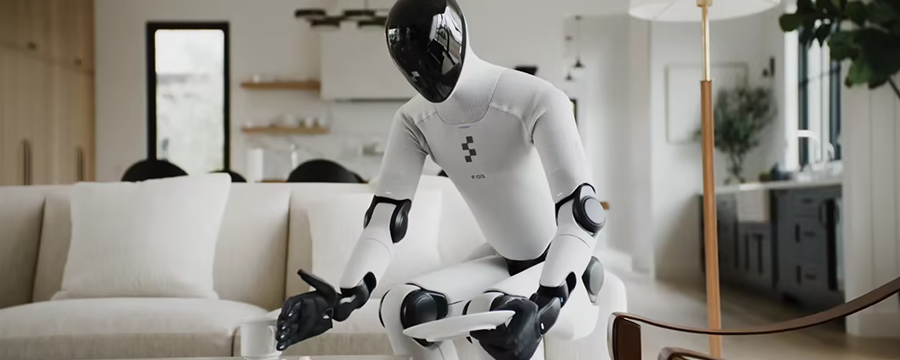 Figure AI
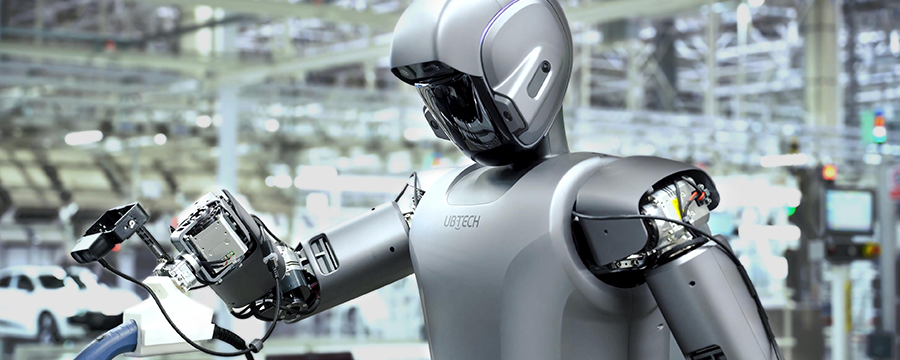 UBTECH