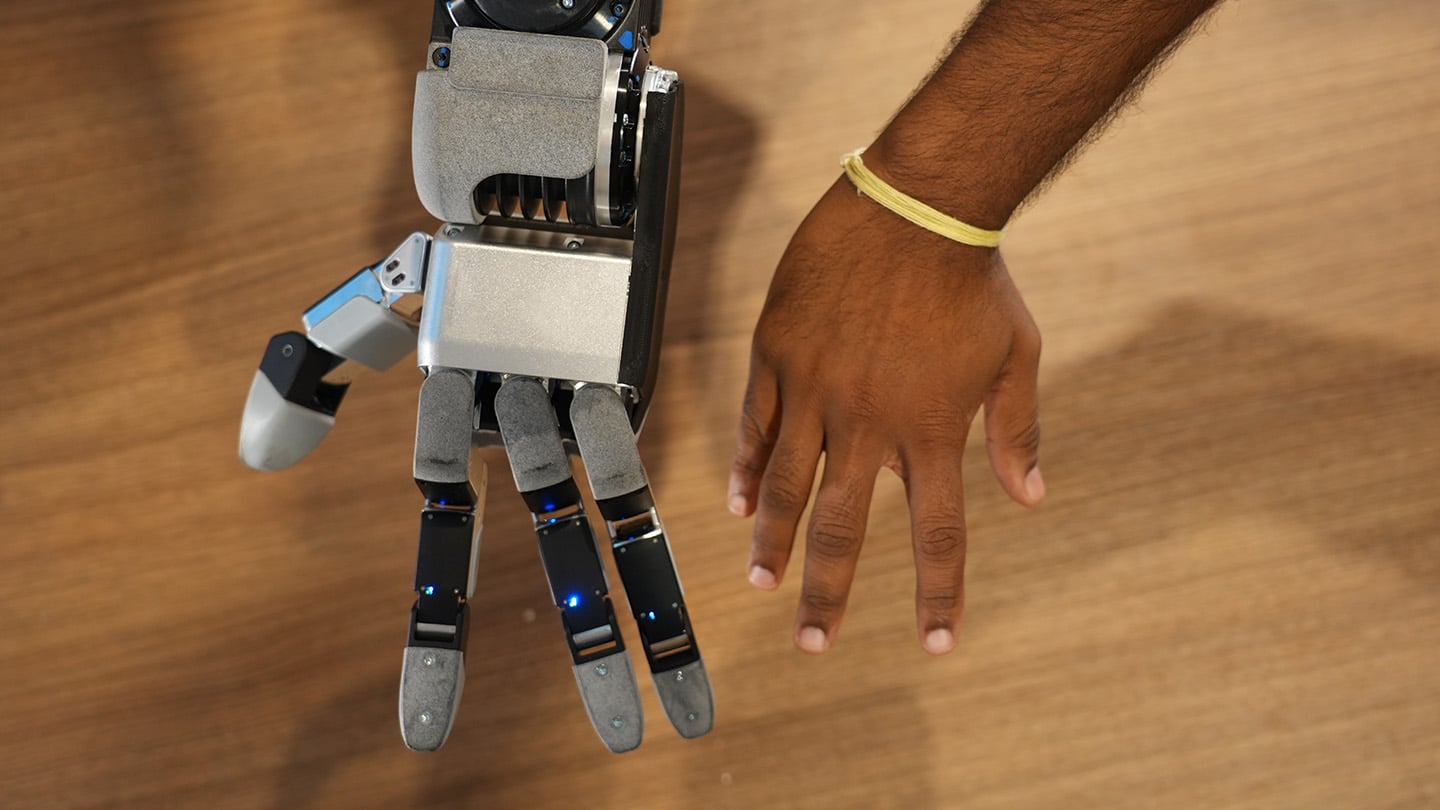
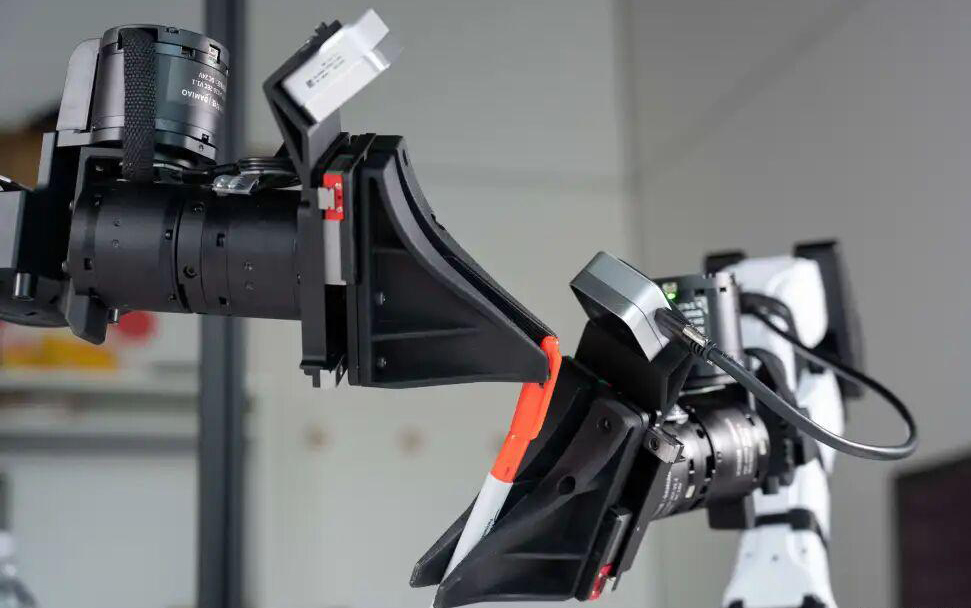
Boston Dynamics has introduced a new four-fingered hand for its Atlas humanoid, a 13-degree-of-freedom, directly actuated design intended for mass production.
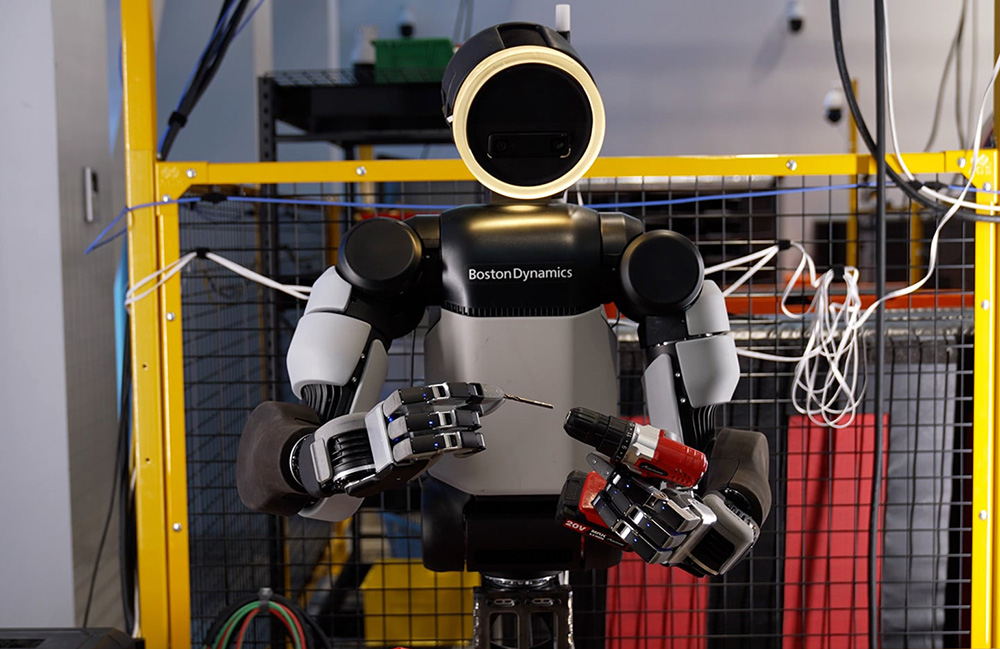
The hand marks a strategic shift. Earlier Atlas hands had seven degrees of freedom and were designed to grasp a wide range of objects. The new version focuses on manipulating them.
“We considered many, many designs,” said Alberto Rodriguez, director of robot behavior for Atlas. “It boils down to a trade-off of competing objectives.”
The design omits a pinky and is tailored for high-fidelity simulation and sim-to-real reinforcement learning. It uses a single actuator type, fully encapsulated joints and no fragile cables crossing joints. Boston Dynamics said the hand can slide the thumb tip along and across the other fingers, perform pinch and tripodal grasps, and handle tools such as drills, torque drivers, grinders, nail guns and welding torches. It can also reorient objects in hand, recover from slipping grasps and operate tools while pressing their triggers.
The launch follows the opening of Boston Dynamics’ Robotics Metaplant Application Center at Hyundai Motor Group Metaplant America in Georgia a week ago. The facility trains Atlas for Hyundai automotive manufacturing.
Dylan Thrush, an Atlas mechanical engineer, said a pinky’s extra dexterity did not justify three more degrees of freedom, added size, power use and actuators. Chief Product and Technology Officer Zachary Jackowski once asked the team to tape their pinky and ring finger together for a day; they later agreed the robot did not need a pinky. The hand is about the size of a large human hand and retains similar strength to its predecessor.
Boston Dynamics said backdrivable, transparent actuators support proprioception, while dense pressure tactile sensors on fingertips and palm detect small contact signals.
The company designed the hand for simulation learning. Wearable Universal Manipulation Interfaces can capture human demonstrations, but not the high-rate closed-loop control and force regulation central to agile manipulation. Whole-body controllers are trained with reinforcement learning in simulation. Rigid-drive actuation, backdrivable transmission and controls that compensate for cogging and friction allow high dynamic fidelity in simulation, making RL more effective when motor torque, friction, object geometry and disturbances are randomized.



 the 2026 Bund Summit