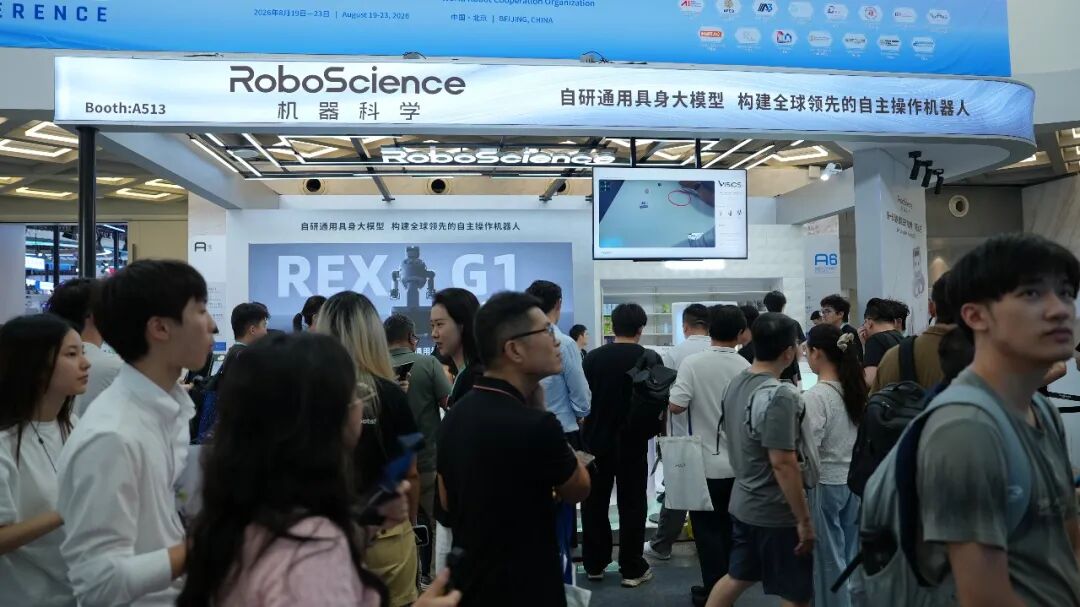
RoboScience unveiled its Visics-Agent desktop embodied agent at the 2026 Tencent Global Digital Ecosystem Summit, demonstrating long-horizon planning, persistent memory and proactive interaction.
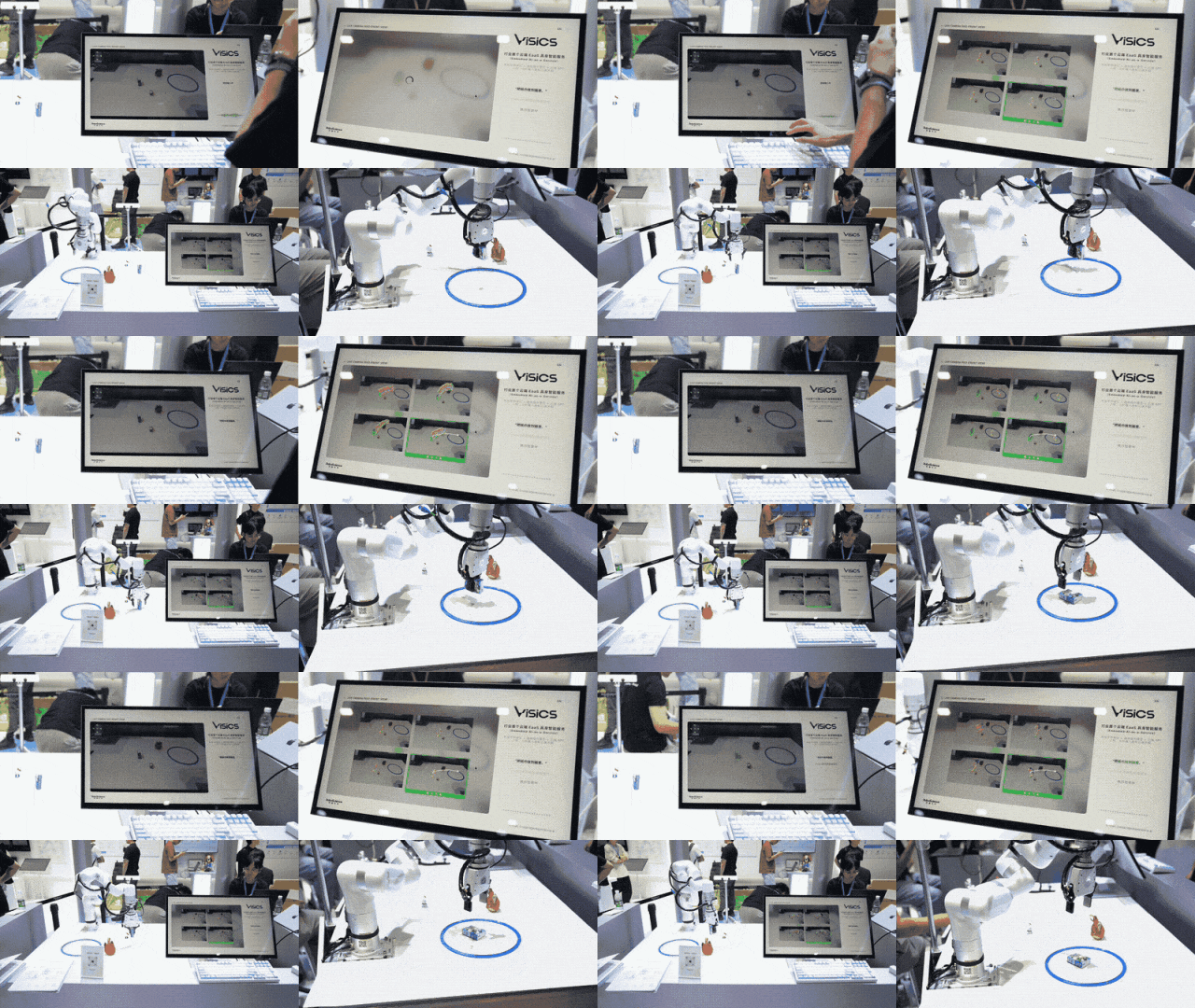
The company said users can instruct robots in natural language to complete extended real-world tasks. At a separate booth, it showed “one brain, multiple hands”: cloud-hosted embodied foundation model Visics controlled dexterous grippers of different configurations, with cross-hardware switching completed in 30 seconds.
The demo highlights a shift in embodied manipulation toward agent-based systems. Robots are moving from machines that execute preset motions to agents that can interpret intent and make autonomous decisions, RoboScience said. In the desktop-tidying demonstration, users state requests in everyday language, and the agent identifies objects, plans steps, sorts waste and rearranges items without coding.
The agent handled randomly placed items including banana and lychee plush toys, cola cans and coconut juice containers. Using visual recognition and spatial perception, it located targets and parsed user intent through open-ended dialogue. Attendees could issue or revise instructions during the demonstration. When prompts were ambiguous, the agent asked clarifying questions and adjusted its plan based on context.
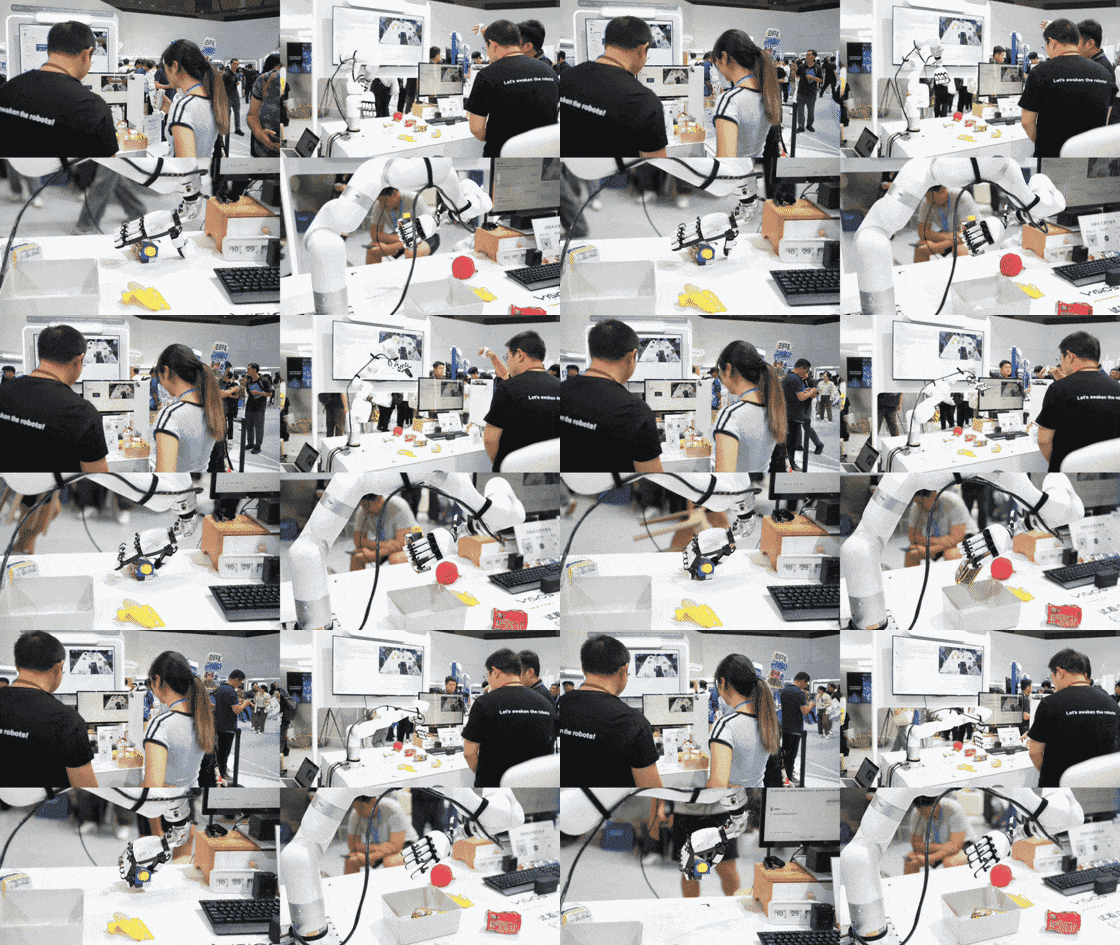
Long-term memory allowed the agent to retain user preferences. If a user said “leave this plush toy untouched during future table cleanup,” the agent avoided the item in later tidying runs without a reminder, RoboScience said. The agent also decomposed complex goals into action sequences. Given an instruction such as “place the banana plush into the basket first, then tidy the cola bottles,” it executed steps in order, monitored environmental changes and revised its plan in real time, forming a closed loop from language understanding and sensing to task planning and actuation.
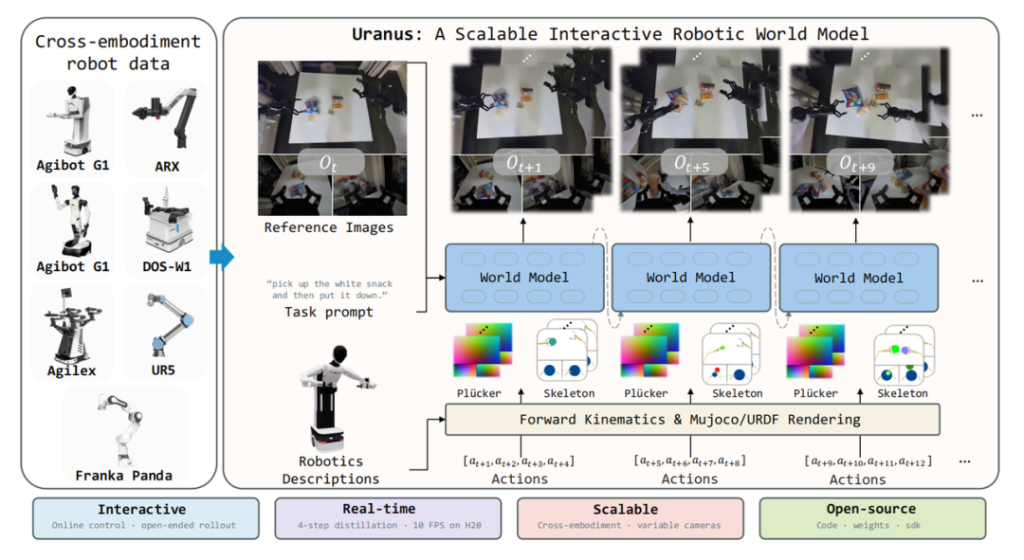
In the cross-embodiment grasping demo, users gave instructions such as “put the cola inside the circle.” After validating the request, Visics called Tencent Cloud-hosted embodied world models and general manipulation models via APIs, jointly reasoned over visual inputs and text prompts and generated real-time manipulation policies to drive dexterous hands.
Visics supported 30-second hot-swapping across heterogeneous dexterous hands and exposed its inference process. On-screen 3D point-cloud trajectories showed competing reasoning paths: the model identified object positions, simulated multiple motion candidates, selected the one with the highest success rate and passed it to the underlying manipulation model for execution. The display showed the decision-making process itself, including how the model assessed spatial relationships and chose among four candidate trajectories. RoboScience said the exhibit demonstrated generalization across embodiments, objects and tasks.


 AGIBOT
 Figure AI
 UBTECH