D-Robotics, a Chinese robotics company, has published the technical report for its world-model simulation platform Uranus and released inference code, an SDK and two versions of model weights, while offering 100 early-access slots to developers and researchers worldwide.
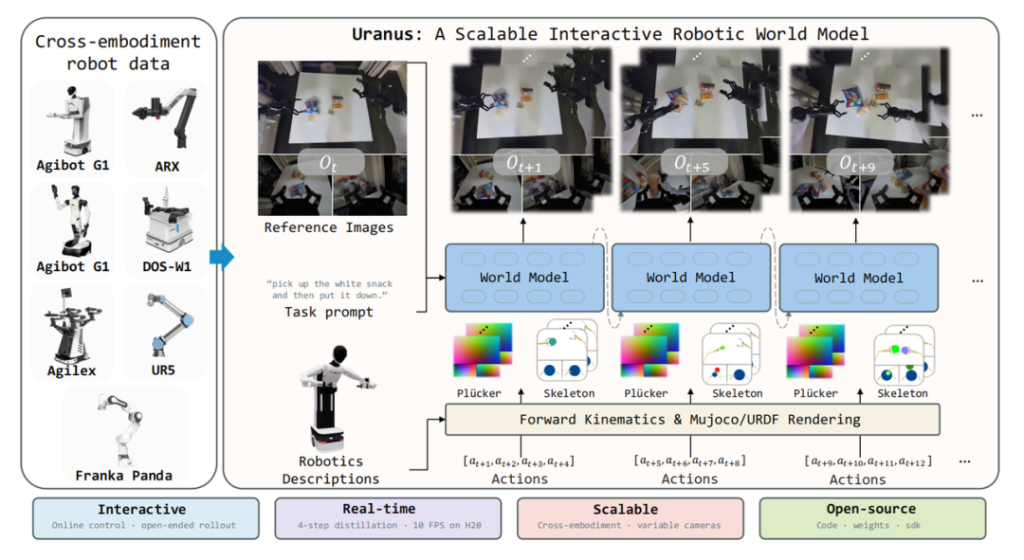
The platform is designed to let robot policies run, test and compare actions in a virtual environment. Uranus uses future joint trajectories as conditions and an autoregressive diffusion architecture to generate multi-view observations corresponding to robot actions, forming a closed interaction loop for policy evaluation.
D-Robotics said Uranus supports single-arm, dual-arm and mobile manipulation robots under one model by converting different robot bodies into a unified skeleton and spatial representation. Camera inputs are encoded using Plücker ray embeddings, and the model fuses multi-view and temporal information through alternating spatial-temporal attention.
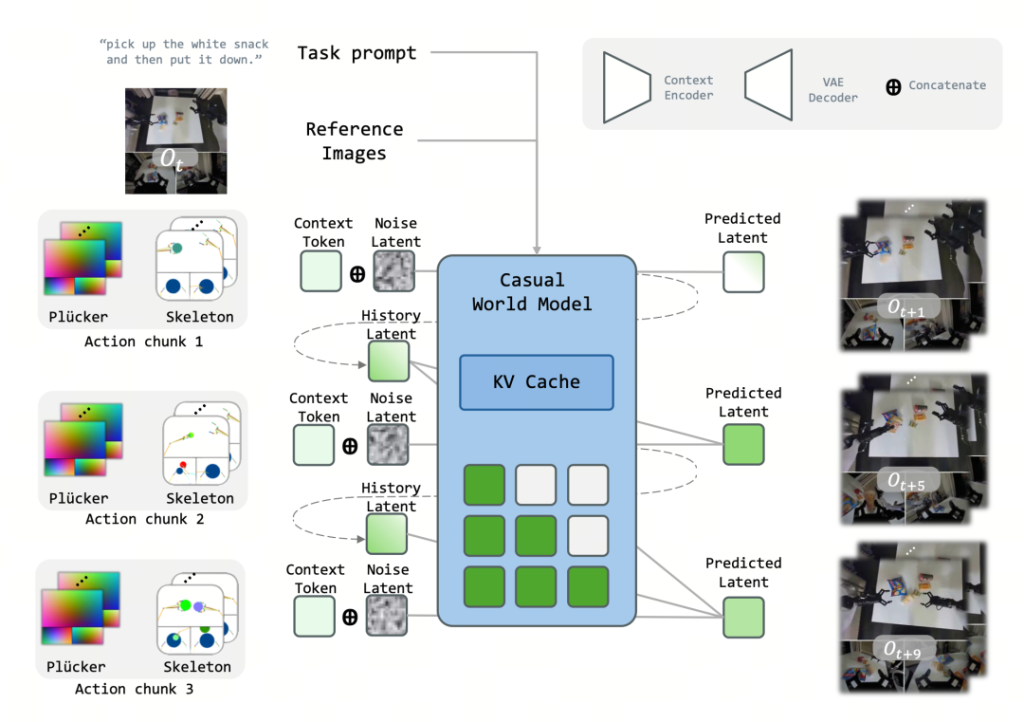
To support minute-level, multi-view rollouts, Uranus uses a causal architecture, retains reference frames as visual anchors and manages history through a sliding window. The team introduced distillation based on student autoregressive rollouts, compressing generation to four denoising steps per latent frame.
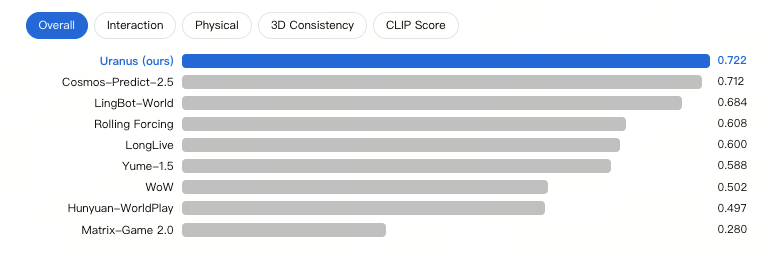
In closed-loop tests on five RoboTwin tasks and nine policies, with 15 episodes per policy per task, Uranus achieved a 0.98 correlation coefficient in success rates and an MMRV ranking metric of 0.01 after domain adaptation. Under the WorldOlympiad robot evaluation setting, Uranus scored 0.722 overall and 0.730 on interaction, the highest among compared models, according to the report.
D-Robotics cautioned that the results validate Uranus’s evaluation value under specific tasks and adaptation conditions, and that the effectiveness of transferring results to real robots still requires further verification.



 AGIBOT
 Figure AI
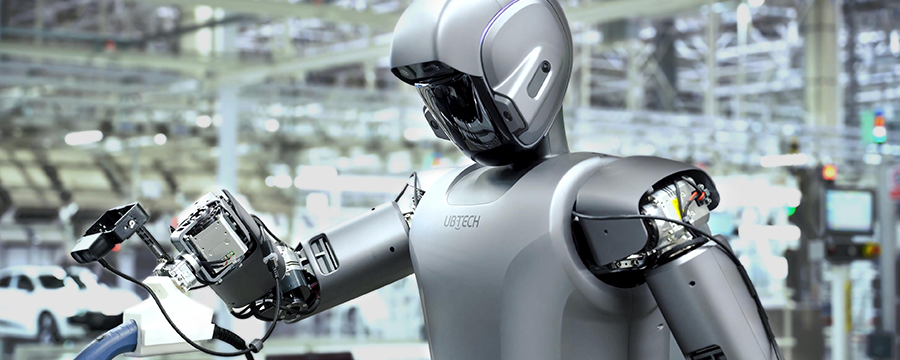 UBTECH